Why Choose Arbtech?
Watch this video to see why Arbtech are the best asset you can possibly have when you need ecology or tree surveys to help you obtain planning permission.
Contaminated sites in Southampton are being redeveloped to improve the city’s sustainability. If you need a contaminated land risk assessment, our experts can help.



Last updated: October 2026

Editor at Arbtech, Rob is a content specialist who manages our ecology and arboriculture services copy to ensure it is accurate, up to date, and insightful for current and future clients.
Managing contaminated land to create benefits for the city is a priority for Southampton City Council. The area’s industrial past has left a legacy of contaminated areas, and the council is working to ensure public health and environmental safety are foremost while promoting sustainable development on these sites.
We investigate the city’s historical sources of contamination and look at how the council manages polluted land, before outlining the correct steps to take when redeveloping such sites.

Southampton has been home to a shipbuilding industry, chemical manufacturing and operated as a busy port. All these uses have resulted in areas of contaminated land: common contaminants include heavy metals, hydrocarbons and solvents.
The council works to identify and assess these sites to mitigate potential risks via a systematic approach:
Fresh development on a contaminated site can create new pathways for pollutants to spread. This could potentially affect human health, watercourses and ecosystems. The severity of risk depends on the following three factors being present. Without all three, the threat is minimal.
If you’re considering developing a contaminated site in Southampton in the south of England, a contaminated land risk assessment will be required before planning permission will be granted. If contamination is identified, the assessment report will provide details of the remediation work needed to allow the project to continue.
Site investigation services are conducted by geo-environmental consultants working to the Environment Agency’s Land Contamination Risk Management guidelines. Identifying an expert team of consultants offering a full range of services on the south coast will give you access to cost effective solutions.
1. Pre-application consultation: early engagement with the council’s planning department will clarify potential contamination issues and the assessments required prior to planning applications being considered.
2. The Phase 1 desk study and preliminary risk assessment. During this first step, a consultant will carry out an analysis of the site’s history, referring to historic maps, industrial records and landowners. A preliminary risk assessment will identify potential contaminants.
3. The Phase 2 site investigation. Investigations will include soil, surface water and gas sampling. The work may involve digging trial pits to monitor ground conditions. Consultants may use a conceptual site model to give an overall picture of the area.
4. Risk assessment. From the data collected, consultants calculate the site’s potential risk factors and any need for remediation.
5. Remediation strategy: A plan will be drawn up to clean up identified contaminants and make the site safe. Methods involve removing contaminated soil off-site for cleaning, or capping areas to prevent exposure.
6. Validation and reporting: Following the remediation process, evidence must be provided to the council to prove that all safety and environmental standards have been met.

The management of contaminated land in the UK is governed by Part 2A of the Environmental Protection Act 1990, which defines contaminated land as any site where substances on or beneath the ground present significant risks to health or the environment. This legislation requires local authorities to identify and remediate such land.
Key principles include:
Additionally, the National Planning Policy Framework (NPPF) notes the importance of restoring and reusing previously developed land. Paragraph 197 of the NPPF states that the safe development of contaminated land is the responsibility of the developer, landowner, or both. The NPPF includes a statutory duty for local authorities to monitor sites and manage contamination risks.
The main reasons are:
Southampton City Council is committed to the reuse of brownfield sites to reduce pressure for building on greenfield areas. The council maintains a Brownfield Land Register, identifying sites suitable for residential development. Notable projects, such as the WestQuay Watermark development, demonstrate the city’s dedication to turning former industrial sites into thriving communities.
Southampton City Council’s approach to managing contaminated land ensures that development within the city is both safe and sustainable. The transformation of historically contaminated sites into valuable assets for the community aligns with broader goals of urban regeneration and environmental improvement.
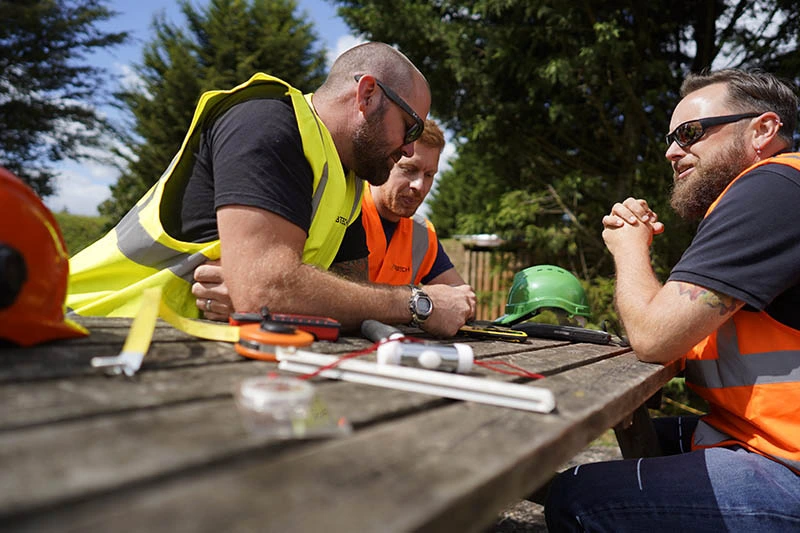
Arbtech are your best asset when it comes to getting planning permission for your project. We cover the whole of the UK and we are waiting to get started on your project...
Get Your Free Quote