Why Choose Arbtech?
Watch this video to see why Arbtech are the best asset you can possibly have when you need ecology or tree surveys to help you obtain planning permission.
Our team of geo-environmental consultants provides contaminated land risk assessments for development projects in the Nottingham area.



Last updated: September 2026

Editor at Arbtech, Rob is a content specialist who manages our ecology and arboriculture services copy to ensure it is accurate, up to date, and insightful for current and future clients.
Addressing land contamination issues effectively is a key part of Nottingham City Council’s planning and development strategy. Former industries in the area, such as coal mining and manufacturing, have left a legacy of contaminated land and the council is committed to ensuring public health and environmental safety while promoting sustainable development.

In the UK, the management of contaminated land is primarily governed by Part 2A of the Environmental Protection Act 1990. This legislation mandates local authorities to identify and remediate land where contamination poses significant risks to health, the environment or controlled waters. Additionally, the National Planning Policy Framework (NPPF) emphasises the importance of remediating and reusing contaminated land to promote sustainable development.
Nottingham’s industrial past, from textile manufacturing to iron working and waste disposal, has led to areas of contaminated land. Common contaminants include heavy metals, hydrocarbons and asbestos. The council proactively identifies and assesses former industrial land sites to mitigate potential risks from contaminated land.
Breaking ground on a potentially contaminated land site has the potential to allow contamination to escape and spread to impact human health, controlled waters and special sites such as designated ecosystems. All three of the following elements must be evident for this to happen: if just one is absent, the threat is minimal.
There are three main benefits:
The council has robust strategy details in place which planning applications involving potentially contaminated land must comply with. Its contaminated land management policy involves protecting special sites such as controlled waters from harm and avoiding further land contamination issues.

Early engagement with the council’s planning department via a pre-application consultation will clarify potential land contamination issues and the assessments that are needed. While voluntary remediation work may be carried out, a contaminated land risk assessment will likely be required before planning permission will be granted. If land contamination is confirmed on the site, the assessment report will provide details of the regulatory action necessary to allow a scheme to proceed.
Geo-environmental consultants conduct contaminated land assessments according to the Environment Agency’s Land Contamination Risk Management guidelines:
Phase 1: Desk study. A consultant will investigate historic maps of the area to understand former land uses, which may highlight sources of potential contamination.
Phase 2: Site investigation. Samples of soil, ground gas and water will be taken and analysed. In some cases, trial pits will be dug to monitor ground conditions. Consultants may develop a conceptual site model to assist their investigations.
Risk assessment. The data collected will enable consultants to accurately assess the present site for risk to human health, water and the environment, and any further land contamination risk.
Remediation. If land contamination is confirmed, consultants will draw up remediation strategy details for dealing with the identified contaminants. This might involve cleaning soil on-site or removing it for off-site cleaning. Consultants may recommend capping areas of the site with soil or other materials to prevent contamination spreading.
Validation and reporting. Following the remediation work, consultants will investigate to ensure compliance with regulatory standards. A report can then be submitted to the relevant local authorities for approval.
Nottingham City Council is committed to the redevelopment of brownfield sites, aiming to reduce pressure on greenfield areas and promote sustainable urban growth. The council maintains a Brownfield Land Register, identifying sites suitable for residential development and enabling protection of special sites that host designated ecosystems. Notable projects, such as the regeneration of the Waterside area, exemplify the city’s dedication to transforming former contaminated land sites into thriving communities.
Nottingham City Council’s proactive and structured approach to contaminated land management ensures that development within the city is both safe and sustainable. By collaborating with developers, environmental agencies and consultants, the council ensures that the correct regulatory action is taken, the land is safe for its intended use and does not pose unacceptable risks to human health, controlled waters or the environment.
This policy facilitates the transformation of historically contaminated land sites into valuable assets for the community, aligning with broader goals of urban regeneration and environmental stewardship.
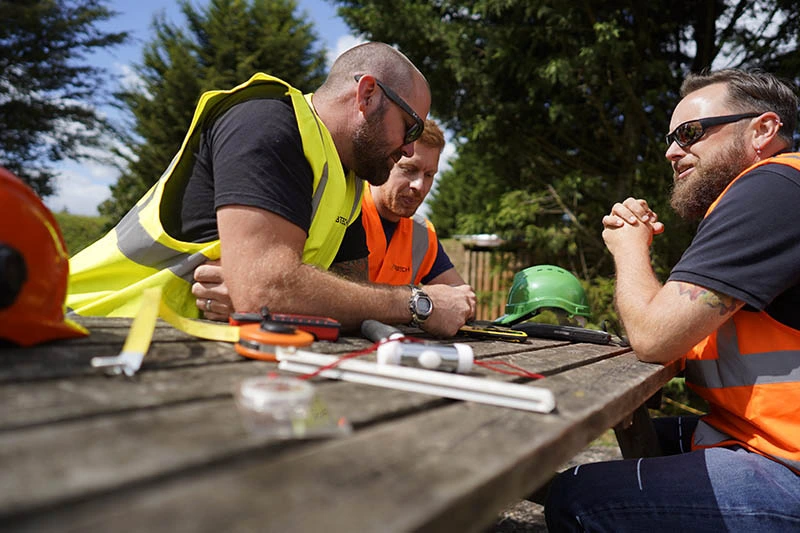
Arbtech are your best asset when it comes to getting planning permission for your project. We cover the whole of the UK and we are waiting to get started on your project...
Get Your Free Quote