Why Choose Arbtech?
Watch this video to see why Arbtech are the best asset you can possibly have when you need ecology or tree surveys to help you obtain planning permission.
Plans for developing contaminated sites in Bournemouth will need careful assessment. Our experienced geo-environmental consultants provide fast, accurate reports.



If you’re considering a development on a potentially polluted site in Bournemouth, it’s essential to understand how Bournemouth, Christchurch and Poole Council deals with contaminated land. The council is responsible for identifying and managing contaminated land within its jurisdiction, ensuring that any development is safe for both people and the environment. Contaminated land remediation by developers or property owners is a key part of this strategy, ensuring compliance with regulatory requirements.

If land is contaminated, it may contain substances including heavy metals, oils, tars, chemical solvents, gases, asbestos, pesticides or radioactive materials. Depending on the amount of contamination, such substances may pose risks to human health or the environment.
In Bournemouth, historical industrial processes have contributed to land contamination: the district’s diverse geology, including chalk, clay, and gravel affects the mobility and persistence of contaminants in the environment. If contaminated land is discovered, there are various steps that property owners must carry out, involving site investigations and contaminated land remediation strategies, to ensure compliance with regulatory requirements.

Bournemouth, Christchurch and Poole Council adheres to the legal framework established by Part 2A of the Environmental Protection Act 1990, which mandates local authorities to identify and manage contaminated land so that it presents no threat to human health and the environment.
Paragraph 197 of the National Planning Policy Framework places responsibility for the safe redevelopment of contaminated land on developers or landowners. Property owners should also be aware that contaminated land is referred to in the Planning Practice Guidance and the Building Regulations and Environmental Permitting Regulations.
The council encourages the redevelopment of brownfield (previously developed) land that may be contaminated: this approach aims to reduce the need to build on greenfield areas and supports growth in sustainable areas.
Sites suitable for residential development are added to the council’s Brownfield Land Register. While sites on this register are not guaranteed planning permission, entry does indicate the council’s support for redeveloping contaminated land sites. Site investigation will still be needed and contaminated land remediation, ensuring compliance with regulations.

If you’re considering developing potentially contaminated land in Bournemouth, follow this process:
Bournemouth, Christchurch and Poole Council’s proactive approach to managing contaminated land promotes the transformation of historically contaminated sites into valuable assets. By working with developers and consultants, the council ensures that development within the district is both safe and sustainable, enabling urban regeneration and protection for the environment.
To be certain of ensuring compliance with regulatory requirements, property owners are likely to need a phase 1 desk study to assess site history as a first step. This will determine whether a phase 2 assessment is needed and any subsequent contaminated land remediation work.
Arbtech’s experienced geo-environmental consultants can help you assess how land with contamination issues should best be dealt with. For further information, fill in our quick quote form at the top of this page.

Gill is our Editor, with a background that combines journalism with land and estate management. Gill is a farmer’s daughter, an associate member of the RICS and has an interest in all things to do with agriculture and the countryside. Her free time is spent on the tennis court, walking and improving her cooking skills.
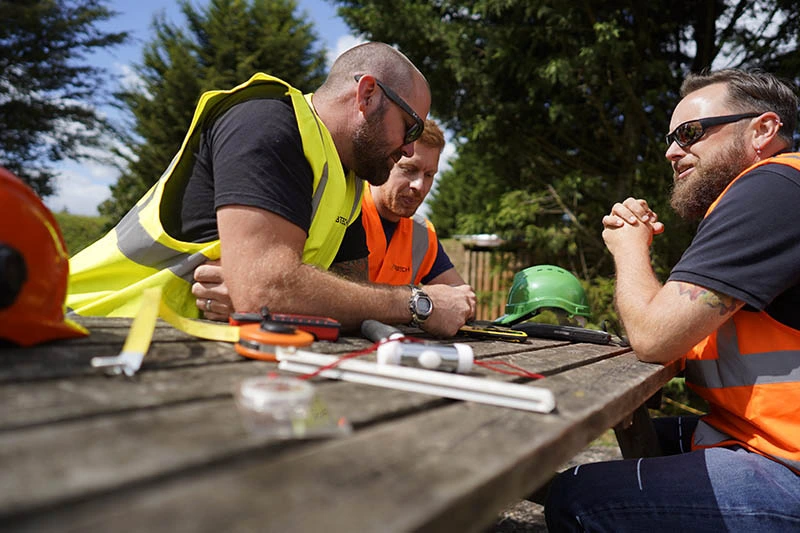
Arbtech are your best asset when it comes to getting planning permission for your project. We cover the whole of the UK and we are waiting to get started on your project...
Get Your Free Quote