Why Choose Arbtech?
Watch this video to see why Arbtech are the best asset you can possibly have when you need ecology or tree surveys to help you obtain planning permission.
If you need a CAVAT tree report to support tree valuation, planning or development decisions, our arboreal specialists can help.
CAVAT (Capital Asset Value for Amenity Trees) is the principal UK methodology for placing a monetary value on the public amenity benefits of trees.



Last updated: October 2026

Gill is our Editor, with a background that combines journalism with land and estate management. Gill is a farmer’s daughter, an associate member of the RICS and has an interest in all things to do with agriculture and the countryside. Her free time is spent on the tennis court, walking and improving her cooking skills.
A CAVAT tree assessment is the UK’s go-to method for putting a clear monetary value on the public benefits of trees.
Whether you’re a developer navigating planning decisions or a landowner managing assets, our specialist reports turn trees from potential liabilities into high-value community assets.
Using the Capital Asset Value for Amenity Trees (CAVAT) system, we examine everything from size and health to life expectancy and local visibility.
The data-driven approach gives you a robust, GBP-valued figure that’s respected by local authorities and legal stakeholders alike.
We offer both the Full Method for detailed single-tree valuations and the Quick Method for larger strategic sites, ensuring your project stays on track with expert, defendable advice.
Often required by local authorities, landowners and organisations managing trees, a CAVAT tree report is a method of examining a tree, or group of trees, to calculate its value in terms of life expectancy, health and visibility in the location.

A CAVAT tree report applies the Capital Asset Value for Amenity Trees (CAVAT) methodology, a widely adopted and defendable system developed by the London Tree Officers Association in collaboration with Forest Research and the CAVAT group.
Originally championed by Chris Neilan and supported through a pro bono initiative, CAVAT was designed to give local authorities and tree officers a clear, consistent way to express the public value of trees in monetary terms. Used by tree officers and tree experts across the UK, CAVAT provides a robust way to value trees as public assets, not liabilities.
Rather than focusing on timber value or simple replacement costs, it captures the wider public amenity benefits a single tree or group of trees provides to communities, including within community tree index areas. The approach supports planning policy, aligns with the London Plan, and is frequently used to inform decisions where amenity trees are extensively managed in complex urban environments, for instance, urban pollards.
CAVAT is both a strategic tool and a practical, complementary system that can sit alongside arboricultural assessments and planning processes. Following an extensive review, the updated CAVAT full method and revised method reflect current best practice and the input of experienced practitioners.
Tools such as the CAVAT spreadsheet, crown completeness calculator and the fully illustrated guide help ensure valuations are consistent, transparent, and evidence-based. As a result, CAVAT is increasingly used to promote CAVAT principles across local authorities, support defensible decision-making, and facilitate CAVAT training for professionals responsible for managing urban trees.
A CAVAT Tree Valuation is carried out using one of two methods:

Trees can be public assets and tree valuation is increasingly important in situations where a value for amenity trees must be demonstrated clearly by decision makers, including:
The CAVAT Tree Valuation System involves:
A qualified arboriculturist conducts a site survey to gather measurements, condition assessments and contextual data.
A clear breakdown of the capital asset value of each tree or group, expressed in GBP on a survey spreadsheet, with an explanation of how the figure was derived to aid objectivity.
Contextual guidance on how the valuation affects planning, legal or management decisions, and recommended next steps for policy makers.

These reports are typically required by:
Due to the technical nature of CAVAT, valuation must be carried out by a trained arboricultural consultant with experience in the Full and Quick methods. A robust report should provide defensible data that local authorities, planners and legal stakeholders will respect.
Our experienced tree experts can provide CAVAT tree reports tailored to your project needs, whether for planning support, tree protection, compensation claims or asset management. For expert guidance, contact our team for further information and a free quote.
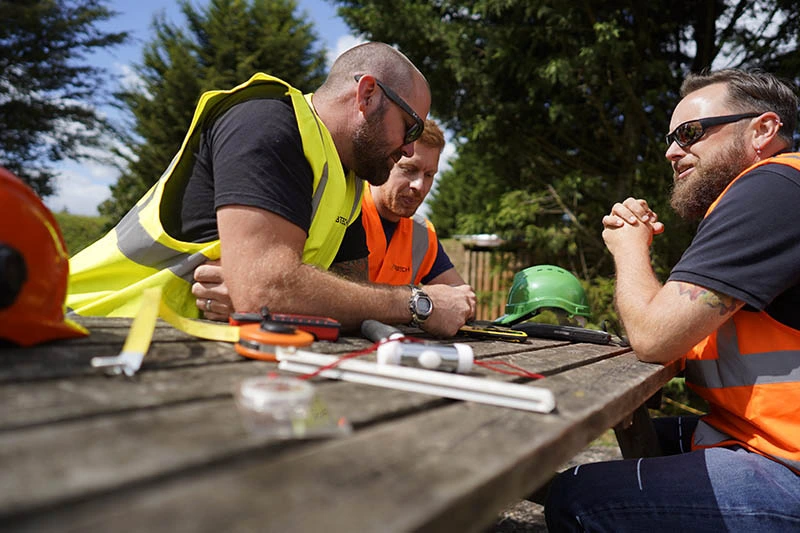
Arbtech are your best asset when it comes to getting planning permission for your project. We cover the whole of the UK and we are waiting to get started on your project...
Get Your Free Quote