Why Choose Arbtech?
Watch this video to see why Arbtech are the best asset you can possibly have when you need ecology or tree surveys to help you obtain planning permission.
As a new or experienced developer, you might have a lot of questions about submitting new planning applications, especially based on the type of building, development or consent. On our helpful FAQ page, you can see loads of planning permission questions and answers, and you can always ask us directly if there’s anything we haven’t covered.



Last updated: October 2026

Editor at Arbtech, Rob is a content specialist who manages our ecology and arboriculture services copy to ensure it is accurate, up to date, and insightful for current and future clients.
Our Q&A page provides a clear, professional guide to navigating the complexities of planning permission, specifically focusing on ecological and arboricultural requirements.
It is designed to help you understand the essential surveys needed to secure approval for your development project.
Survey Requirements: Explains why local authorities demand professional reports on trees and protected species.
Project Timelines: Outlines how long the process takes and how to avoid common seasonal delays.
Legal Compliance: Details the risks and consequences of starting work without the correct permissions.
Strategic Advice: Offers practical steps to manage your application and avoid a refusal.
Whether you are a homeowner or a developer, this resource simplifies the technical aspects of the planning system, ensuring you have the facts needed to keep your project moving forward without any surprises.

If you’re new to staging a development, the planning process can be overwhelming. Then again, even if you’re an experienced developer or planner, changes to legislation, planning policy and relevant regulations can suddenly affect how you operate.
From extending your home to developing a commercial plot of land, it’s important to get the right advice early, whether it’s about different elements of planning permission, the specific types of consent, or a matter affected by the development you’re working on. With our expert planning consultant team, Arbtech can offer you clarity and settle any nerves.
It doesn’t matter how experienced or knowledgeable you are – a simple online search doesn’t always get you the answer you need or a full picture of what you’re dealing with.
Across this page, we’ve answered a lot of the questions planning permission often raises, giving you the confidence to move forward with your planning project and take the next step in the right way.
Yes, but the planning application process depends on the scale of the change. Minor tweaks can often be handled via a non-material amendment, while larger changes may require a new use application or a variation of planning conditions.
Standard full planning permission usually requires you to begin work within three years. If you haven’t started, you cannot simply extend it; you will usually need to apply again with a fresh householder application or full submission.
While rare, a local authority can issue an enforcement notice if the work doesn’t match the approved planning applications. In extreme cases of error, a local planning authority has the power to revoke permission, though this involves a larger number of legal hurdles.
You can withdraw your own application form at any point before the planning committee or officer makes a final decision – something that is often done to make changes based on feedback from a planning officer.
Yes. In most cases, you must start the development within the timeframe stated on your decision notice (usually three years). If it expires, you lose your development rights for that specific plan.
The most efficient way is to apply online via the planning portal website. You will need to submit a location plan and the correct fee, as well as a design and access statement for more complex sites.
For a standard new home or extension, the statutory limit is eight weeks. If the council is taking longer due to staff shortages, however, it can take up to 13 weeks.
As of April 2026, the fee for a single dwellinghouse extension in England is £548. You can find further information on the excellent resource that is the Planning Portal’s fee calculator.
In most cases, full planning permission or a householder application approval is valid for three years. You must start work within this timeframe. Otherwise, the permission will lapse, and you will need to apply again. Once a material start is made on-site, the permission is generally secured indefinitely.
The old 4-year limit was scrapped in 2024. Now, for almost all new planning applications regarding unauthorised work, the council has a 10-year window to take action. After this, you can apply for lawful development certificates to formalise the status.
A single-storey rear extension often falls under permitted development rights, provided it doesn’t exceed height and depth limits relative to the original house.
You generally don’t need planning permission for a basic conversion, but you must stay within a specific class use and volume limit (40 cubic metres for terraced houses).
Many dormers are class A permitted developments. If they face the highway or are in a designated area, however, you will require planning permission.
You usually don’t, provided the ground floor area is under 3 square metres and it’s no higher than 3 metres. It must also stay at least 2 metres away from the property boundary if that boundary is next to a road.
In most cases, a conservatory is permitted. It must not, however, exceed 50% of the land around the original house and must stay within specific height limits to avoid needing a full planning application.
Most garage conversions fall under permitted development rights because the work is internal. You should still check for local restrictions or Article 4 directions that might have removed these rights in your local area.
Like a conservatory, an orangery is often permitted. If it’s a larger project, you might need to use the ‘Prior Approval’ use application process to extend further than standard limits.
Internal floors don’t usually require planning permission, but they often need building regulations approval to ensure that the new structure is safe and fire-compliant.
A Juliet balcony is generally allowed under class A rights as long as it has no platform or floor. If it includes a walk-out area, it becomes a standard balcony and will need to apply for permission.
You can usually add windows under your development rights, but any new first-floor side window must be obscure-glazed and non-opening to protect the privacy of the surrounding area.
Creating new openings for bifold or patio doors is typically permitted. You must, however, ensure that the building work doesn’t weaken the structure of the house.
For standard homes, no. For listed buildings, however, you will always need listed building consent before removing any internal fabric, as they have special architectural or historic interest.
Removing a chimney is usually permitted, but you must ensure that the remaining stack is properly supported. If your home is in a conservation area, you should check if the chimney is considered a key feature of the building’s character.
All of them are permitted if they are single-storey and ‘incidental’ to the house. If you are building near mature trees, check for any level of tree protection surrounding the tree like a tree preservation order (TPO), as roots can be damaged by foundations.
Yes. Because they are intended for use as a new home or self-contained living space, they generally require a full planning application to ensure the proposed development aligns with local housing standards.
They don’t usually need planning permission, provided they aren’t placed forward of the front wall of your house and don’t take up too much garden space.
They are permitted if they meet the height rules for outbuildings. If you’re unsure, seeking further information from your local authority website is a good starting point.
Private stables are often permitted in large gardens, but you will need to submit planning applications if they are for commercial use or located on agricultural land.
Smaller ones are fine, but large and permanent polytunnels may require permission if the local planning authority deems them a permanent change to the land.
Outdoor pools are usually permitted. You will just need to ensure that your sewage plans are compliant and that the pool doesn’t create a flood risk.
You can build a wall up to 2 metres high (or 1 metre by a road). If you are building on a boundary, double-check your property information to ensure that you aren’t encroaching on a neighbour’s land.
It is usually permitted unless you live in a national park or an area of outstanding natural beauty (AONB), where external materials are more strictly controlled.
A new driveway is permitted if it is porous. For a dropped kerb, you must apply through the council’s highways mapping team.
Minor changes are fine, but not all work is exempt. Significant changes to ground levels might require a lawful development certificate to prove they are legal.
Gates follow the same height rules as walls. Full balconies almost always need permission because they affect the privacy of those nearby.
Most are permitted. For a heat pump, however, there are specific noise and siting rules to follow under national planning policies.
Wall-mounted chargers are permitted. You only need to apply if the installation is in a designated area and exceeds certain size limits.
External units are usually permitted if they are small, but check your local planning policies regarding noise.
No, but the flue must not exceed the roof height by more than 1 metre.
You usually don’t need planning for the tank itself, but you must follow environment agency (EA) rules for drainage.
Private bollards on your own land are generally fine.
Yes, you must usually apply for ‘Prior Approval’ so the council can check your demolition plan.
Structures on the application site for more than 28 days usually need permission.
If they involve a change of use of the land for business, you will likely need to submit a plan to the planning committee.

Whenever a planning project consists of a significant increase in floor space or a substantial change to the height and scale of the building, it is likely that planning permission will be needed. And without planning permission, you will be unable to move forward.
For proposals involving heritage assets, a consultation with Historic England is often necessary, and many local councils now take at least two weeks to validate a submission before a case officer even starts working on the file. Likewise, even in common projects, you may need to consider visual impact or any sort of negative impact that could come from your plans.
If you haven’t found the answer you were looking for on this page, feel free to get in touch with us directly over the phone, via email or by completing an online form on our website. Our contact details are available on our helpful contact page, and however you get in touch, one of our team can help you.
You can ask for planning advice from Arbtech or find guidance on our website – whatever you decide, we’re here to support your plans.
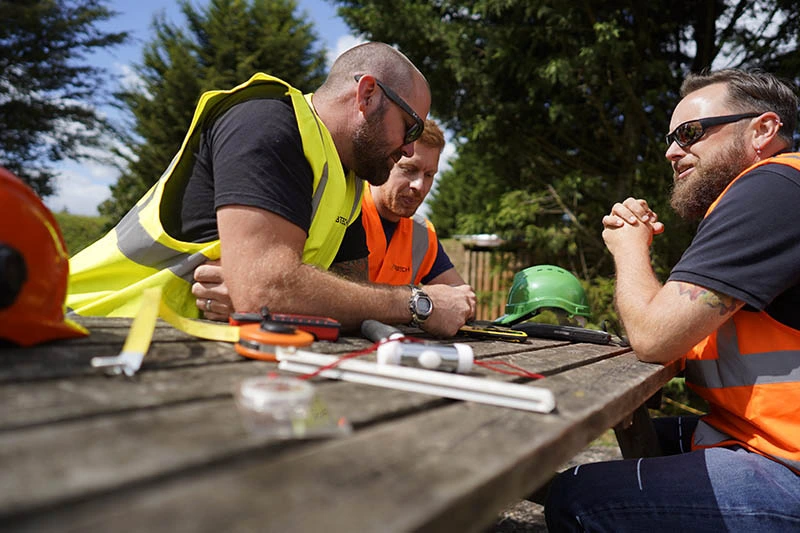
Arbtech are your best asset when it comes to getting planning permission for your project. We cover the whole of the UK and we are waiting to get started on your project...
Get Your Free Quote