Why Choose Arbtech?
Watch this video to see why Arbtech are the best asset you can possibly have when you need ecology or tree surveys to help you obtain planning permission.
Common types of planning permission include full planning permission, change of use, listed building consent and reserved matters. For more information, check out our informative page.



Last updated: October 2026

Editor at Arbtech, Rob is a content specialist who manages our ecology and arboriculture services copy to ensure it is accurate, up to date, and insightful for current and future clients.
Navigating the planning system can feel like a maze, but getting the right consent is the first step to a successful project.
Here is a brief look at the most common types of planning permission:
Full Planning Permission: This is the standard application for most building projects. It requires comprehensive details of the proposed works and usually remains valid for three years once granted.
Change of Use: You’ll need this if you intend to alter the primary purpose of a building or land—for example, moving from a commercial office to a residential dwelling.
Listed Building Consent: This is a specific requirement for heritage assets. It ensures that any alterations preserve the architectural or historic character of the building.
Reserved Matters: Following an initial “outline” approval, this application deals with the specific details that were previously excluded, such as appearance, landscaping, and access.
Choosing the correct path is vital to avoid enforcement action. We provide the expert surveys and reports you need to ensure your application is robust and ready for the local authority.

Each type of planning application serves a specific intended use. Choosing the wrong one can lead to planning enforcement action or even a criminal offence in the case of unauthorised works to heritage assets.
For developers and planners, the first step to submitting an application consists of understanding the different types of planning and consent regimes.
From larger schemes and major development projects to a simple householder application, the planning rules are governed by the Town and Country Planning Act 1990 and covered by further guidance from the National Planning Policy Framework (NPPF) to ensure that the proposed development fits the local area and development plan.
If you aren’t ready to commit to a full architectural design but want to know if your development is viable, outline planning permission is your best starting point.
The Goal: To establish the council’s general principles of development by finding out if they’d allow a building on the site at all.
Reserved Matters: Detailed elements (for instance, certain details like landscaping and the exact appearance and length of each building) are put aside for a later stage application which will determine the visual impression of the site.
Who it’s for: It’s an alternative means of securing planning permission for landowners looking to sell sites with “permission in principle,” or developers wanting to secure funding before investing in expensive detailed designs at a later stage.
Outline planning permission is a useful way of securing a “yes” from the local planning authority without providing every nut and bolt of the design upfront. It is a popular route for major housing developments or complex sites where the cost of a full planning application is a significant financial risk.
Once outline planning permission is granted, you have a set timeframe (usually three years) to submit a follow-up application for Reserved Matters. This will involve detailed plans of the development proposed, the building’s setting, the consultation undertaken and other material considerations.
Until those matters are dealt with and the local planning authority is clear about what the proposed development consists of, you cannot start work on-site.
The primary advantage is risk management. If a site has significant constraints, like being in the Green Belt, near sensitive ecological habitats or an area of historic importance, an outline application allows you to test the council’s general principles about development without the overhead of a full design team.
Outline planning permission also significantly increases the Gross Development Value (GDV) of land. For landowners, selling a plot with outline permission is far more lucrative than selling “hope value” land without any consent at all.
While less detail is required in terms of design, the local planning authority will still expect to see that the principle of development doesn’t clash with environmental laws.
To get an outline application over the line, you will likely still need:
A full planning application is the standard way to obtain planning permission for most building operations and changes of use.
Full planning permission is a comprehensive application for planning consent that includes full details of the proposed building and other operations.
The application must include accompanying information like a location plan with a north point, a site plan showing the application site boundary within a red line, and other land owned by the applicant within a blue line.
For certain building works, a design and access statement is needed to explain the design principles and how the specific place makes a positive visual impression.
The standard application form itself and any supporting information must be accurate, as the application relates to the identified scale of the building proposed.
Full planning permission is needed for any planning projects that fall outside of relevant permitted development rights, such as for:
An application for full planning permission would also be needed for developments on large sites if a screening opinion or scoping opinion is required to determine if an environmental impact assessment (EIA) and an environmental statement are necessary.
You will also need to submit a relevant certificate to confirm if you are the sole owner. Ownership certificates can also verify that you have notified all the other owners.
If your project doesn’t fall under permitted development, you must seek planning permission. Apply via the local authority and you can ensure that your new development is lawful.
The determination period in an application for full planning permission is usually eight weeks for a small number of dwellings or minor works.
Alternatively, the local planning authority has 13 weeks to complete the decision-making process on applications for full planning permission.
Under certain conditions, if additional information or details relating to specific issues are needed, the time limit can be extended.
Once a decision notice for full planning permission has been issued, it is usually granted subject to a condition that the proposed development takes place within the next three years.
If you don’t start within this timeframe, you will likely need a new application.
A change of use planning application is necessary when the primary use of a building place is set to be altered to a different use class.
A change of use application focuses on the intended use of the planning unit rather than the external appearance.
The Use Classes Order groups different uses together. A material change of use occurs whenever you move from one class to another, such as from class E to sui generis.
The current use classes framework helps to determine if you need to seek professional advice before transitioning between various categories of use.
Certain use applications change the existing use of a whole planning unit, such as moving an existing building from business use to operating as community halls or skating rinks.
Change of use applications are needed for any proposed change that isn’t covered by permitted development rights, such as:
It would also apply to any developments aiming to change the use of a building or place for assembly and leisure, such as health centres or training centres.
If you are unsure whether your proposal fits within one use class or requires a more complex change, you should seek advice from a planning expert. We can confirm if a certificate of lawful use is sufficient for your use project or if a full application may be required.
The determination period for a change of use application typically takes eight weeks.
In some cases, however, you may need to obtain prior approval or prior notification. Across the prior approval application, the timeline for change of use planning permission is much shorter.
Like with full planning permission, a change of use planning consent usually remains valid for three years.
A new use must be established within this timeframe to avoid needing a new planning application.
In any proposed works affecting a building of special interest, you need to apply for listed building consent to preserve the value and condition.
Listed building consent is a separate and distinct requirement from standard planning permission.
It creates a way for the relevant local planning authority to provide protection for heritage assets with special architectural or historic worth.
The listed status covers the character as a building, including historic features and aspects of the building that contribute to its historical interest.
You require listed building consent for any building works that alter a heritage asset on the site. Examples include:
You may also need to consult with Historic England if the proposed project involves a Grade I or II building.
It is common for listed building consent applications to be decided within eight weeks.
As the applications can change the fabric of the historic asset, the local planning authority usually asks for a heritage statement and further information regarding the proposed impact.
Planning consent for a listed building is often granted subject to the work starting within three years.
The specific planning conditions may, however, be more stringent depending on the property involved.
A reserved matters application deals with the specific details required after an initial outline planning application has been approved.
Reserved matters are the outstanding details that were not included in the outline application.
The details focus on both the external appearance and the external built form of the proposed development, as well as how the buildings and spaces within the development scale are arranged. It often includes details on other amenity features and specific landscaping requirements.
Across this stage, the aim is to guarantee that the visual impression and appropriate scale are in line with the outline permission.
Once you have outline approval, you must submit information for the specific aspects of a building that were previously excluded. Further submission is required to address:
An application for approval of reserved matters usually takes eight weeks.
If the local planning authority sees any concerns raised by the local community, other information required to mitigate the potential impact on the amenities of the site will be needed.
Applications for reserved matters approval need to be submitted within three years of the outline permission date.
You can usually apply online, and once approval is granted, you generally have two years to start work.

Navigating the selection of planning application types is much easier with a thorough understanding of development legislation and statutory requirements.
Between small houses and non-residential institutions (for example, state-funded schools or post office buildings), the use process involves complex information requirements. Understanding the planning use classes and the planning application process is vital for any building project, whether it involves residential dwellings or a large-scale forestry development.
If you need pre-application advice to ensure that your development proposal is viable before you apply for planning permission, we can arrange pre-application meetings to go over everything with you.
At the earliest opportunity, you should consult a planning consultant to understand how these fit with your goals.
We handle all aspects of your submission, ensuring that sensitive information is managed correctly and that every other means of supporting your case.
If you want support for the specific circumstances of your development, guidance through the planning process, general planning advice, an explanation of the planning application process and help with matters that could affect your plans, speak to our team.
We are easy to contact, either over the phone, via email or by filling out a quote form on our website.
Once we determine the correct permission for you, we explain the next steps to ensure your project is handled correctly within the planning system.
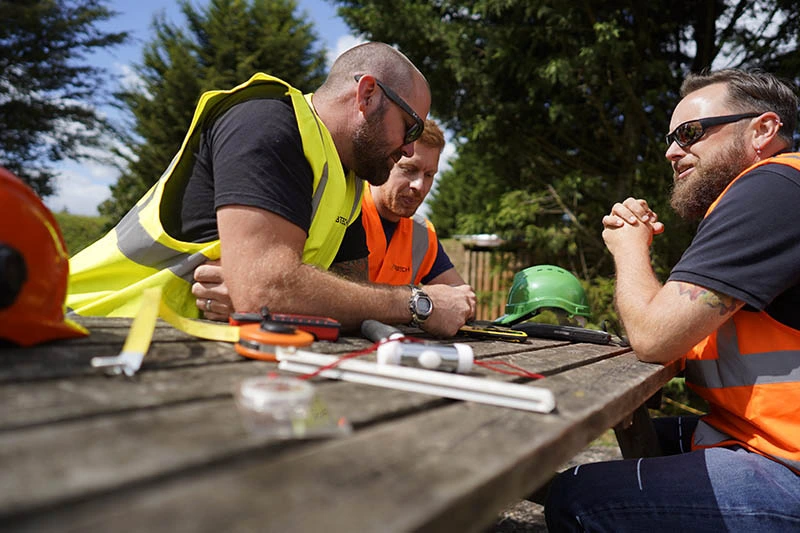
Arbtech are your best asset when it comes to getting planning permission for your project. We cover the whole of the UK and we are waiting to get started on your project...
Get Your Free Quote