Why Choose Arbtech?
Watch this video to see why Arbtech are the best asset you can possibly have when you need ecology or tree surveys to help you obtain planning permission.
We explain how the planning system in the UK works, outlining its purpose and priorities, before looking at the four countries separately to highlight each one’s specific requirements.



Last updated: October 2026

Gill is our Editor, with a background that combines journalism with land and estate management. Gill is a farmer’s daughter, an associate member of the RICS and has an interest in all things to do with agriculture and the countryside. Her free time is spent on the tennis court, walking and improving her cooking skills.
The UK planning system balances economic growth with environmental protection to ensure the right development happens in the right place. Whether you are navigating the National Planning Policy Framework in England or specific frameworks in Wales, Scotland, and Northern Ireland, we simplify the “plan-led” process for you.
From understanding Local Plans and permitted development rights to securing planning permission through expert ecology and tree surveys, we provide the dependable advice you need to move your project forward. We are the only consultancy that offers a money-back guarantee if our advice doesn’t help you get planning—so you can start your project with total confidence.
Key Highlights:
National Coverage: Expert guidance across England, Wales, Scotland, and Northern Ireland.
Plan-Led Decisions: How local and national policies influence your application.
Expert Support: Use our professional surveys to meet environmental and biodiversity requirements.
Direct Advice: Clear, simple explanations of Section 106, CIL, and appeals.
The British planning system exists to ensure that appropriate development happens in the right place at the right time, to benefit communities and protect nature.
A planning system aims to balance economic growth (homes, jobs and facilities) with protection for the environment. The UK planning system is plan-led, which means most decisions should follow the policies in the local development plan.
In 1909, planning legislation was introduced to improve poor housing conditions. Major suburban expansion followed in the 1930s. The UK planning system was established by the Town and Country Planning Act 1947, which gave public authorities control of development rather than private landowners. Planning law made planning permission compulsory to manage growth and prevent urban sprawl.
Other important milestones include the New Towns Act 1946, post-war reconstruction, the introduction of Green Belts in 1955 and the National Planning Policy Framework in 2012, which prioritises sustainable growth.
The current `plan-led’ system is guided by local, regional and national policy. The Planning and Compulsory Purchase Act 2004 introduced Regional Spatial Strategies.

Under English planning law, most planning decisions on whether to grant consent are made by local councils, known as Local Planning Authorities. The planning system is applied by local government according to the government’s planning practice guidance and national policy statements.
In England, many areas have 3 tiers of local government:
Under England’s planning system, in London, the Mayor of London can decide certain strategically important applications. In National Parks, the National Park Authority carries out planning functions.
Elected councillors represent the views of local residents. Some councillors sit on a planning committee, which decides larger or more controversial applications. They should adhere to statutory time limits for determining applications.
Professional planning officers are employed by most councils. Most planning applications (usually small, straightforward ones) are decided by officers under delegated powers. Larger or sensitive proposals are normally decided by the planning committee, guided by planning advice, good practice guidelines and an officer recommendation.
The Secretary of State will take a direct role in a minor number of appeal decisions, the call-in process and nationally significant infrastructure projects.
National policy is set out in the National Planning Policy Framework (NPPF). A key part of the English planning system, it provides a national approach to planning across:
The NPPF sets the rules and priorities that Local Plans should follow and must be considered when councils write Local Plans and decide applications. When assessing a proposal, planning officers may give a different weight to various factors depending on the circumstances and context.
A key principle in the NPPF is the presumption in favour of sustainable development. While this means that development that is sustainable should normally be supported, it does not mean ‘development at any cost’. As well as Green Belt safeguards, site-specific policies and strong protections for valued landscapes, heritage and nature are included.
A Local Plan is the main document used by a unitary authority to guide future development. This plan-making strategy plays an important role in England’s planning system and sets out:
Local Plans should be developed following public consultation with input from communities, landowners, developers and other stakeholders.
Before it can be adopted, a Local Plan must be examined by an independent planning inspector who checks that it meets legal requirements and is considered `sound’. Local Plans must be justified, effective and consistent with national policy.
Local Plans are expected to meet housing needs as far as possible, including maintaining a 5-year supply of deliverable housing sites, updated each year. This usually includes a buffer to ensure flexibility.
Neighbourhood planning gives communities the chance to shape development in their area. A neighbourhood plan can include limited design policies or a full set of policies and site allocations. Neighbourhood plans must:
Once ‘made’ by the Local Planning Authority, the neighbourhood plan becomes part of the legal development plan used to decide planning applications.
New housing development often creates extra demand for roads, schools, open space and services. To help with this, councils can use:
CIL is a charge paid by many new developments, based on size and type. It helps fund the infrastructure needed to support growth.
A proportion of CIL must be passed to local communities:
Planning obligations (often called Section 106 agreements) are used to make development acceptable. They can secure things like:
To be valid, obligations must be necessary, directly related to the development and fair in scale.
Some types of development are already allowed nationally through permitted development rights. These allow certain works to go ahead without a full planning application if conditions and limits are met. If a proposal goes beyond what is permitted, planning permission is needed.
On receiving an application for planning permission, in the first instance, the council will:
Minor individual planning applications are usually decided within 8 weeks, and major developments within 13 weeks.
Councils also enforce planning control, investigating unauthorised development and taking action where needed. Enforcement action should be proportionate, and retrospective applications can sometimes be made.
If an application is refused (or delayed), applicants can appeal to the Planning Inspectorate. The executive agency will then act on behalf of the Secretary of State to provide its own determination on the case.
In a small number of cases, the Secretary of State may:
This normally only happens in rare cases for issues of more than local importance. A public inquiry may be required for controversial applications involving legal technicalities when an application is ‘called in’ by the relevant Secretary of State.
Once a final decision is reached, the only way to challenge it further is usually through a judicial review. The process doesn’t look at the merits of the project, but rather whether the local council followed the law correctly.
Wales’s planning strategy sets out the national rules and goals for development. It creates a framework that local councils must follow when preparing their own Local Plans and deciding planning applications.
The Welsh planning system supports sustainable placemaking, with clear guidelines that ensure local decisions are consistent with national goals.

Alongside PPW, the Welsh Government has published Future Wales: the National Plan 2040. This national development framework sets out long-term priorities and spatial strategy for the whole of Wales. As Future Wales has development plan status, local planning policies and decisions must be consistent with it. Future Wales aims to:
Local councils prepare Local Development Plans (LDPs) that set detailed planning policies for their area. This plan-making process must be consistent with both PPW and Future Wales.
When a council decides whether to grant planning permission, it must consider:
Factors called `material considerations’ can also be taken into account in decision-making: these include things like traffic impact, design quality, environmental effects and community views.
At the heart of planning strategy in Wales is the idea of sustainable growth: the government’s planning policies aim to ensure that development today doesn’t undermine the ability of future generations to meet their needs.
This plan-making process includes:
Protecting the natural environment, conservation areas, managing flood risk and conserving biodiversity are central parts of national policy. Planning decisions must safeguard valuable landscapes and habitats while allowing appropriate development.
The Welsh Government regularly updates PPW and Future Wales to reflect new priorities and changes in law.
Planning strategy in Scotland combines national policy and local plans to shape development. It guides decisions about new homes, existing buildings, jobs, infrastructure and protecting the natural and built environment.
The system aims to ensure that development is sustainable, in the public interest and contributes to creating attractive places and quality of life.

Planning guidelines exist to support:
The National Planning Framework 4 (NPF4) is the most important national planning document in Scotland. The Scottish government published it in February 2023, and it brings together:
NPF4 replaces the older Scottish Planning Policy and National Planning Framework 3. It is now part of the statutory development plan, meaning it must be considered in local planning decision-making.
NPF4 sets out spatial principles and priorities for Scotland’s future up to around 2045, with a strong focus on sustainability, climate change and placemaking.
The planning system in Scotland is shaped by several key laws, including:
The Scottish Government leads national policy, supports good practice and oversees the planning system. It also issues additional guidance on specific topics.
A development plan sets out how land should be used in a local area. It identifies:
Councils and national park authorities must prepare a development plan regularly (at least every five years). These plans form the basis for deciding planning applications.
Planning decisions must follow the development plan unless other significant `material considerations’ exist. Material considerations include:
Development management refers to the system of deciding planning applications. This includes:
Most proposed development requires planning permission, but some minor applications (like certain house extensions) may be allowed without a full application under `permitted development rights’.
When development happens without the right permission, local authorities have enforcement powers to stop or correct unauthorised works.
Scottish policy focuses on three overarching themes:
Planning strategy in Northern Ireland combines regional direction through the Strategic Planning Policy Statement and long-term strategy with local detail in the Local Development Plans. It helps ensure that development supports sustainable communities, protects the environment and reflects both regional and local priorities. Planners and councils must take this policy into account when shaping the places where people live, work and enjoy recreation.
Part 1 of the Planning Act (Northern Ireland) 2011 requires the Department for Infrastructure (DfI) to prepare and co-ordinate these policies to secure the consistent development of land. The Act underpins the planning system and supports a two-tier approach with councils handling most local decisions.

The Strategic Planning Policy Statement (SPPS) is the main set of regional planning policies in Northern Ireland. It was most recently updated with Edition 2, published in December 2025.
The SPPS:
All planning decisions and local plans must take the SPPS into account. Where the SPPS and older planning policies conflict, the SPPS has greater weight.
Each of Northern Ireland’s 11 local councils prepares its own Local Development Plan (LDP). These LDPs:
LDPs are shaped in consultation with local communities and must balance local needs with environmental protection and regional objectives.
While councils prepare new Local Development Plans, retained planning policies continue to apply. These include a suite of older Planning Policy Statements (PPSs) and strategies that have been kept in place to ensure continuity. Once a council formally adopts its own plan strategy, the retained policies cease to apply in that area.
In addition to the SPPS, policy works alongside the Regional Development Strategy (RDS) 2035. The RDS sets out a long-term vision for spatial development, including housing, transport and economic priorities for the whole of Northern Ireland up to 2035. Councils must take the RDS into account when preparing their local plans.
A central aim of Northern Ireland’s planning outlook is to support sustainable schemes, ensuring that new development meets current needs without damaging opportunities for future generations. This includes considering housing, jobs, transport and environmental protection together.
Planning policy set by legislation incorporates protections for nature, landscapes and listed buildings. Plans and decisions must consider impacts on priority habitats, wildlife and other natural assets. Where development might harm such features, planners weigh the benefits and harms carefully and may require mitigation or alternatives.
Policies also address how buildings and places should be designed, how people and goods should move around and what infrastructure is needed to support communities.
When councils make planning decisions, they must consider:
The planning system in Northern Ireland means that applications for new development must align with these policies to obtain full planning permission, unless there are strong, evidence-based reasons not to.
It could be that your planning project takes place in England, Wales, Scotland or Northern Ireland. Wherever it is, you need to make sure that you move through the planning process in the correct way, especially as it could affect getting planning permission.
If you need help with getting the right development knowledge or making the correct decision, taking advice from our team would be the best way to go.
The team at Arbtech has helped with countless developments, guiding numerous developers and planners through each stage of the planning process and seeing planning applications accepted by local planning authorities all over the country.
From help with understanding the planning process and general planning advice to working out the next step to take or booking all sorts of surveys to support applications for planning permission, get in touch with us for expert help.
Speak to one of our team today by calling, emailing or filling out a quote form over on our contact page.
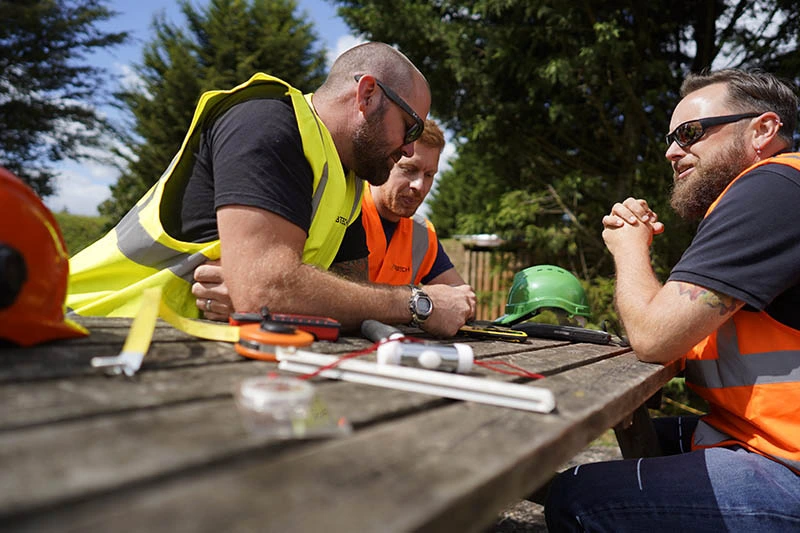
Arbtech are your best asset when it comes to getting planning permission for your project. We cover the whole of the UK and we are waiting to get started on your project...
Get Your Free Quote