Why Choose Arbtech?
Watch this video to see why Arbtech are the best asset you can possibly have when you need ecology or tree surveys to help you obtain planning permission.
Understanding when planning permission is required for residential development is fundamental to risk management, project certainty and design feasibility.



Last updated: September 2026

Gill is our Editor, with a background that combines journalism with land and estate management. Gill is a farmer’s daughter, an associate member of the RICS and has an interest in all things to do with agriculture and the countryside. Her free time is spent on the tennis court, walking and improving her cooking skills.
Knowing whether you need planning permission – and what’s required to get it – is the first step toward a successful build.
While many smaller extensions or garage conversions fall under permitted development, larger projects or those in protected areas often require a full planning application.
When you’ll likely need planning permission:
New Builds & Conversions: Building a new home or converting commercial space into flats.
Major Extensions: Adding large or two-storey extensions that exceed depth or height limits.
Protected Sites: Working on listed buildings or projects within Conservation Areas and Green Belts.
Change of Use: Significantly changing how a building or piece of land is used.
What you need to submit: A standard application typically requires a location plan, site elevations and specific technical data.
Depending on your site, you may also need to provide:
Ecology Surveys: To check for protected species like bats or great crested newts.
Tree Surveys (BS5837): To ensure development doesn’t harm valuable trees.
Specialist Reports: Such as flood risk assessments or heritage statements.
Why it matters: Starting work without the right consent can lead to an enforcement notice, which could force you to undo the work at your own expense.
We help you identify these requirements early, providing the expert surveys and advice you need to get your application over the line without the headache.
Understanding lawful development is essential before starting any residential project. Many homeowners assume planning permission is not required in many cases, but whether you need planning permission depends on the scale, location and nature of the proposed development.
In some circumstances, planning permission is required, and you may need to submit a planning application to your local planning authority. In other situations, permitted development (PD) rights apply, meaning formal consent is not necessary, although it is often advisable to secure a Lawful Development Certificate to confirm works can proceed without planning permission.
Alongside planning consent, compliance with building regulations and, where applicable, building regulations approval remains mandatory. Failing to secure the necessary planning permission can result in planning enforcement action or an enforcement notice, so understanding the distinction between works that require planning permission and those that do not is critical.
This guide explains when you may need to apply for planning permission, when certain types of full planning permission or a full planning application may be required, and how the planning application process operates within the framework of the National Planning Policy Framework and local policy.

For properties including terraced and detached houses, alterations and extensions often fall within permitted development rights under the Town and Country Planning (General Permitted Development) (England) Order 2015 (as amended). However, those rights are conditional and subject to site-specific factors, including limits on scale, siting and design.
If your scheme exceeds a certain height, extends beyond prescribed depth allowances, or creates unacceptable potential impacts on neighbours, you will likely need to submit a full planning application.
Planning officers assess proposals in line with adopted development plans and the National Planning Policy Framework, considering amenity, design, highways and environmental effects. The assessment applies not only to new buildings but also to significant engineering operations, such as major earthworks or excavations that change the character of the land.
In straightforward cases, homeowners may rely on permitted development and obtain a Lawful Development Certificate for certainty. In more complex cases, particularly within designated areas such as a national park, conservation areas or Areas of Outstanding Natural Beauty (AONB), a formal application is usually required.

Extensions to terraced houses are often more sensitive due to proximity to neighbours and the risk of creating a “terracing effect” if side gaps are closed. Local authorities assess how extensions relate to the street scene and whether they undermine the original reasons for the layout of the estate.
Rear extensions may fall under permitted development in many cases, but larger or two-storey additions typically require planning permission. Side extensions, especially those exceeding single-storey scale, commonly trigger the need to apply for planning permission.
For detached houses, greater flexibility often exists, but compliance with dimensional limits and design policies is still essential. Even if permission is not required in most cases, homeowners should confirm that permitted development rights apply, as councils can remove permitted development rights via Article 4 Directions.

Loft conversions can frequently proceed under permitted development, provided they remain within volume allowances and do not materially alter the principal elevation. However, dormers facing highways, raising the roof beyond a certain height, or significant structural building operations may mean you need to apply for consent.
In conservation areas or other designated areas, roof alterations are scrutinised carefully. If the property has special architectural or historic importance, or is formally designated as a listed building, listed building consent will also be required. Failure to obtain consent for works affecting a building of special interest can result in serious enforcement consequences.

Garage conversions often proceed without permission if external alterations are minimal and no planning conditions restrict the space. However, if off-street parking standards are affected, particularly in areas with limited on-street parking or other parking spaces, councils may require a planning application.
Projects involving changing the use of a building, such as converting a residential property into multiple occupation or altering commercial buildings to residential use, almost always require planning permission. In some instances, a prior approval route may apply under permitted development legislation, but this still forms part of the formal planning application process.
Outbuildings used for purposes incidental to the main dwelling can fall within permitted development if they meet scale limits and are not used as separate accommodation. Independent occupation would typically trigger a material change of use, meaning planning permission is required. Similar specific rules also apply to forestry development, where certain buildings or structures needed for managing woodland may be allowed under separate permitted development rights, provided they meet strict criteria.
The installation of air source heat pumps and electric vehicle charging points is often supported in principle by national policy. Often, these can be installed under permitted development. However, in other cases, location, noise, siting and visual impact may mean you may need formal consent, particularly in designated areas or where the building has historic interest.
Even where building work qualifies as permitted development and proceeds without planning permission, compliance with building regulations is separate and compulsory. Structural alterations, insulation upgrades, fire safety measures and drainage works all require building regulations approval. Planning and building control regimes operate independently; securing one does not remove the need for the other.

Where the necessary planning permission is required, applicants must prepare and submit supporting documentation through the Planning Portal. The planning application process involves validation, consultation, assessment and determination by the local planning authority.
Applications for full planning permission are assessed against development plan policies, material considerations and certain conditions. If development proceeds unlawfully, councils may initiate enforcement action, potentially issuing an enforcement notice requiring alterations or removal of unauthorised building works.
Early planning advice and careful adherence to planning rules can prevent delays and reduce risk. As planning fees and local policies can be updated within any calendar year, it is always advisable to find guidance relevant to your existing development type and location, ensuring you are following guidance issued by your local authority.
While permission is not required in many cases thanks to permitted development rights, it is never safe to assume this applies automatically. Whether extending terraced houses, upgrading detached houses, installing air source heat pumps, or converting commercial premises, understanding the applicable planning terms and securing the necessary planning permission where required is essential.
Taking a proactive approach – confirming whether permitted development rights apply, deciding to obtain prior approval, obtaining a lawful development certificate, or submitting a robust full planning application – will ensure your scheme proceeds lawfully, avoids enforcement risk and aligns with national and local planning policy.
If you are uncertain about whether your project can benefit from permitted development rights or will need full planning consent, the team at Arbtech can help.
A sound understanding of the development position from the outset will give your scheme its best chance of success. Arbtech can also help book the surveys required to support planning applications.
For further information, get in touch with a team member by calling, emailing or filling in a quote form on our contact page.
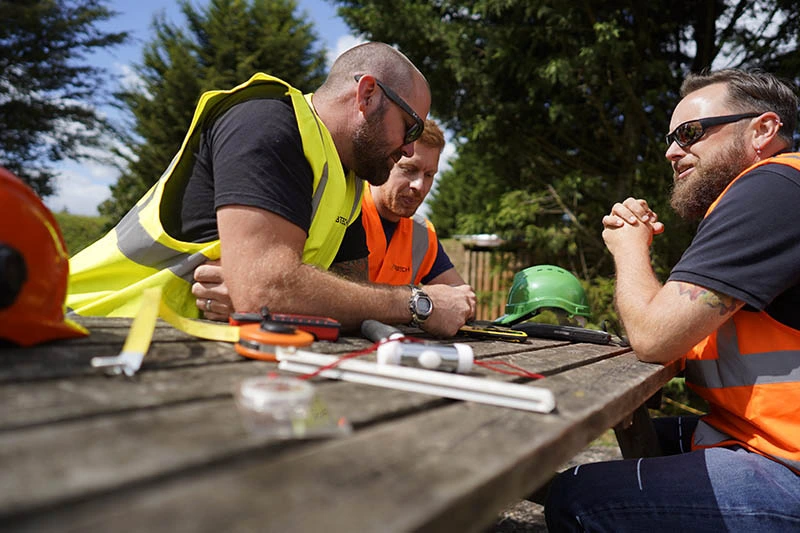
Arbtech are your best asset when it comes to getting planning permission for your project. We cover the whole of the UK and we are waiting to get started on your project...
Get Your Free Quote