Why Choose Arbtech?
Watch this video to see why Arbtech are the best asset you can possibly have when you need ecology or tree surveys to help you obtain planning permission.
Section 106 contributions and the Community Infrastructure Levy (CIL) often determine the financial viability of a development scheme.
Having the correct documentation and ecology surveys in place will enable these contributions to be assessed in a timely manner.



Last updated: October 2026

Gill is our Editor, with a background that combines journalism with land and estate management. Gill is a farmer’s daughter, an associate member of the RICS and has an interest in all things to do with agriculture and the countryside. Her free time is spent on the tennis court, walking and improving her cooking skills.

When navigating the complexities of the UK planning system, many developers focus primarily on design, density and site constraints. However, the financial viability of a project often hinges on “developer contributions,” the other measures that local planning authorities (LPAs) use to ensure that most new development contributes to fund infrastructure needed in the local area.
In accordance with the Planning Act 2008 and the National Planning Policy Framework (NPPF), these financial contributions are not optional taxes but necessary measures to make a development acceptable in planning terms.
Understanding the nuance between Section 106 Agreements and Community Infrastructure Levy (CIL) planning obligations is vital for assessing financial contributions, monitoring fees and protecting your profit margins.
Section 106 agreements, or “planning obligations,” are private legal deeds entered into by a developer and the local council, arranged on a case-by-case basis. They are specifically designed to mitigate the localised impacts of a development that cannot be dealt with through planning conditions.
S106 is typically reserved for on-site needs such as affordable housing requirements, or very specific site-related impacts. This often means a developer is potentially liable for:
Unlike a flat tax, Section 106 is inherently flexible. Because it is a contract, it is subject to the rules of viability. If a council’s S106 demands render the total cost of a project financially unfeasible, developers can submit a Financial Viability Assessment. This professional audit may prove that the financial contributions requested are too high for the project to proceed, often leading to a reduction in the required contribution and a more appropriate balance being found.
The Community Infrastructure Levy (CIL) was introduced to provide a more transparent and faster way of collecting developer contributions to raise funds. Unlike the bespoke nature of S106, the CIL charging schedule is a non-negotiable, mandatory charge based on the council’s Charging Schedule.
CIL rates are charged per square metre of the Gross Internal Area (GIA) of net additional floor space. The levy rates are set by charging authorities and often vary depending on the type of development (residential or commercial) or the specific geographic zone within the borough.
CIL acts as a pooling fund for off-site strategic infrastructure that benefits the wider community. These “pot of money” funds are used for:
While CIL regulations are rigid, there are vital exemptions for self-builders, charities and social housing providers.
However, there’s a critical pitfall: you must claim these reliefs and receive a formal decision before any work commences on-site. Starting work before the paperwork is finalised can result in the immediate loss of the discount and the imposition of heavy surcharges.
The following table outlines why these two mechanisms require different management strategies.
| Feature | Section 106 (S106) | Community Infrastructure Levy (CIL) |
| Legal Nature | A negotiated bilateral contract. | A fixed, statutory mandatory tariff. |
| Primary Goal | Mitigating specific, site-based impacts. | Supporting wider strategic infrastructure. |
| Flexibility | High; negotiable via Viability Assessments. | Low; set by a public Charging Schedule. |
| Timing | Must be signed before the Decision Notice. | Calculated at permission; paid at commencement. |
| Risk Factor | Can cause significant delays in the “legal tail”. | Can create “cash flow” shocks at start-on-site. |
To ensure these charges don’t wreck your project’s viability, you should follow three core strategic good practice principles:
Legally, councils are prohibited from charging you for the same piece of infrastructure through both S106 and CIL. If an LPA asks for a CIL payment for general transport and an S106 contribution for a specific road improvement on a chargeable development, your planning consultant should audit these requests against the council’s local infrastructure list to ensure compliance.
Because a planning permission isn’t legally issued until the S106 agreement is signed and sealed, this stage can add months to your timeline. Efficient developers instruct solicitors early and ensure all “proof of title” documents and appropriate evidence is ready to avoid stalling at the finish line.
S106 is now the primary vehicle for securing Biodiversity Net Gain. If your biodiversity net gain survey reveals you cannot meet the 10% BNG target on-site, you will be required to provide units off site or pay for “credits”. Knowing these costs during the due diligence phase allows you to adjust your land purchase price accordingly.
Whether you are a property owner dealing with a small-scale conversion, a new dwelling, residential development or major developments, you are potentially liable for financial contributions, making accurate cost planning essential.
At Arbtech, our expert team can provide information and the appropriate evidence required in ecology surveys and BNG surveys to satisfy your Section 106 s106 and Community Infrastructure Levy regulations and ensure effective delivery of your project through the planning process.
We have wide-ranging experience of working on planning applications for smaller developments and major projects relating to residential, commercial and mixed-use sites across the UK. We understand what local authorities expect when it comes to developer contributions and planning obligations.
Whether you have a proposed development or a project that is underway and you need to satisfy planning obligations, we can help.
Contact our experts who can provide further information about our services, or fill in the form at the top of this page for a quote.
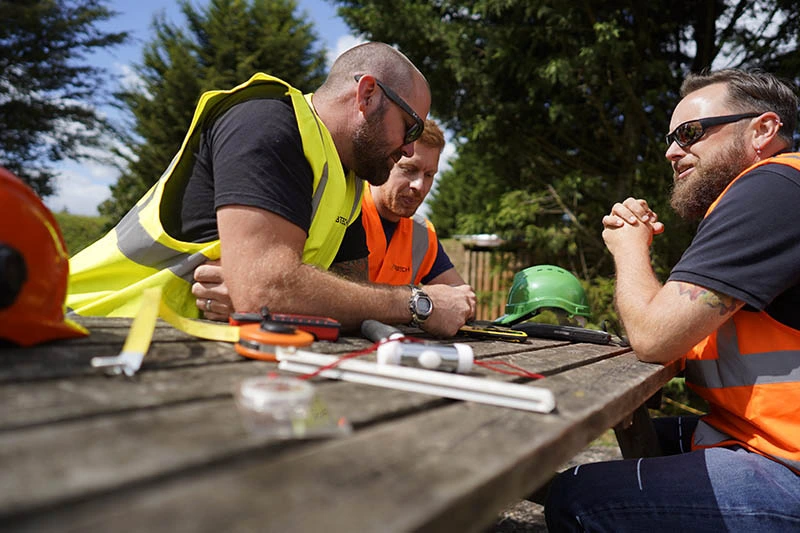
Arbtech are your best asset when it comes to getting planning permission for your project. We cover the whole of the UK and we are waiting to get started on your project...
Get Your Free Quote