Why Choose Arbtech?
Watch this video to see why Arbtech are the best asset you can possibly have when you need ecology or tree surveys to help you obtain planning permission.
A retrospective planning application is a legal means of ensuring that a development carried out without prior consent meets planning laws. While an application may be granted, a council could refuse it and issue an enforcement notice requiring the land or building to be returned to its original state.



Last updated: October 2026

Editor at Arbtech, Rob is a content specialist who manages our ecology and arboriculture services copy to ensure it is accurate, up to date, and insightful for current and future clients.

Retrospective planning permission is a formal process used to regularise property developments or changes of use carried out without prior consent. Under Section 73A of the Town and Country Planning Act 1990, owners can apply for approval after work is complete. The local planning authority assesses these “as-built” projects against current policies just as they would a standard proposal.
Securing this permission is vital for maintaining property value and ensuring legal compliance. Without it, you may face a formal enforcement notice: such a notice will require the total removal of the unauthorised structure. Additionally, a lack of consent can complicate property sales or mortgage applications.
While applying retrospectively is a legal way to remedy an oversight, success is not guaranteed. If the development breaches national and local standards and guidelines, it may be refused, leading to costly restoration requirements.
Professional planning advice and technical surveys are often used to demonstrate that the completed work meets all necessary regulatory standards.

Retrospective planning permission is an application submitted to a local planning authority for development that has already been completed as a means of securing planning permission.
Misunderstanding permitted development rights, actions carried out by a previous owner, a genuine mistake or particular circumstances may all be reasons for property owners to have committed a planning breach by progressing with construction work without a formal planning application being made. Deliberate concealment of information relating to a development’s history or building work will hamper an applicant’s case.
While the standard procedure involves obtaining approval before a project begins, retrospective planning consent often comes down to a way of regularising a change of use or a physical structure after the fact. It serves as a legal bridge to ensure that an existing development meets local and national planning policies.
Many people wonder how does retrospective planning permission work in practice. Essentially, the local planning authority treats the application in the same way they would a standard application. Planning control officers will assess the development against the local plan and other material considerations.
If the development is deemed acceptable, the authority will grant planning permission and the development becomes lawful. However, if the application is refused, the local authority may take formal enforcement action, serving enforcement notices requiring the owner to return the land or building to its original state within the relevant time limit.

To apply for retrospective planning permission, a formal application must be submitted to your local council. The process requires detailed “as-built” architectural drawings and supporting documents that accurately reflect the completed work. The council then evaluates the development against local planning policies and conducts a public consultation period.
If the project aligns with building standards and community guidelines in the surrounding area, the authority grants the necessary planning permission to the works. However, if the application is refused, you may have to appeal the council’s decision or face enforcement action requiring the land or property to be returned to its original state.

Learning how to apply for retrospective planning permission follows a similar path to a traditional application. You must submit the necessary forms, architectural drawings and supporting documents via the Planning Portal.
If you need to submit a retrospective planning application, it is vital to provide accurate details of the work already completed. Professional surveys and expert reports can significantly strengthen your case by demonstrating that the development adheres to safety and environmental standards.
The retrospective planning permission cost is generally the same as the fee for a standard application. However, the overall cost of retrospective planning permission can increase if the council decides to charge a penalty or if complex surveys are required to justify the existing structure.
It is important to factor in professional fees for planning consultants and architects, as their expertise is often essential to avoid a costly refusal or enforcement action.

Arbtech provides the essential technical data and expert witness evidence required to turn an unauthorised development into a lawful one. Specialising in arboriculture and ecology, our team conducts the high-quality surveys, such as tree reports and protected species assessments, that local planning authorities demand during the retrospective process.
By identifying environmental constraints and proposing robust mitigation strategies, our experts can advise on the steps required to ensure your “as-built” plans stand up to official scrutiny. They act as a vital link between you and the council, helping to navigate enforcement issues, manage appeals and prove that your development is compliant with national and local planning policies.
Many people find that navigating the complexities of planning law can feel overwhelming, especially when a development is already in place.
If you are concerned about an unauthorised project, the experts at Arbtech are here to help with the decision-making process when you need to act quickly.
Our team can provide the technical surveys and professional advice needed to support your application and meet planning conditions.
Reach out to us to ensure your project stands the best chance of success.
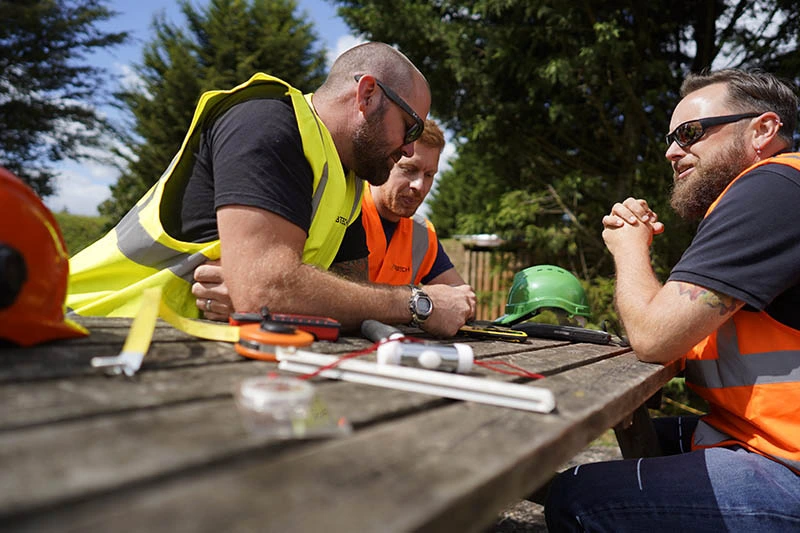
Arbtech are your best asset when it comes to getting planning permission for your project. We cover the whole of the UK and we are waiting to get started on your project...
Get Your Free Quote