Why Choose Arbtech?
Watch this video to see why Arbtech are the best asset you can possibly have when you need ecology or tree surveys to help you obtain planning permission.
Planning conditions must be discharged before works may start on a development site.
We can provide the surveys you need to satisfy local authority requirements.



Last updated: September 2026

Editor at Arbtech, Rob is a content specialist who manages our ecology and arboriculture services copy to ensure it is accurate, up to date, and insightful for current and future clients.
Discharging planning conditions is a necessary step after planning permission is granted. It means formally satisfying the requirements set out by the local planning authority (LPA) before you can proceed with development.
We provide expert reports and assessments to help you discharge conditions quickly, accurately and in full compliance with your LPA’s requirements.
Planning conditions are legally binding. Failing to discharge them before starting development can invalidate your planning permission or lead to enforcement action. We ensure you meet every requirement without delay.
Our specialist team delivers the reports, surveys and documentation required to satisfy your planning conditions. This includes:
Don’t let unresolved conditions hold up your development. We offer fast turnarounds and fixed-price quotes. Contact us today to secure the professional reports you need to keep your project on track.
When a local planning authority grants planning permission, it is often granted subject to a set of conditions. These conditions, or details reserved, must be addressed before development begins, or at a specified stage during or after construction.
To discharge a condition, you must submit the details required to the local planning authority (LPA) demonstrating that you have met its requirements. This could mean providing a specialist report, an ecological survey, a drainage strategy, a method statement, or another document that satisfies the condition as written.
New conditions may also be imposed relating to a planning application in other respects, if a local authority is concerned about any adverse effects resulting from a scheme.
Until those conditions are formally discharged and you receive written confirmation of a decision notice, you cannot lawfully proceed with the relevant aspect of your development. The local authority has a time limit to review your submission and will either approve it, request further information, or refuse planning permission if the submission is insufficient.
The application must be submitted in accordance with the Town and Country Planning Act 1990, which sets out the legislative framework for discharging pre-commencement conditions.

If a local authority grants permission to a planning application and decides to impose conditions, they must be discharged to formally satisfy the requirements attached to a whole permission. Each condition sets out something the developer must do, prove or provide before a particular stage of development can go ahead.
Conditions typically fall into two categories. Pre-commencement conditions must be discharged before any work starts on site. Pre-occupation conditions must be satisfied before the development is used or occupied.
Examples of common planning conditions that require discharging include:
Each condition is specific to your site and the nature of your development. Understanding exactly what each one requires – and what evidence the local planning authority will accept – is key to a smooth and timely discharge to enable development.
To discharge a planning condition, you must submit a formal application to the local authority using the correct process, usually through the Planning Portal. Your submission must include all relevant evidence and documentation required to satisfy each condition.
The quality and completeness of your submission matters. If the local authority decides that your evidence is insufficient, they will reject the application and you will need to resubmit. This causes delays and, in some cases, additional cost.
Working with experienced consultants ensures that your submission is thorough, correctly presented and fit for purpose. At Arbtech, we are familiar with the deemed discharge procedure and standards expected by local authorities across the UK. We can prepare the relevant reports and assessments to meet those expectations in a timely manner.
The process for discharging a condition generally follows these steps:

There is a standard fee payable to the local planning authority when submitting an application to discharge planning conditions. You can confirm the current fee with your LPA or via the Planning Portal before submitting.
It is important to note that this fee covers the LPA’s administrative cost of processing your planning application. It does not cover the cost of producing the reports, surveys or assessments themselves: those are commissioned separately from qualified consultants such as Arbtech.
The cost of discharging a condition will therefore depend on both the LPA application fee and the professional fees for any surveys or documents required to satisfy it.
Some conditions can be discharged with a simple written statement; others require detailed ecological surveys, technical assessments or specialist designs, which carry their own costs.
We are happy to provide a transparent, fixed-price quote for the work needed on your specific conditions, so you know exactly what to expect before you commit.
The local planning authority has a target time period of 8 weeks to determine an application to discharge planning conditions, after which a deemed refusal may be appealed. In practice, timescales can vary depending on the complexity of the submission, the LPA’s current workload and whether any additional information is requested during the process. For major applications, a decision can take up to 12 weeks.
Pre-commencement conditions are often the most time-sensitive, since development cannot start until they are formally discharged. It is therefore advisable to begin commissioning the necessary reports as early as possible, ideally as soon as planning permission is granted, to avoid unnecessary delays to your programme.
Certain types of surveys have seasonal constraints that can also affect timescales. For example, certain bat surveys can only be carried out during specific months of the year and the same applies to other types of surveys, including great crested newts, nesting birds and some other protected species. If your conditions involve ecology, early engagement is particularly important to avoid being locked out of the survey season.
Our team will advise you on realistic timescales based on your specific conditions and the time of year, helping you to plan your programme accurately from the outset to secure a successful planning application.
The range of conditions that a planning inspector can attach to a planning permission is broad, and the evidence required to discharge them is equally varied. Having the right specialist on your side makes a significant difference to how smoothly and quickly an application moves through the planning process.
Arbtech provides a comprehensive range of surveys and reports that are commonly required to discharge all the conditions attached to a planning consent, including:
Whether you have a single condition to discharge or a complex set of requirements across ecology, including sites of special scientific interest, trees and drainage, we can coordinate the necessary work and ensure that every submission is complete, accurate and ready for approval and a deemed discharge notice.
If you need to secure approval of details attached to a planning permission and are unsure where to start, our team is ready to help. We will review all the conditions, advise you on what is needed and provide a clear, fixed-price quote for the work involved.
Arbtech operates across the whole of the UK, with experienced ecologists, arboriculturalists and drainage consultants available to take on your project. We are committed to fast turnarounds, transparent pricing and results that keep your development moving.
To book our services or for further information, get in touch by filling in the online contact form. We will respond with a free quote for the work you need,
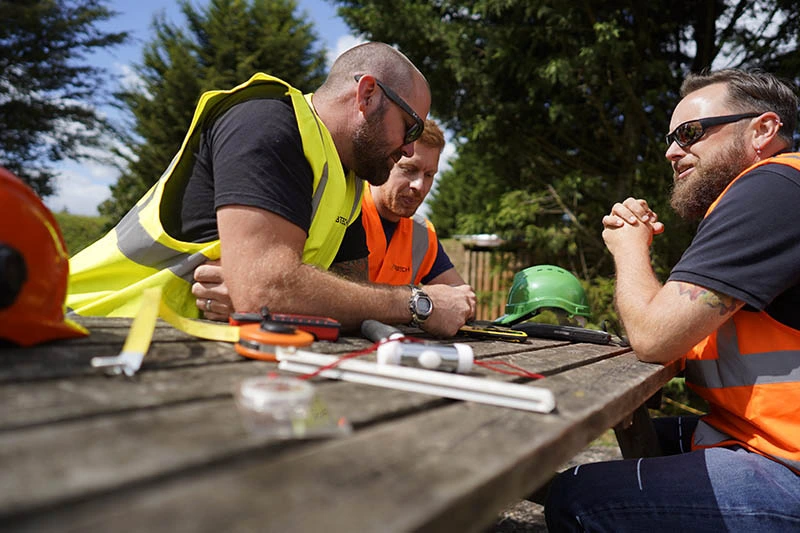
Arbtech are your best asset when it comes to getting planning permission for your project. We cover the whole of the UK and we are waiting to get started on your project...
Get Your Free Quote