Why Choose Arbtech?
Watch this video to see why Arbtech are the best asset you can possibly have when you need ecology or tree surveys to help you obtain planning permission.
Any site can have roosting bats hidden somewhere in natural or man-made structures. With bat surveys from Arbtech, our licensed ecologists can evaluate your site and give you advice on what to do next.
For developers in Stoke-on-Trent and other parts of Staffordshire, our team is available for conducting bat surveys and helping you with your planning application.



Last updated: October 2026

Editor at Arbtech, Rob is a content specialist who manages our ecology and arboriculture services copy to ensure it is accurate, up to date, and insightful for current and future clients.
Any scheme that involves structural modifications, demolition or land clearance across Stoke-on-Trent must account for local wildlife before work begins.
The Potteries features a unique architectural past, where traditional industrial brickwork, disused kilns and Victorian terraced houses exist alongside vast transport corridors.
With modern barn conversions on the rural edges of the city, the ageing structures offer dark recesses, unlined roof voids and lifted tiles that readily accommodate roosting bats.
To safeguard declining bat populations, local planning authorities must ensure that construction work does not breach national environmental legislation.
Under the Wildlife and Countryside Act 1981 and the Conservation of Habitats and Species Regulations 2017, all native bat species and their resting places are designated as European protected species.
Damaging shelters, blocking entrances or causing deliberate disturbance carries severe legal penalties. Due to the statutory protections, Stoke-on-Trent City Council requires developers to establish that proposed works will not harm local wildlife.
Instructing our team to undertake comprehensive bat surveys ensures that you identify any ecological obstacles early and avoid unexpected enforcement delays.
Urban environments can sustain diverse colonies when interconnected green infrastructure is present.
Across the city, linear foraging habitats follow the Trent and Mersey Canal and Caldon canal networks, connecting green lungs like Central Forest Park and Westport Lake directly to surrounding wooded areas.
The waterways provide abundant insect prey for species such as the common pipistrelle, noctule and Daubenton’s bat, while the brown long-eared bat frequently selects quiet roof spaces in residential districts.
Regional monitoring and conservation efforts are supported by independent organisations like the Staffordshire Bat Group, which records colony distributions and advocates for the protection of native bat habitats.
Whenever development projects interact with sensitive sites, local authorities expect accurate species identification and thorough ecological surveys before granting approval.
Gathering detailed baseline data ensures that valuable commuting paths remain unbroken, allowing commercial and residential developments to sit comfortably within the natural landscape.
Determining whether animals occupy a property follows a structured assessment framework. The first step involves a visual inspection known as a preliminary roost assessment (PRA).
During this daytime survey, experienced ecologists evaluate every accessible area of the building or tree, checking for live bats alongside indirect evidence such as droppings, feeding remains and grease rub marks around entry points.
If this appraisal concludes that the structure possesses negligible roosting potential, a report is issued right away to accompany your planning submission.
Whenever an ecologist detects potential crevices that cannot be fully examined from the inside, further surveys become mandatory to confirm presence or absence. It involves bat dusk emergence surveys, during which teams of surveyors monitor potential exit holes around the perimeter.
As bats become active only when the weather warms, the second phase can only run in the summer months between May and late August or September. During visits, our team deploys specialised bat detectors to record ultrasonic frequencies and log flight paths.
On broader development boundaries, a continuous bat activity survey can be staged to record bat movement across open fields, while underground cellars or masonry vaults may require dedicated winter inspections to establish whether hibernating colonies are sheltered within the site.
Discovering active bat roosts on a site will not bring your construction plans to a standstill.
Our team delivers a full range of pragmatic design adjustments to maintain legal compliance, from timing intrusive roof works around the breeding calendar to erecting bespoke bat boxes on retained trees.
If your planning project needs to modify an existing roost, our team will guide you through obtaining an appropriate development licence from Natural England, incorporating dedicated compensation roosts within your new buildings to satisfy the planning department.
Arbtech operates in strict accordance with the standards set out by the Bat Conservation Trust (BCT), ensuring our assessments and reports meet the highest industry criteria.
Beyond bats, we provide complete ecological support, including protected species surveys for badgers, reptiles and great crested newts.
To get your project underway, contact our team today by submitting your site details and architectural drawings through our website form, or give us a call directly.
We will evaluate your proposed development site and supply a free quote to guide you through planning consent without unnecessary fuss.
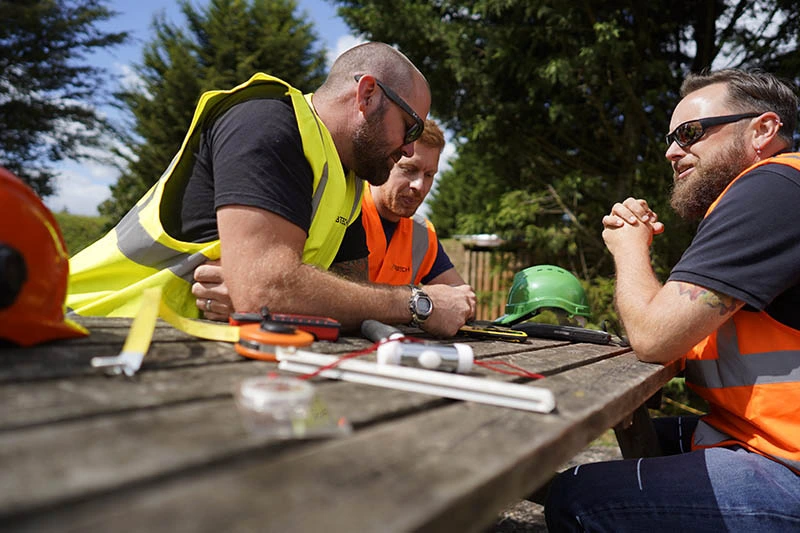
Arbtech are your best asset when it comes to getting planning permission for your project. We cover the whole of the UK and we are waiting to get started on your project...
Get Your Free Quote