Why Choose Arbtech?
Watch this video to see why Arbtech are the best asset you can possibly have when you need ecology or tree surveys to help you obtain planning permission.
If you’re staging a development in Cardiff or wider South Wales, you could need a bat survey to avoid harming any bat species present on the site.
Our team can help with PRA, BERS, European protected species licence applications and any other matters standing between you and planning permission.



Whenever a proposed scheme calls for roof alterations, timber renovations or complete building demolition within the county borough, applicants must address potential wildlife conflicts before a local planning authority will validate the file.
Cardiff presents a varied architectural landscape, where Pennant stone houses in Llandaff, Victorian brick terraces in Canton and converted maritime warehouses around the docks stand alongside modern urban expansions.
Older properties and traditional agricultural outbuildings across suburban fringes often feature weathered masonry, unsealed fascia boards and accessible attics that readily attract roosting bats.
As native populations have suffered long-term declines, every indigenous bat species and their shelters are legally protected under comprehensive domestic and international legislation.
The Wildlife and Countryside Act 1981 and the Conservation of Habitats & Species Regulations 2017 make it an offence to intentionally capture, harm, or disturb bats or to damage, destroy or obstruct access to any bat roost, regardless of whether animals occupy the space at that exact moment.
For this reason, a formal planning application will be rejected or delayed by Cardiff Council if construction activities take place in close proximity to suitable features without an appraisal.
By arranging a bat survey, Cardiff developers can move forward with their plans based on guarantees that all statutory duties are satisfied early, helping to avoid unexpected enforcement notices or costly downtime on site.
Cities like Cardiff benefit from interconnected ecological corridors that link coastal marine areas to inland valleys and mature deciduous hillsides.
Riparian flight paths along the River Taff, the River Ely and the historical course of the Glamorganshire Canal provide dependable insect-rich foraging routes.
It is standard to find common pipistrelles and noctules feeding under street lamps in residential districts, while Daubenton’s bats hunt over open water, and brown long-eared bats appear around undisturbed timber lofts in quieter outer suburbs like St Fagans and Lisvane.
Volunteer organisations like the Cardiff Bat Group contribute valuable field records, monitoring roost trends and identifying sensitive locations across the city.
At any point that construction activities border these wildlife networks, planning departments often require dedicated ecology surveys or broader environmental impact assessments (EIAs) before works can be determined.
Securing dependable baseline data ensures that critical feeding paths and flight corridors remain intact, allowing new buildings to sit comfortably within the Welsh capital’s green infrastructure policies.
The ecological review journey through the planning process begins with an initial daytime check known as a preliminary roost assessment (PRA).
During this baseline evaluation, a qualified surveyor carries out a thorough visual sweep of all accessible internal areas and external elevations, checking for live animals, droppings, urine splashes and prey remains beneath beams and eaves.
If the inspection confirms negligible potential for roosting, the assessor compiles an immediate sign-off report to satisfy local council conditions. If, alternatively, the survey finds structural crevices, lifted slates or timber cavities that cannot be completely ruled out from the ground, secondary visits become essential to establish presence or probable absence.
The assessments comprise dusk emergence and dawn re-entry monitoring, during which several ecologists watch suspected entry points around the building’s exterior. Since bats enter torpor as temperatures drop, the nocturnal vigils and broader bat activity surveys can only take place during the warmer active flight season between May and September.
By adhering to the good practice guidelines set out by the Bat Conservation Trust (BCT), our team records ultrasonic echolocation signals to determine whether the structure contains simple daytime resting points or vital and protected maternity roosts.
Finding an active roost within your property boundary doesn’t have to bring your planning project to a halt.
Our specialists provide practical expert advice to implement tailored mitigation solutions, including retaining existing entrance slots, timing noisy structural repairs outside of sensitive periods or fixing woodstone bat boxes to adjacent walls or mature trees.
If your permitted designs must alter, block or remove an established roosting feature, you will need to obtain a European protected species licence before physical construction starts.
Our team prepares every aspect of the licence application on your behalf for submission to Natural Resources Wales, formulating the technical method statement and architectural work plans needed to satisfy statutory licensing criteria.
To book your survey or receive an immediate free quote, simply call our team directly or fill in your project details through our website form, and we will get your planning journey moving forward.

Editor at Arbtech, Rob is a content specialist who manages our ecology and arboriculture services copy to ensure it is accurate, up to date, and insightful for current and future clients.
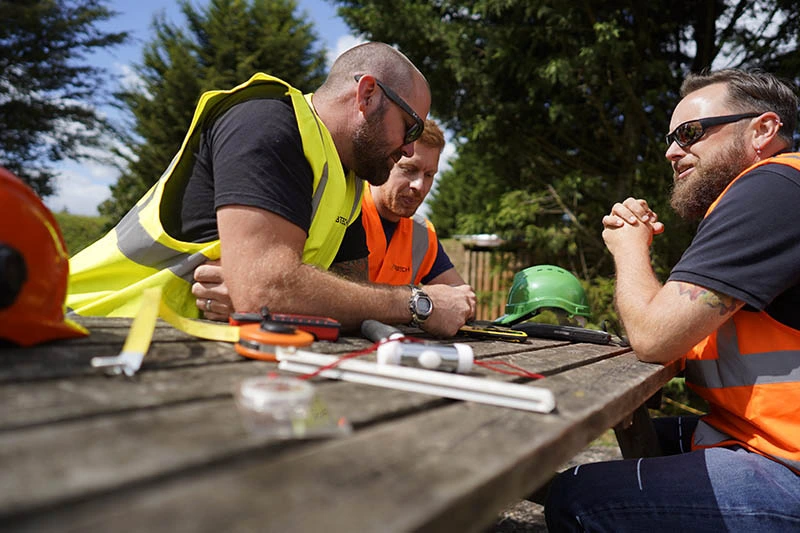
Arbtech are your best asset when it comes to getting planning permission for your project. We cover the whole of the UK and we are waiting to get started on your project...
Get Your Free Quote