Why Choose Arbtech?
Watch this video to see why Arbtech are the best asset you can possibly have when you need ecology or tree surveys to help you obtain planning permission.
Bat surveys are ideal for seeing if bats or a bat roost are anywhere on your development site.
Our team offers bat scoping surveys and bat activity surveys to support development. If you need a bat survey in Nottingham or the nearby areas, get in touch for a free quote.



If you are planning development projects in the East Midlands, ensuring full compliance with nature conservation laws is essential to avoid delays.
Across Nottinghamshire, historic properties, brick barns and urban green corridors often support roosting bats. The Conservation of Habitats and Species Regulations 2017 and wider European legislation makes all UK bat species and their resting places receive strict legal protection.
All native bats are classified as European protected species, and roosts are protected whether or not bats are present at the time. Any work that could disturb bats or obstruct access to a bat roost constitutes a criminal offence.
As experienced ecological consultants, we can deliver a reliable bat survey Nottingham developers can trust to clear planning conditions efficiently and without hidden fees.
Before submitting a planning application, your local planning authority will evaluate whether your site contains potential roost features or suitable foraging habitat.
As a first stage step, our professional ecologists conduct an internal and external inspection of all structures and trees on your site prior to any ground clearance or tree felling.
The initial preliminary roost assessment checks for physical evidence of bats, such as feeding remains or bat droppings, alongside signs of nesting birds.
If our licenced ecologists find no bat roosting potential, we produce comprehensive bat reports confirming a likely absence.
The documents satisfy council requirements, allowing your planning project to move forward without requiring a further survey.
Where an initial check identifies features that could support wildlife, a phase of further bat surveys may be required.
Following guidelines set by the Bat Conservation Trust (BCT), we carry out a dawn entry and dusk emergence survey during the active summer months through to October inclusive.
Our team deploys handheld bat detectors and high-resolution thermal imaging cameras to capture subtle movements in low light.
Using the static bat detectors alongside the use of advanced infra-red tools and thermal imagery, we record echolocation calls to identify bat species and analyse complex bat calls. For larger rural sites, we conduct bat activity surveys to track wider bat activity in the area.
During the winter hibernation period, specialised inspections are also available to check deep cavities for hibernating bats.
Common species in Nottingham include the common pipistrelle bat, soprano pipistrelle, brown long-eared bat, daubenton’s bat and noctule bat.
Sometimes, initial site features turn out to be suitable for other wildlife that are not bats upon closer inspection. When protected species recorded on-site require formal bat mitigation, we design practical solutions, such as installing specialised bat boxes or an alternative roost integrated into new buildings.
If the proposed works will directly alter an active roost, we prepare a formal licence application to Natural England for essential bat licences and suitable mitigation measures tailored to the development.
Our complete bat survey services include full protected species surveys, clear site plans and same-day verbal feedback backed by extensive experience.
To discuss your site in close proximity to Nottingham’s nature networks and get a free quote for a bat survey, get in touch with our team today.

Editor at Arbtech, Rob is a content specialist who manages our ecology and arboriculture services copy to ensure it is accurate, up to date, and insightful for current and future clients.
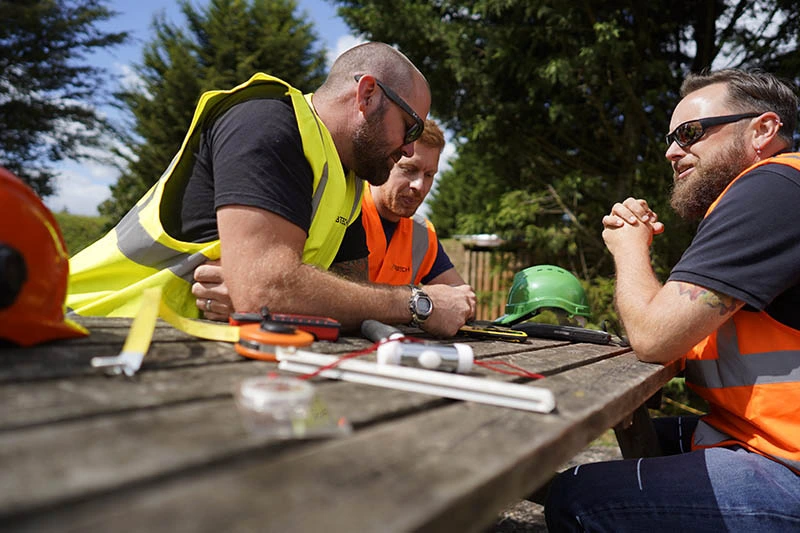
Arbtech are your best asset when it comes to getting planning permission for your project. We cover the whole of the UK and we are waiting to get started on your project...
Get Your Free Quote