Why Choose Arbtech?
Watch this video to see why Arbtech are the best asset you can possibly have when you need ecology or tree surveys to help you obtain planning permission.
Our geo-environmental consultants cover the UK and can swiftly provide contaminated land risk assessments for submission to planning authorities in support of development applications.



Leicester’s former industries such as textiles, dyeing, and manufacturing, have left areas of contaminated land. Common contaminants include heavy metals, hydrocarbons, and chemical dyes.

Controlling threats from contaminated land to ensure public health and environmental safety while promoting sustainable development is a priority. This north west Leicestershire council’s approach is guided by both national legislation and local strategies tailored to Leicester’s industrial history.
The council’s contaminated land strategy comprises:
Leicester City Council is committed to the redevelopment of (formerly developed) brownfield sites, aiming to reduce pressure on greenfield areas and promote sustainable urban growth. The council maintains a Brownfield Land Register, identifying sites suitable for residential development. Notable projects include the regeneration of former industrial areas to create thriving communities.

If you’re considering developing a potentially contaminated site in the city, the first step is to arrange a pre-application consultation with the council’s planning department to discuss the reports that will be needed.
A contaminated land risk assessment is likely to be required. This assessment is carried out by geo-environmental consultants who work in accordance with the Environment Agency’s Land Contamination Risk Management guidance. This phased approach involves:
Developing a polluted site creates the possibility of enabling new routes for any existing pollution to spread. The result could be harm to human health, water sources and the wider environment. For such risk to exist, all these three elements must be present: the lack of just one makes any threat minimal.
In the UK, the management of contaminated land is primarily governed by Part iia of the Environmental Protection Act 1990. This legislation mandates local authorities to identify and remediate land where contamination poses significant risks to health or the environment. Part iia defines contaminated land as a site where substances in or under the ground present significant risks to health, property, or the environment. Sites must be remediated according to the `Polluter Pays’ approach, making remediation the responsibility of the polluter if they can be identified, and contaminated land must be cleaned up as part of future development.
A regulatory role falls on local authorities to identify, monitor and improve land where contamination poses significant risks. Further guidance is contained in the National Planning Policy Framework: paragraph 197 states the developer, landowner, or both, are responsible for safely remediating contaminated land.
Redeveloping contaminated land is a key part of Leicester City Council’s plans for regenerating the urban area and protecting the environment. Collaboration with developers and consultants is central to this approach; often following investigations and risk assessments, a geo-environmental consultant can recommend measures that will enable a development scheme to proceed safely.
For further information about how Arbtech’s geo-environmental consultants can help you, fill in our quick quote form at the top of this page.

Editor at Arbtech, Rob is a content specialist who manages our ecology and arboriculture services copy to ensure it is accurate, up to date, and insightful for current and future clients.
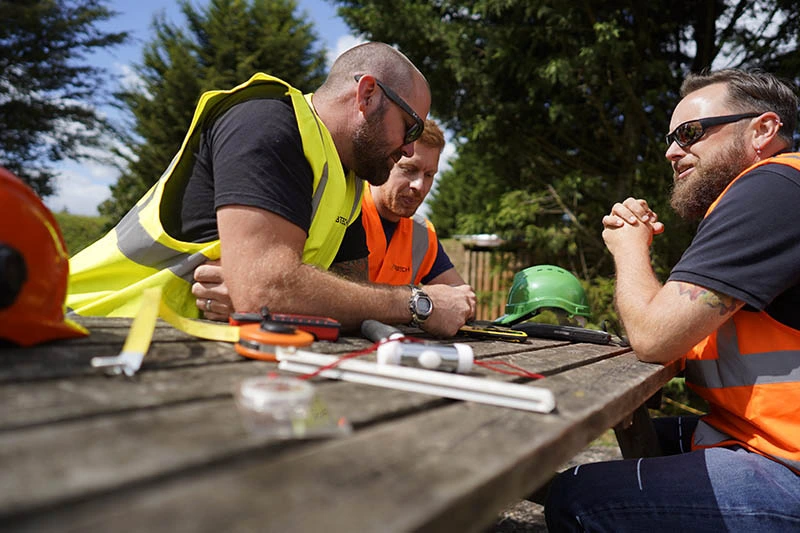
Arbtech are your best asset when it comes to getting planning permission for your project. We cover the whole of the UK and we are waiting to get started on your project...
Get Your Free Quote