Last updated: March 2026

Author: Rob Lambert
Editor at Arbtech, Rob is a content specialist who manages our ecology and arboriculture services copy to ensure it is accurate, up to date, and insightful for current and future clients.
Confirm if invasive non-native species of plant such as Japanese knotweed, curly waterweed or Himalayan balsam are on your development site by instructing our ecology team to conduct a problematic species audit.



Last updated: March 2026
Editor at Arbtech, Rob is a content specialist who manages our ecology and arboriculture services copy to ensure it is accurate, up to date, and insightful for current and future clients.
Problematic Species Audit | Invasive Species Survey – Arbtech
If you are worried about invasive plants like Japanese knotweed, giant hogweed or Himalayan balsam stalling your project, a problematic species audit is the solution you need.
We provide a thorough site inspection to identify both native and non-native invasive species that could damage infrastructure, harm the environment, or impact human health.
By choosing us, you get a clear breakdown of the density and distribution of these species, along with an expert risk assessment and recommended control measures.
Our reports ensure you remain compliant with the Wildlife and Countryside Act 1981, helping you avoid costly delays and securing the planning consent you need.
Fast, fixed-price quotes starting from £599.
Full UK coverage with local experts ready to attend your site.
Expert advice to help you manage ecological constraints effectively.
Money-back guarantee on your planning permission (T&Cs apply).
Don’t let undetected invasive species create unexpected costs. Get your free quote today and move your development forward with confidence.
On new development sites or ones that haven’t been intervened with for a long period of time, it can be particularly difficult to know what ecological constraints may be present within the local area. Even with past reports, an understanding of the site’s local biodiversity and evidence that points towards the current ecological value, a developer can’t always completely grasp all potential issues. And without that, time or money could be wasted later in the process.
It is possible to see an overview of the present plants and animals across a plot of land and the likely effect of development plans by arranging a preliminary ecological appraisal (PEA), ecological impact assessment (EcIA) or ecological walkover survey. If, however, the concern is more about the potential damage that plant pest species could have on the natural environment, a problematic species audit would be more suitable.
Also sometimes known as an invasive species audit, a problematic species audit is an extensive inspection of a site that aims to identify and evaluate any and all plant species that are capable of causing harm. Including both native and non-native species, the audit is an opportunity to reduce or eliminate the impact that challenging elements could have on the ecosystem, agriculture and even human health.
Although many different types of ecological features can appear on a development site, invasive non-native species are major threats. For instance, depending on the category of invasive species, the potential results could include disrupting the balance of ecosystems, destroying infrastructure, overwhelming native species, and spreading diseases and pathogens.
Invasive non-native species include:

Various steps and considerations are involved in a problematic species audit, such as:
Following an audit, additional steps that may be needed could include instructing our team to create an invasive species management plan or undertaking further surveys such as other ecology surveys or an invasive species survey for each present species.

In legislation such as the Wildlife and Countryside Act 1981 and the Conservation of Habitats and Species Regulations 2017, it is made clear how dangerous invasive non-native species can be to infrastructure, human health, native species and even ecological and social concerns. As such, if any are involved in a planning project or on a development site, a problematic species audit could be the difference between the local planning authorities granting or refusing planning consent.
Our team works on the basis of the latest standards and best practice guidelines in Great Britain, such as the most recent EAC report released by the Environmental Audit Committee (EAC) and input from DEFRA, CIEEM and all other relevant organisations and local authorities. An audit can be conducted at any time in the year, but for the best results, we would always recommend aiming for somewhere between April and September, as that’s when plant species are typically at their most visible.
Invasive species may be occupying your development site, and if they are and go undetected, you could eventually see issues in your planning project much further down the line that prompt unanticipated delays and costs. Our ecologists are advanced when it comes to invasive non-native species and can help by providing a problematic species audit. Then, if ongoing measures are needed, we can use a similar approach to create problematic species management plans.
Between an audit, plan or other additional surveys, our team can remain within the assessment process from start to finish. For a free quote from our team, please visit our contact page, call us or email us, and one of our administrators will be more than happy to help. We can then schedule a date for an ecologist to attend your site, monitor for problematic species in the vicinity, and support your planning application to the corresponding local authority.
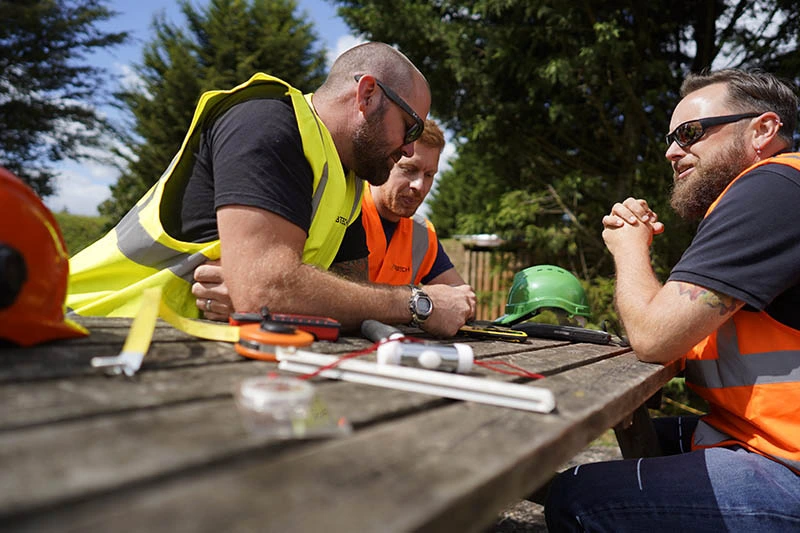
Arbtech are your best asset when it comes to getting planning permission for your project. We cover the whole of the UK and we are waiting to get started on your project...
Get Your Free Quote