Why Choose Arbtech?
Watch this video to see why Arbtech are the best asset you can possibly have when you need ecology or tree surveys to help you obtain planning permission.
With mandatory biodiversity net gain (BNG), on-site and off-site solutions are available. Our helpful page explains how each of them work and the advantages and disadvantages to the two options.
For support with BNG, get in touch with our team today.



To secure planning permission in England, your development must deliver a mandatory 10% Biodiversity Net Gain (BNG). By law, you must follow the biodiversity gain hierarchy, which means trying to hit this 10% target on your site first before looking elsewhere.
On-site BNG: You create or enhance habitats within your development’s red line boundary. This avoids the cost of buying external units but leaves you with a strict, legally binding 30-year habitat management liability.
Off-site BNG: If your site lacks the space to hit the 10% target, you can buy biodiversity units from an external habitat bank. This protects your developable footprint and shifts the 30-year legal and maintenance liability to a third party.

Under the Environment Act 2021, the introduction of mandatory biodiversity net gain (BNG) has changed how we approach the planning process for new developments in England.
In most cases, the mandatory requirements brought about by the biodiversity net gain regulations are a legal requirement for securing planning permission.
Ever since 12 February 2024, most developments have been required to prove that they will leave the natural environment in a better state than it was before. More specifically, the biodiversity gain objective means that developers and planners must deliver at least 10% BNG, ensuring that existing biodiversity and wildlife habitats are protected and enhanced.
To achieve BNG, a competent person needs to calculate the pre-development biodiversity value using the statutory biodiversity metric tool. Comparing the pre-development value to the predicted post-development value will then confirm the expected impact of the plans.
Many planning projects are affected, but it’s important to note that certain BNG exemptions exist, such as householder applications, small-scale self-build projects, custom housebuilding, and proposals under the de minimis exemption.
While BNG applies to many standard applications, nationally significant infrastructure projects (NSIPs) are subject to distinct timelines and BNG requirements. In any non-exempt developments, a biodiversity net gain plan needs to be submitted to meet the biodiversity gain condition.
At the point of preparing a biodiversity gain plan, it becomes clear just how much of a difference there is between delivering the targets inside or outside of the boundary of a development site.
The entire framework surrounding biodiversity net gain operates on a strict mitigation hierarchy, with the priority being to avoid and minimise habitat loss before having to consider compensation.
In terms of BNG implementation, a clear biodiversity gain hierarchy is used, preferring on-site enhancement over external options. It would only be acceptable to move from making changes on the site to purchasing external habitat units if it is logically impossible to hit the target.
More often than not, the planning project’s metric calculations will reveal a shortfall after accounting for retained habitats. If you cannot hit the 10% mark internally, the framework allows you to follow one of three methods to source the shortfall. The alternative option is to source external land after proving to the local authorities that you’ve tried every possibility for meeting the development’s BNG obligations on the site.
Although the mandatory biodiversity net gain requirements can be met in a number of different ways, the chosen method boils down to being between the two main options of on-site or off-site.
Developers must utilise areas units, hedgerow units and watercourse units, but it’s another question whether it will be achievable on the immediate site or by investing in land elsewhere. For developers and planners managing multiple developments, balancing the different types of BNG units across different locations involves careful organisation.
Both options are valid ways to deliver biodiversity net gain, but each of them has different financial, design and long-term land management obligations.
The Planning and Infrastructure Bill 2025 and all subsequent updates make it clear that how you choose to offset your development impacts will dictate the duration of your legal exposure. Among other things, this will determine how long your project remains under the scrutiny of the local authorities in the potentially distant future.
Known as the preferred outcome, on-site delivery means that project gains must happen entirely within the red line boundary of the development site.
Architects and ecologists will then work together to design new habitat, protect existing trees or convert a low-value existing habitat (such as a modified grassland) into something richer. The combination of habitat creation, enhancement and preservation keeps the planning project compliant.
With an on-site habitat solution, the upfront capital costs are low, as you don’t need to buy market units. On the other hand, on-site habitat that undergoes significant enhancement must be maintained for at least 30 years. The long-term commitment is then legally binding via a planning condition or a Section 106 agreement with the local planning authorities.
Every on-site existing habitat enhancement or new habitat creation scheme needs a habitat management and monitoring plan (HMMP). A HMMP will set out how the enhanced and created habitats will be managed, what subsequent monitoring reports are expected, and how compliance will be upheld over the three-decade lifespan.
In the case of small sites, committing large areas to nature can significantly decrease the developable footprint, especially if you hit habitats with medium or higher distinctiveness where the replacement rules are stricter. Whether or not you can improve a habitat that’s seen as significant depends on the amount of changes to mitigate the impacts.
As for private gardens, any on-site gains will not be counted because the long-term management and monitoring cannot be controlled or legally secured.
Whenever it isn’t possible to achieve on-site targets, off-site delivery involves looking outside the red line boundary to accomplish off-site biodiversity net gain.
The option involves investing in off-site gains on land outside of your planning project to balance out the negative impacts of your actions.
Three ways to source off-site biodiversity units:
Carrying out habitat enhancement works on land owned by you elsewhere, as long as it aligns with the local planning policy.
Choosing to purchase biodiversity units from a habitat bank operator, private landowner or land managers who will sell biodiversity units through a commercial trading platform.
Opting to buy statutory biodiversity credits from the UK government as an absolute last resort, with the Department for Environment, Food & Rural Affairs (DEFRA) intentionally pricing statutory credits higher to avoid competing with the private market.
Any external site used for off-site biodiversity gains must be confirmed on a national register managed by Natural England, known as the biodiversity gain sites register.
The off-site habitats must be secured via a conservation covenant with a responsible body or through planning obligations.
Strategic significance will often influence the price of off-site units. If the habitat restoration area sits within the same national character area (NCA) or aligns with the local nature recovery strategies (LNRSs), it scores better.
If you need to source units from neighbouring LPAs, the metric applies a special penalty, meaning that you will need to buy more units from the neighbouring LPA to achieve compliance in the same way.
A benefit to investing in off-site units or credits is that the long-term liability transfers to the habitat banking provider, leaving your footprint from the build entirely clear.

As any developer or planner who’s already had to work mandatory BNG into their project will know, it involves balancing design goals, financial realities and strict environmental laws.
Between standard developments and schemes with a large number of phases, baseline biodiversity value needs to be established early. The alternative would be to leave BNG until you submit your final planning application, but local councils will refuse to grant planning consent without a valid strategy.
From analysing low distinctiveness plots of land to mapping out complex off-site unit purchases, you need to know exactly how many biodiversity units your planning project needs. Calculating the number of biodiversity units relative to your project’s target allows you to determine the exact units required to satisfy the local council.
You must provide evidence of the calculations before your application can progress. From there, you can choose to set up your own habitat bank on a spare land holding or simply source units from an external provider.
A strategic approach is needed to support local habitats, benefit local communities, utilise the nature restoration fund, and correctly fill out all the paperwork for a legal agreement, such as a conservation covenant.
Our role is to handle the complexities of DEFRA guidance, ensuring that your calculations are flawless and your development meets the minimum requirements to contribute significantly to local ecological targets and fully support local planning authorities.
The team at Arbtech combines ecological expertise with a commercial understanding of the development sector to help clients achieve the BNG requirement without unnecessary headaches.
We understand the pressures of developers and planners when it comes to climate change policies and the constantly changing planning policy demands. Our team will review the red and blue line boundary and surrounding options to find cost-effective solutions for the planning project.
Our ecological consultants work closely with local planning authorities to make sure that the biodiversity gain plan is approved quickly, helping to reduce delays and keep the development moving forward to ensure complete BNG compliance.
At the start, we explore at least some of the feasible on-site options before moving on to off-site solutions. That way, we follow a consistent way of attempting to achieve biodiversity net gain on-site until we are left with no choice, keeping the BNG process moving forward.
If you need someone to calculate the BNG increase using the statutory biodiversity metric tool, a habitat management and monitoring plan (HMMP) to guarantee compliance or simply want further information about BNG implementation, our team can help.
Even if you’re unaware of whether you can achieve biodiversity net gain (BNG) on-site or off-site, you can speak to our team in due course and allow our experts to work it out for you. For a free quote, call us, email us, message us on our socials or complete a quote form on our website.

Editor at Arbtech, Rob is a content specialist who manages our ecology and arboriculture services copy to ensure it is accurate, up to date, and insightful for current and future clients.
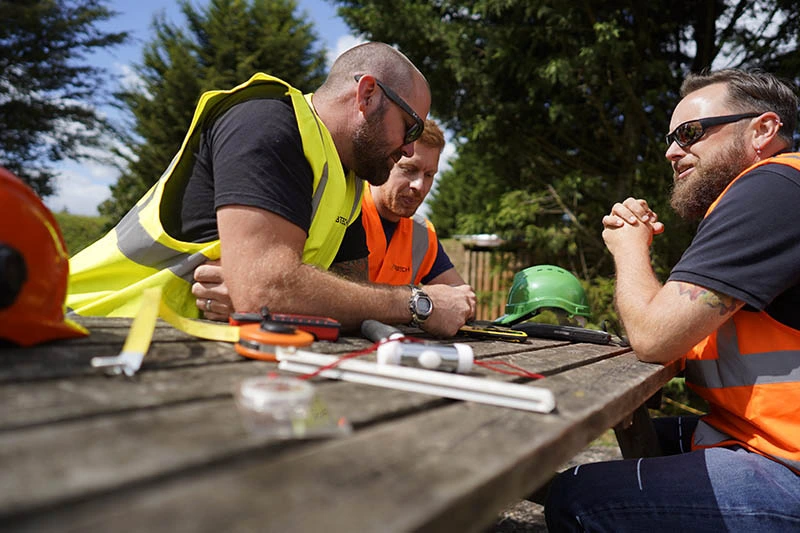
Arbtech are your best asset when it comes to getting planning permission for your project. We cover the whole of the UK and we are waiting to get started on your project...
Get Your Free Quote