Why Choose Arbtech?
Watch this video to see why Arbtech are the best asset you can possibly have when you need ecology or tree surveys to help you obtain planning permission.
By evaluating junction capacity and promoting active travel, a transportation management plan (TMP) provides the strategic data needed to prove a project is viable.
With Arbtech, you can get a referral to a partner company we trust for a high-quality TMP.



A strategic Transportation Management Plan (TMP) is a vital technical document required to secure planning permission for new developments.
Unlike short-term construction traffic plans, a strategic TMP focuses on the long-term operational phase of your project.
It acts as a bridge between your layout design and the local highway authority, proving that your completed site will integrate safely and sustainably with the existing road network.
Local planning authorities require these reports to ensure that long-term vehicle movements will not compromise road safety, disrupt traffic flow, or overwhelm local junction capacities.
A comprehensive plan assesses site access, maps out permanent pedestrian and vehicle segregation, and establishes clear zones for loading and servicing.
Navigating highway regulations can be complex, but we simplify the process by connecting you directly with trusted, expert transport planners.
We will help you secure a robust report that satisfies the planners, protects your design, and keeps your project moving forward.

In any project, effective transport planning and management are fundamental to a successful development.
When the planning and management of transportation is arranged correctly, the long-term impact on the local area is evaluated and mitigated before any issues arise.
For significant projects, various factors are considered, such as expected vehicle movements and a high-level look at travel demand management to reduce the overall number of vehicle trips and optimise the capacity of the existing infrastructure.
A transportation management plan (TMP) is a strategic document that outlines how a planning project will interact with the local road network once it is fully operational.
Rather than focusing on the temporary disruption of a building site, a TMP looks at the legacy of the development.
Often confused with the similarly named traffic management plan (TMP), a transportation management plan acts as a technical bridge between your project and the local highway authority.
With it, you can provide the data necessary to prove that the increase in residents, employees or visitors won’t compromise the safety or efficiency of the surrounding area.
While a TMP is a common planning requirement, it is more specifically essential for maintaining traffic safety and network efficiency.
A plan will contribute to protecting the public and future site users by identifying and mitigating all potential conflict points in the permanent design.
It also includes public information strategies to keep the local community informed, ensuring that the development is viewed as a sustainable and well-integrated addition to the region.
When it comes to developing a plan, it’s important to look beyond the site boundary and think about how the project is likely to affect the wider network throughout the entirety of its operational lifespan.
A robust plan needs to account for all road users to meet national safety standards, and that includes both pedestrians and motorists.
In more complex urban environments, it could be necessary to implement strategic measures, such as signal retiming at nearby junctions, preventing bottlenecks caused by changing traffic patterns as a result of the new development.
By doing this, developers and planners can justify that the scale of the development is compatible with the capacity and safety standards of the local road network.
For developments in 2026 and beyond, environmental impact is a primary focus for the local authorities.
Noise and air quality need to be addressed within a plan, and it is usually done by promoting sustainable travel modes to keep pedestrians and cyclists safely prioritised.
Through the use of travel demand management and car-sharing incentives, the project’s total carbon footprint can be significantly reduced.
Comprehensive transportation management plans are technical documents that act as a blueprint for the permanent operation of the site.
A completed TMP will include:
Defined protocols for how the permanent road layout handles vehicle breakdowns or emergencies and general vehicle routing to ensure the network remains resilient and minimises downtime for road users.
Integration of technology to provide real-time updates to road users, such as permanent smart signage or traffic sensors that help manage flow during peak hours.
Ensuring the safety of future residents, workers and the general public, speed limits should be set to appropriate and permanent speed zones that are tailored to the new road layout.
A formal process for engaging with local businesses, transport authorities, stakeholders and the principal contractor to ensure that the development supports regional growth and transport policy.
Scaled drawings that show exactly where vehicles enter and exit the site permanently, with factors like visibility splays and safety standards integrated into them.
Permanent design plans that ensure pedestrians, cyclists and vehicles have dedicated and safe routes to improve efficiency while guaranteeing long-term health and safety.
Dedicated areas for refuse collection and deliveries for the finished building, ensuring that any and all essential services don’t obstruct the public highway or create safety issues.
Primarily for construction, a strategic TMP defines the permanent management protocols for large-scale logistics hubs or complex service yards to ensure safe vehicle guidance.
Organising long-term maintenance schedules for the site’s private roads and drainage to prevent debris or standing water from affecting the wider public highway.

An extensive management plan covering transport concerns is the only way to ensure that your planning project remains safe, efficient and legally compliant.
From road users to sustainable travel, every detail needs to be documented in order to check that the project is viable.
Although our team oversees all ecological and arboricultural aspects of your site, high-level traffic and transportation management is a specialist field.
With this in mind, we refer to a trusted partner company for all transport planning services, including any time a client needs a transportation management plan, as well as other matters relating to work zone impacts, construction traffic and the possible involvement of a construction logistics plan.
The team we work with for transport planning services shares our passion for providing a top-quality service and doing everything possible to get planning permission granted.
If you know what you need or want advice on how to move forward, reach out to us, and we can pass you on to the trusted team we work with.
You can do this by emailing us, calling us, filling out a quote form on our site or visiting our contact page.
After you’ve given us as much information as you can about your site and project, we can guide you on what to do next.

Editor at Arbtech, Rob is a content specialist who manages our ecology and arboriculture services copy to ensure it is accurate, up to date, and insightful for current and future clients.
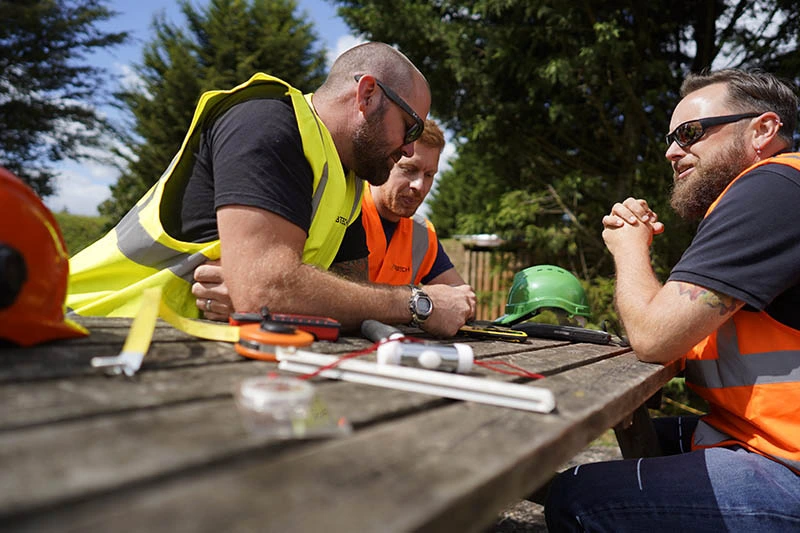
Arbtech are your best asset when it comes to getting planning permission for your project. We cover the whole of the UK and we are waiting to get started on your project...
Get Your Free Quote