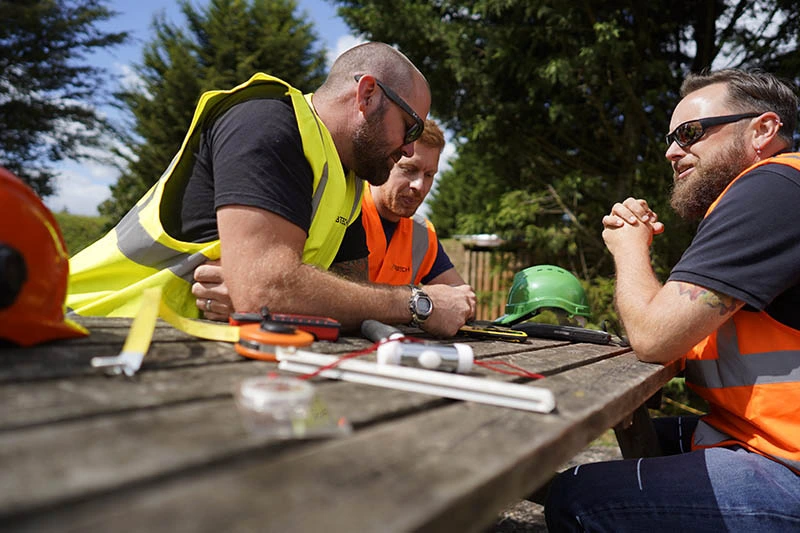

The CAVAT Tree Valuation System
Often required by local authorities, landowners and organisations managing trees, a CAVAT tree report is a method of examining a tree, or group of trees, to calculate its value in terms of life expectancy, health and visibility in the location.

What is a CAVAT Tree Assessment?
A CAVAT tree report applies the Capital Asset Value for Amenity Trees (CAVAT) methodology, a widely adopted and defendable system developed by the London Tree Officers Association in collaboration with Forest Research and the CAVAT group.
Originally championed by Chris Neilan and supported through a pro bono initiative, CAVAT was designed to give local authorities and tree officers a clear, consistent way to express the public value of trees in monetary terms. Used by tree officers and tree experts across the UK, CAVAT provides a robust way to value trees as public assets, not liabilities.
Rather than focusing on timber value or simple replacement costs, it captures the wider public amenity benefits a single tree or group of trees provides to communities, including within community tree index areas. The approach supports planning policy, aligns with the London Plan, and is frequently used to inform decisions where amenity trees are extensively managed in complex urban environments, for instance, urban pollards.
CAVAT is both a strategic tool and a practical, complementary system that can sit alongside arboricultural assessments and planning processes. Following an extensive review, the updated CAVAT full method and revised method reflect current best practice and the input of experienced practitioners.
Tools such as the CAVAT spreadsheet, crown completeness calculator and the fully illustrated guide help ensure valuations are consistent, transparent, and evidence-based. As a result, CAVAT is increasingly used to promote CAVAT principles across local authorities, support defensible decision-making, and facilitate CAVAT training for professionals responsible for managing urban trees.
A CAVAT Tree Valuation is carried out using one of two methods:
- Full Method
The updated CAVAT full method provides a detailed valuation for a single tree or small groups of trees. It considers factors such as size, location, visibility, condition, structure, canopy volume, crown completeness, and expected lifespan. This revised method is commonly applied in detailed assessments, compensation cases, and where a robust, defendable system is required. - Quick Method
The quick method is a simplified, strategic approach designed for large datasets and wide-scale assessments. It is often used by tree officers to value extensive tree stocks, inform policy, compare community tree index areas, and support long-term planning and management strategies.

Why Might You Need a CAVAT Tree Valuation?
Trees can be public assets and tree valuation is increasingly important in situations where a value for amenity trees must be demonstrated clearly by decision makers, including:
- Planning and development: Local planning authorities may request CAVAT valuations where trees are affected by development proposals. A robust valuation can influence design, mitigation measures and compensation requirements if loss of trees is unavoidable.
- Compensation claims: If trees are damaged, destroyed or unlawfully removed, a CAVAT report prevents under valuing and provides a credible basis for calculating loss of amenity trees and securing appropriate financial compensation.
- Asset management: Councils, landowners and organisations use CAVAT reports to manage trees as part of an asset register, inform budget allocation and justify tree-related investment decisions.
- Legal or policy requirements: CAVAT valuations are used in legal contexts, for example, to support proof of value in courts, planning appeals, or when negotiating S106/mitigation agreements with developers.
What’s Included in a CAVAT Tree Report?
The CAVAT Tree Valuation System involves:
Site Inspection and Data Collection
A qualified arboriculturist conducts a site survey to gather measurements, condition assessments and contextual data.
Cavat Tree Valuation Methodology
- Stem size and unit value factor (UVF): to calculate base value.
- Local value adjustments: considering the visibility and community impact of amenity trees.
- Functional assessments: health, structure and canopy quality.
- Life expectancy estimation: to adjust for realistic long-term amenity contribution.
Results and Valuation Output
A clear breakdown of the capital asset value of each tree or group, expressed in GBP on a survey spreadsheet, with an explanation of how the figure was derived to aid objectivity.
Interpretation and Recommendations
Contextual guidance on how the valuation affects planning, legal or management decisions, and recommended next steps for policy makers.

Who Typically Needs a CAVAT Report?
These reports are typically required by:
- Developers – Preparing planning applications where trees are present.
- Local Authorities – Needing consistent tree asset valuation data.
- Landowners and Estate Managers – Reviewing tree value.
- Insurers and Legal Professionals – Supporting compensation or dispute cases.
- Consultants and Ecologists – Integrating amenity trees and tree valuation into wider site assessments.
Choosing a CAVAT Provider
Due to the technical nature of CAVAT, valuation must be carried out by a trained arboricultural consultant with experience in the Full and Quick methods. A robust report should provide defensible data that local authorities, planners and legal stakeholders will respect.
Our experienced tree experts can provide CAVAT tree reports tailored to your project needs, whether for planning support, tree protection, compensation claims or asset management. For expert guidance, contact our team for further information and a free quote.