Why Choose Arbtech?
Watch this video to see why Arbtech are the best asset you can possibly have when you need ecology or tree surveys to help you obtain planning permission.
A Planning Consultant can play a key role in helping to achieve planning permission on a site.
We explain why their advice can be invaluable and the various sectors they work in.
If you need a planning consultant, we can help.



Last updated: October 2026

Gill is our Editor, with a background that combines journalism with land and estate management. Gill is a farmer’s daughter, an associate member of the RICS and has an interest in all things to do with agriculture and the countryside. Her free time is spent on the tennis court, walking and improving her cooking skills.

Getting planning permission approved is rarely straightforward. Whether you are a homeowner looking to extend, a developer with ambitions for a large residential scheme, or a business seeking to change the use of a commercial building, the UK planning system places significant demands on those navigating it.
That is where planning experts come in. With the right planning advice to identify the best way forward, the path from initial concept to a granted permission becomes far more manageable.
At Arbtech, we work alongside planning permission consultants every day, providing the ecological and arboricultural surveys that support planning applications across the UK. We understand what local planning authorities expect, what a robust submission looks like, and what role a skilled planning consultant plays in achieving a successful outcome for property owners.
The planning system in England and Wales is complex, policy-driven and unforgiving of submissions that fail to address the right considerations. Even experienced developers can find themselves caught out by local policies, site-specific constraints, or changing national guidance.
A planning consultant brings technical knowledge, policy awareness and practical experience to the table. Their strategic advice can help you identify development opportunities, avoid costly delays and increase your chances of securing consent for full planning permission first time from the local authority.
You may need a planning consultant if your development proposals involve a sensitive site, such as a listed building, a site within a conservation area, or land close to a protected habitat.
You might also benefit from their advice if a previous application has been refused, if development proposals are likely to generate objections, or if the planning history of a site is complicated. Even on seemingly straightforward projects, having a planning consultant review the proposal and prepare a well-reasoned planning statement for the local authority in question can make a significant difference to the outcome. Consultants can also advise on and manage planning appeals.
Planning permission consultancy is not just for major developments. Local consultants work with individual homeowners, small builders and community groups just as readily as they work with volume housebuilders and commercial developers. The value they bring is the same regardless of the scale: clarity and confidence to give a site the best possible chance of a positive decision.

Consultants manage the process of obtaining planning permission on behalf of their clients. Their work begins well before a planning application is submitted.
At the pre-application stage, a planning consultant will conduct feasibility studies, review the site constraints and advise on the most appropriate planning strategy. This early input can save considerable time and expense by identifying potential issues before they become problems.
Once a strategy is agreed, consultants will coordinate the preparation of the planning application itself. This involves commissioning and reviewing the specialist reports that local planning authorities require; from ecology surveys and arboricultural assessments to flood risk assessments, topographical surveys, transport statements, biodiversity net gain reports, environmental impact assessments and heritage impact appraisals.
A good planning consultant will ensure that all these documents are policy-compliant, technically sound and presented to a local authority in a way that supports the case for permission.
Consultants also manage communication with the local planning authority throughout the application process, liaising with case officers over matters such as the community infrastructure levy, responding to queries and negotiating amendments where necessary.
Where a decision goes against the applicant, consultants can also advise on and manage planning appeals, preparing written representations, instructing expert witnesses and attending hearings or public inquiries on their client’s behalf.

Consultants operate across every part of the built environment, including both the public and private sector. On the residential side, they handle everything from individual householder applications and self-build plots for property owners through to large-scale housing allocations and strategic land promotion.
In the commercial world, they give planning advice on retail, office, industrial and logistics developments, including mixed-use, new homes and complex change-of-use applications where a building is being repurposed from one planning use class to another.
Development land and planning is a specialism in its own right. Consultants working in this area assist landowners and promoters in identifying development opportunities, securing allocation in local plans and bringing sites forward through the planning process. This can involve many years of engagement with local planning authorities and the Planning Inspectorate, making experience and persistence essential qualities.
Other sectors where planning experts are regularly instructed include hospitality and leisure, renewable energy and utilities, education and healthcare, agriculture and rural development and heritage.
Each of these areas has its own policy context and technical considerations, and a specialist planning consultant will have the knowledge to navigate them effectively, providing strategic planning advice and helping achieve a successful planning application.

The client base is broad. At one end of the spectrum are private individuals: homeowners wanting to extend or convert their property, or landowners hoping to realise the development potential of their land.
At the other end are national housebuilders, property developers, and infrastructure providers who need experienced consultants to manage large-scale projects; often complex, multi-site programmes of work.
In between, consultants work with architects, housing associations, charities, religious organisations, local authorities, NHS trusts, schools and universities, farm businesses and commercial occupiers.
Local planning professionals and chartered town planners often develop long-standing relationships with clients in their area, building an understanding of the local planning environment that is invaluable when navigating decision-making at a specific council.
For architects and other design professionals, a planning consultant is a natural point of collaboration. While architects focus on the design quality and technical specification of a scheme, a planning consultant concentrates on the planning system, policy justification and development opportunities, ensuring that the proposal is presented in the most favourable light and that all planning requirements are addressed comprehensively.

Experienced planning permission consultants in the UK typically hold qualifications from the Royal Town Planning Institute (RTPI), the professional body for chartered town planners. Chartered membership of the Royal Town Planning Institute – designated MRTPI – is widely recognised as the benchmark for professional competence in the field. Many chartered members also have backgrounds in geography, architecture, law, or environmental science, which helps them bring a multidisciplinary perspective to their work.
Core competencies for chartered town planners include a thorough understanding of the planning system, national planning policy – the National Planning Policy Framework (NPPF) and its associated Planning Practice Guidance – as well as the local development plans, supplementary planning documents and emerging policies that apply to a given site.
As well as being technical experts, consultants must also be skilled negotiators, effective communicators and comfortable working with a wide range of technical specialists, from ecologists and arboriculturalists to transport engineers and heritage consultants.
Digital skills are increasingly important too. Consultants and town planners work with planning portals, GIS mapping tools and online consultation systems as a matter of course. An ability to analyse and interpret planning data, track appeal decisions and monitor policy changes is all part of the day-to-day role.
The value a chartered town planning consultant adds to a development project is difficult to overstate. At the most basic level, they bring structure and accountability to a process that can otherwise feel overwhelming. By managing timelines, coordinating specialist inputs and keeping the application on track, they free up developers and landowners to focus on the wider project rather than getting bogged down in procedural detail.
More fundamentally, consultants bring credibility to planning applications. A well-prepared planning statement, written by a qualified planning permission consultant UK, signals to a case officer that the development proposals have been thoroughly considered. It demonstrates an understanding of local knowledge and local policy, anticipates likely concerns and makes the case for approval in a clear, evidence-based way. This professional rigour backing the planning advice does not guarantee a positive outcome, but it significantly improves the odds.
On larger or more contentious projects, the strategic role of a planning consultant becomes even more pronounced. Their ability to engage productively with officers, manage stakeholder relationships in the local community and adapt the approach in response to feedback can be the difference between a project succeeding or stalling.
In these situations, planning consultancy is not just a professional service: it’s a strategic asset, whether a scheme is in the highly developed south east or other parts of the UK.

Obtaining planning advice from a planning consultancy firm that’s experienced in projects like yours can help you navigate many problematic areas. Identifying a firm that’s familiar with recent changes in legislation will help smooth your route to achieving full planning consent.
If you need planning consultancy support, we can help. Simply fill in the contact form on our website, call or email us. We’ll ask for some basic information about your project, which will enable us to provide you with a free quote for the planning advice you need.
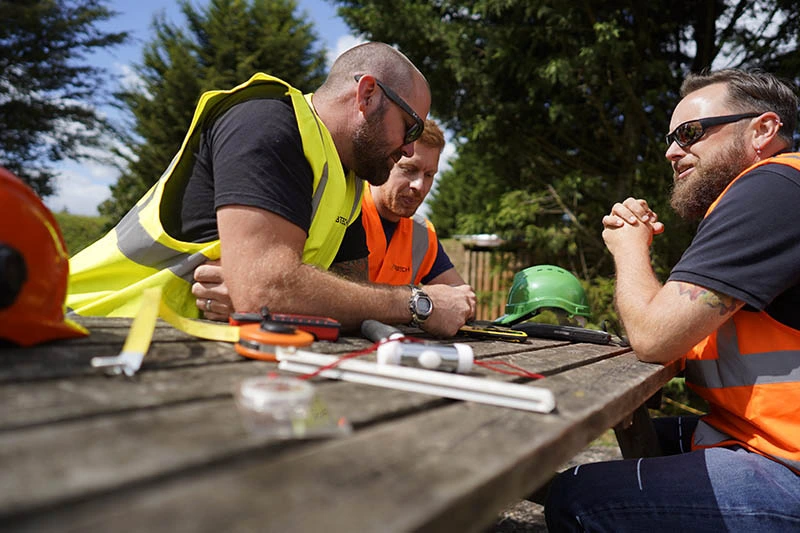
Arbtech are your best asset when it comes to getting planning permission for your project. We cover the whole of the UK and we are waiting to get started on your project...
Get Your Free Quote