Why Choose Arbtech?
Watch this video to see why Arbtech are the best asset you can possibly have when you need ecology or tree surveys to help you obtain planning permission.
Biodiversity net gain offers a potential new revenue source for landowners.
To find out if you have suitable land, a BNG assessment will be needed to establish an ecological baseline.



Mandatory biodiversity net gain legislation has created a significant new income stream for landowners across England. By registering land as a habitat bank, you can sell biodiversity units to developers who need to offset the ecological impact of their projects, generating long-term revenue from land that may currently be under-utilised.
At a glance:
Since February 2024, every applicable development project in England, whether residential, commercial or infrastructure, must demonstrate a measurable net improvement in biodiversity value before planning permission is granted. That requirement does not disappear when a developer has limited scope to improve habitats on their own site. Instead, they must look elsewhere.
That is where landowners come in. When a developer cannot fully meet their biodiversity net gain obligation on-site, they are required to purchase off-site biodiversity units from registered habitat banks. If your land holds ecological value, or has the potential for habitat creation and enhancement, you can register it as a habitat bank, sell units to developers, and generate a stable revenue stream for up to 30 years.
Key point: Landowners or land managers do not need to be involved in development to participate in BNG. You simply agree to manage your existing land in a way that increases its ecological value, have this independently verified, and sell the resulting biodiversity units through the national register.

Biodiversity net gain operates through a structured marketplace underpinned by government legislation. The value of any piece of land, before and after habitat enhancement, is calculated using the statutory DEFRA biodiversity metric. The statutory biodiversity metric converts habitat quality and condition data into a numerical figure known as biodiversity units.
Developers need to acquire enough units to meet their planning obligations. If they cannot produce all of those units on their own development site, they must buy them from a habitat bank operator or habitat banks listed on the biodiversity gain sites register. Landowners interested in creating habitats and nature recovery can register their land, allowing them to sell units directly to developers or through brokers and land agents who operate in this growing market.
The planning system operates a preference hierarchy when it comes to delivering biodiversity net gain bng. The biodiversity gain hierarchy requires developers to first seek on-site habitat enhancement, then off-site habitat bank units, and only as a last resort option, statutory biodiversity credits. Statutory biodiversity credits must be purchased from the government. This means demand for genuine off-site habitat bank land – your land – will remain strong.

A wide range of landowners can potentially benefit from the BNG market, including farmers, rural estate managers, private landowners with surplus land, and organisations managing ecological or conservation land. The key factors are the ecological baseline of the land, its potential for measurable improvement via environmental schemes and the landowner’s willingness to maintain agreed habitats for at least 30 years.
Land types that often perform well in the BNG market include:
Even existing land with relatively low biodiversity can generate significant unit values if there is a clear and credible plan for nature recovery. The greater the uplift in condition or area, the more units can be sold.
The price of biodiversity units is not fixed by government; it is determined by supply and demand in the open market. However, as BNG becomes embedded in the planning system and demand from developers increases, unit values are expected to remain substantial.
The table below provides an approximate overview of factors that influence unit pricing and income potential. Exact figures will depend on habitat type, location, baseline condition and agreement terms.
| Habitat Type | Approximate Unit Value | Agreement Term | Notes |
| Lowland meadow creation | Higher value | 30+ years | High demand; significant baseline uplift achievable |
| Hedgerow enhancement | Moderate value | 30+ years | Common across agricultural land; lower management cost |
| Wetland / pond creation | Higher value | 30+ years | Scarce habitat type; strong developer demand |
| Woodland creation | Variable value | 30+ years | Can overlap with other woodland grants and schemes |
| Species-rich grassland | Moderate to high | 30+ years | Value depends on starting condition and location |
Note: Unit pricing varies significantly based on local authority area, the proximity of your land to the development requiring offset, habitat type, and market conditions. Arbtech can assess your land and provide a realistic income estimate before you commit to anything.
Registering land as a BNG habitat bank involves several clearly defined steps. Arbtech can guide you through each stage, from the initial ecological assessment through to legal agreements and ongoing monitoring.
Step 1: Ecological Baseline Assessment
An ecologist visits your land to record all existing habitats, species and ecological features to calculate how many biodiversity units are present. This establishes the pre-enhancement biodiversity value using the DEFRA biodiversity metric: the starting point from which any uplift will be calculated and sold.
Step 2: Habitat Management Plan
A Habitat Management and Monitoring Plan (HMMP) is produced. This sets out exactly how the land will be managed over the 30-year period to achieve and sustain the agreed biodiversity improvements. It forms the technical backbone of any sale agreement.
Step 3: Registration on the BNG Register
The land is registered on the national biodiversity gain sites register, administered by Natural England. This makes it visible to developers and their consultants who are actively searching for off-site habitat units in your area.
Step 4: Conservation Covenant or Section 106 Agreement
Once a developer wishes to purchase units from your land, a legally binding covenant or Section 106 agreement is drawn up. This secures the habitat management obligations for the full 30-year term and protects both parties. The covenant is recorded against the land title at the Land Registry.
Step 5: Ongoing Monitoring
Regular monitoring reports must be produced throughout the agreement period to confirm that the habitat management and habitat enhancement is on track and the ecological targets are being met.
A conservation covenant is a private, voluntary legal agreement between a landowner and a responsible body such as a local planning authority, the Environment Agency, or an approved conservation organisation. Introduced by the Environment Act 2021, conservation covenants allow landowners to commit to managing their land for ecological benefit over a defined period, with that commitment binding on future owners of the land too.
For the BNG market, conservation covenants serve a critical function: they provide developers with the legally secured evidence they need to satisfy their local planning authority that off-site biodiversity net gain will be maintained for the required 30-year minimum. Without a legally binding agreement in place, the biodiversity units cannot be counted towards a developer’s obligation.
It is essential to take independent legal advice before entering into a conservation covenant. The covenant will bind any future sale of the land, so buyers and mortgage lenders will need to be made aware of it. Understanding the full implications, including management obligations, permitted uses, and enforcement, is important before signing.

Biodiversity net gain does not exist in isolation. Many landowners are already participating in or considering other environmental schemes, or local nature recovery strategies and it is important to understand how BNG interacts with these and other environmental payments.
DEFRA’s Sustainable Farming Incentive (SFI) and Countryside Stewardship schemes pay farmers to deliver environmental outcomes including habitat creation, water quality improvements and biodiversity enhancements. In principle, BNG and agri-environment schemes can complement each other, but there is a risk of double-counting on the same land: claiming payment for the same ecological outcome through more than one funding source.
Natural England guidance makes clear that BNG units can only be generated from ecological improvements that are additional to what is already required or funded under another scheme. If a habitat improvement is already being funded through SFI or Countryside Stewardship, the same improvement generally cannot also be sold as a BNG unit. Careful planning at the outset, ideally with specialist ecological and financial advice, is essential to maximise the combined value of your land.
The Woodland Carbon Code provides verified carbon credits for new woodland creation. Like SFI, it is possible in principle to establish woodland that delivers both BNG units and carbon credits, but the additionality requirements of both schemes must be met separately. Specialist advice is needed to structure agreements that allow both revenue streams to coexist legitimately.
In catchment areas with water quality issues, particularly those affected by phosphate or nitrate pollution, landowners can also sell nutrient neutrality credits to developers. Nutrient credits is a related but entirely separate market from BNG units. Some land management interventions, such as creating wetland buffer strips, can deliver both ecological and nutrient reduction benefits, creating multiple income opportunities from a single land management change.
Before committing to a BNG habitat bank arrangement, landowners should fully understand what’s involved and be aware of the following:
Arbtech is one of the UK’s leading ecological consultancies, with over 20 years of experience and a team of more than 150 professional ecologists and arboriculturalists working across England. We have been involved in biodiversity net gain since it was first announced, supporting both developers and landowners through every stage of the process.
BNG has created an opportunity for landowners and we offer a complete end-to-end service to help, including:
Our ecologists are situated across England, meaning we can attend your site promptly and provide locally relevant advice. Whether you own a small parcel of farmland or a large rural estate, we can assess the BNG potential of your land, work out how best to create or enhance what’s there and help you understand what income you could realistically generate.
Our contact details are at the top of this page: you can call us, email us, or complete the quote form to arrange a free initial consultation about your specific development. We will take all the details required to review your land, provide a realistic assessment of unit potential, and outline the next steps with no obligation to proceed.

Gill is our Editor, with a background that combines journalism with land and estate management. Gill is a farmer’s daughter, an associate member of the RICS and has an interest in all things to do with agriculture and the countryside. Her free time is spent on the tennis court, walking and improving her cooking skills.
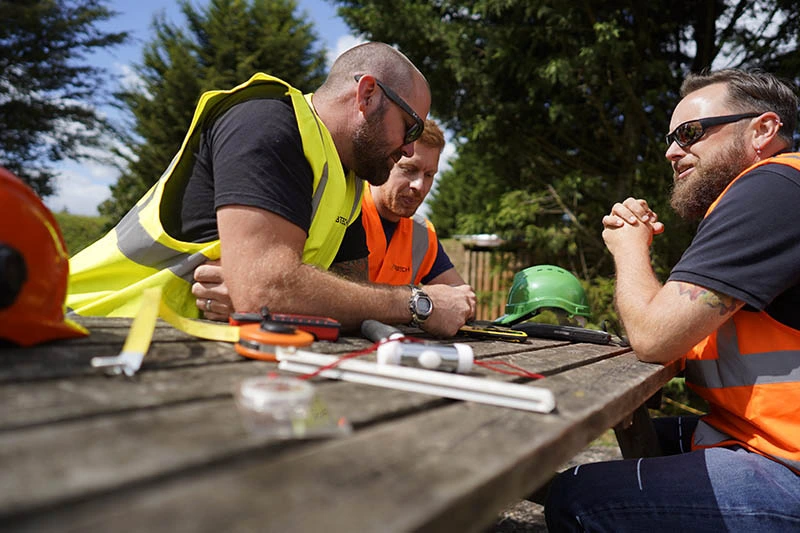
Arbtech are your best asset when it comes to getting planning permission for your project. We cover the whole of the UK and we are waiting to get started on your project...
Get Your Free Quote