Why Choose Arbtech?
Watch this video to see why Arbtech are the best asset you can possibly have when you need ecology or tree surveys to help you obtain planning permission.
With local councils across the country given the option to expect a percentage increase higher than the national 10% mandate, our biodiversity net gain requirements page details the expectations from each of the local authorities.




The mandatory requirement for biodiversity net gain (BNG) has seen the UK government put more of a focus on the natural environment when it comes to development proposals.
Under the statutory framework of the Environment Act 2021 and such legislation as the Town and Country Planning Act 1990, mandatory biodiversity net gain forces new developments to contribute towards improving biodiversity across England.
Although the statutory objective is to deliver at least a 10% BNG increase, local authorities may mandate a higher percentage if they’re given a reason to by the available supporting evidence in their planning policy.
Insisting on a higher increase of BNG represents a commitment to ensuring that planning projects result in a measurably better state for the local area and support biodiversity on a long-term basis.
Between the national 10% net gain or a higher percentage, the specific increase set by the local council will determine the number of biodiversity units a developer needs to generate.
The target affects the approach to development from the earlier date of design. It has a significant impact on the floor space available for building, as on-site measures must be undertaken solely to enhance biodiversity or create biodiversity on-site.
Just like with achieving a 10% increase, if a local authority requires a 20% or 30% increase, the planning applicant needs to meet the requirement. Significant onsite habitat enhancements will be a priority in the hope of avoiding the potentially heavy financial burden of off-site BNG costs.
A predicted calculated biodiversity value must show measurable improvements over the pre-development value, often needing a complex landscaping plan to integrate BNG with habitat features like hedgerow units or watercourse units.
If it isn’t possible to achieve on-site targets within the red line boundary of the site, however, the alternative proposed approach would be to look towards off-site biodiversity gains instead.
Shifting to off-site solutions involves finding local opportunities to increase biodiversity on an area-wide basis. Developers and planners could secure off-site units from habitat banks or biodiversity gain sites to ensure that the development meets the biodiversity gain objective while taking account of local needs.
When the relevant local planning authority reviews a valid planning application, they must ensure that the mitigation hierarchy set out in national policy is followed to prioritise on-site retention.
At the planning application stage, planners and developers must provide minimum information requirements to avoid delays at the validation stage. The information submitted as part of the application form should include detailed site plans and pre-development biodiversity value data.
If a planning applicant believes that the baseline value of the development site is negligible, they need to provide further details to the decision-makers to justify this opinion.
To successfully achieve biodiversity net gain, the person submitting the proposal must calculate the biodiversity value using the statutory biodiversity metric tool.
Once a planning project is granted planning permission, a biodiversity gain condition is usually applied as a pre-commencement condition. With it, a biodiversity gain plan must be submitted and approved before the development takes place.
For major developments, a habitat management and monitoring plan (HMMP) is a legal requirement to guarantee that the on-site biodiversity gains are legally secured for a minimum of 30 years. The planning obligations are formalised through section 106 agreements or conservation covenants with a responsible body, ensuring ongoing management and preventing potential enforcement action.
While national targets provide a baseline, local authorities may demand a higher percentage based on the identified scale of local nature recovery strategies.
Specific allocations are often found in produced guidance where existing local policies apply. Developers and planners need to provide evidence for how the area’s biodiversity is protected, as other policies may dictate measurable improvements across the transport network.
Elsewhere, transitional arrangements and transition period rules mean that for some outline planning permissions, existing policies apply until reserved matters are successfully discharged.
In the lists below, we’ve detailed the expected 30%, 20% or 10% increase for each local council:

If you’re aiming to meet the rules of mandatory BNG, the identified scale of your project and the relevant date of the application will affect how you go about doing it.
The requirement applies to most cases of development, but there are certain types of exempt developments. Common BNG exemptions include householder applications, retrospective planning permissions and urgent crown development projects.
In addition to that, the de minimis exemption applies to small development projects affecting less than 25 square metres of on-site habitat or 5 metres of linear habitats.
The rules no longer apply to other developments, such as permitted development, simplified planning zones and local development orders, as well as BNG exemptions if the original permission predates the two-year transition period that ended on 12 February 2024 for large sites and on 2 April 2024 for small sites.
For a lot of non-major development, minor development and small development sites, the small sites metric is used to calculate the post-development biodiversity value. A different DEFRA metric calculation tool is used, with variables such as the strategic significance multiplier and threshold of 0.5 hectares playing a role in planning decisions.
Self-build and custom build applications are often exempt, but it can apply to custom housebuilding if the site consists exclusively of self-build dwellings. Even for exempt developments, however, the development management procedure needs to minimise impacts on irreplaceable habitats.
If your development site contains important habitats, you may need to purchase off-site biodiversity units to avoid an adverse effect on the area’s biodiversity.
Working with biodiversity net gain means addressing how your development impacts the environment and working out ways to enhance the biodiversity value to a level seen as acceptable by the local planning authority.
In most developments and other cases that aren’t as typical, understanding BNG regulations and the wider planning application process can be difficult for developers and planners, regardless of how experienced you are.
With the right help, you can get the expert advice and land management assistance you need. Even if your planning project involves a custom building development, phased development or a development forming a part of a larger scheme, our team can assist you to achieve BNG by integrating a robust biodiversity net gain plan into already firm proposals.
After we’ve evaluated the onsite biodiversity value on your proposed development site, we can work out how to meet the BNG target. If it isn’t possible to see a measurable increase in biodiversity on your own land, we can help you to support biodiversity via offsite biodiversity options from external land managers.
Contact Arbtech by calling, emailing or completing a quote form. Once you’ve given us further information about your site and project, we can ensure compliance with your development plans and guarantee that you meet all LPA requirements.

Editor at Arbtech, Rob is a content specialist who manages our ecology and arboriculture services copy to ensure it is accurate, up to date, and insightful for current and future clients.
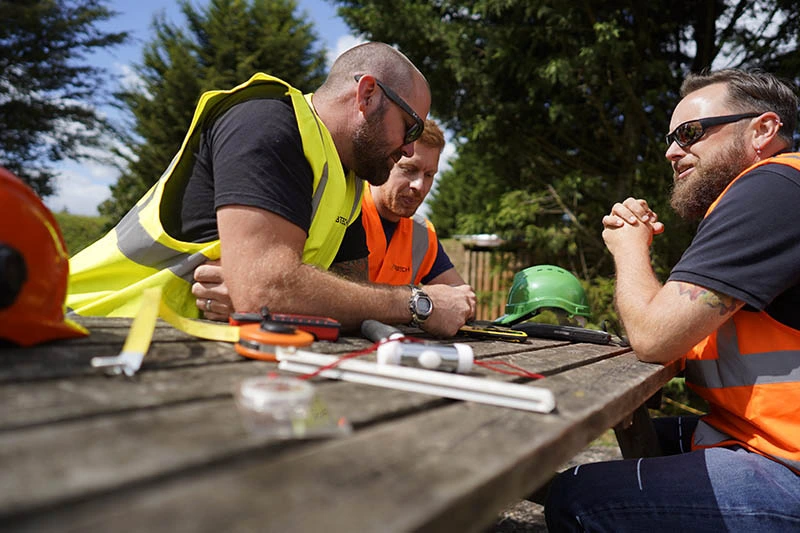
Arbtech are your best asset when it comes to getting planning permission for your project. We cover the whole of the UK and we are waiting to get started on your project...
Get Your Free Quote