Why Choose Arbtech?
Watch this video to see why Arbtech are the best asset you can possibly have when you need ecology or tree surveys to help you obtain planning permission.
Our informative page explains how trees work in conjunction with delivering biodiversity net gain (BNG).
For more help or to book one of our arboricultural or BNG services, get in touch with our team.




In modern UK planning, instead of just having landscape features or constraints to design around, there are also legally protected and quantifiable assets.
Under the UK government framework, most planning applications must show measurable improvements to the natural environment before being able to receive planning permission.
For most developments including commercial, residential and even qualifying small sites, it means that achieving a 10% uplift in the standard of the environment is a strict legal requirement, as part of biodiversity net gain (BNG).
Every single tree on your development site carries a specific biodiversity value within the statutory biodiversity metric. Whether you retain or remove them will single-handedly dictate your baseline calculation, your post-development BNG obligations, and your overall budget.
More than anything, understanding the role trees found on your site play in the planning process is essential to avoiding significant issues and costly delays.
The statutory framework treats individual trees differently from full woodlands and other habitats.
Instead of measuring them strictly by land area, the process of recording individual trees involves submitting physical measurements into the DEFRA Tree Helper tool. It calculates a standardised area equivalent in hectares to generate baseline units.
A tree is categorised based on the stem diameter at breast height (DBH) and the canopy radius:
| Size Band | Stem Diameter (DBH) | Approx. Canopy Radius | Metric Area Equivalent |
|---|---|---|---|
| Small | 7.5cm to 30cm | 3m | 0.0028 ha |
| Medium | 30cm to 60cm | 6m | 0.0113 ha |
| Large | 60cm to 90cm | 9m | 0.0254 ha |
| Very Large | Greater than 90cm | 12m+ | 0.0765 ha |
If your site features a continuous row of trees with overlapping canopies, the biodiversity net gain (BNG) framework calculates them as a linear feature rather than isolated individual trees.
Doing this alters their unit output and must be mapped precisely during your baseline assessment to avoid data errors.
An ecologist or arboriculturist determines exactly how many units a tree is worth by running it through the BNG calculation process based on three distinct statutory variables:
The metric rewards ecological complexity based on the specific habitat type.
Native species (English oak, field maple or silver birch, for example) automatically carry a higher distinctiveness score and yield significantly more units than non-native, invasive or ornamental species (like sycamore or leylandii) that offer less value to local biodiversity.
Every tree is graded as ‘Poor’, ‘Moderate’ or ‘Good’ by running it through Natural England’s strict six-point criteria. Higher grades then heavily multiply the tree’s unit value.
The assessment looks for continuous healthy canopy cover, an absence of severe human damage, and the presence of natural microhabitats like deadwood or cavities.
Location heavily influences the unit value.
If your site’s trees sit within a zone targeted for ecological enhancement by the local nature recovery strategy (LNRS), the unit value receives an automatic multiplier boost, helping you to meet the mandatory BNG requirements more efficiently.
Axing mature trees on a development site is one of the fastest ways to break a planning project’s budget.
The BNG rules are explicitly designed to disincentivise tree removal through heavy mathematical penalties, framing clear-cutting as a primary driver of local biodiversity loss.
Often known as the ultimate red line in the planning system.
Much like ancient woodland, ancient and veteran trees are classed as an irreplaceable habitat.
If your new development design impacts an irreplaceable tree, you cannot use the standard 10% metric calculation.
Your planning project automatically bypasses the standard BNG process and triggers strict legal compensation strategies with the local planning authorities.
Apart from in exceptional circumstances, impacting the trees will result in severe design delays or outright planning refusals.
If you’re developing a residential scheme, trees planted or retained within proposed private gardens are generally excluded from your post-development BNG scoring.
The exception is that any tree with a DBH of 30 centimeres of greater (‘Medium’ to ‘Very Large’) must be accounted for in the baseline, even if it ends up inside a private plot boundary.
Due to freshly planted trees taking decades to replicate the ecological benefits of a mature tree, the metric heavily devalues new canopy growth.
With the time-lag penalty in place, removing just one mature, healthy native tree can require you to plant between 10 and 30 new trees on-site just to break even on your baseline.
While trees present risks, smart architectural design can leverage them to achieve your net gain target much faster and much cheaper on-site, making them a crucial component of the site’s green infrastructure.
As tree canopies sit above the ground, the metric classifies them as non-ground-based habitats.
It means that you can score the habitat on the ground (modified grassland, rain gardens or structural paving, for example), and score the tree canopy sitting directly above it at the same time.
With this, you will be able to effectively squeeze double the biodiversity value out of a single square metre of urban land.
If you are working with a tight footprint in urban environments where space for large-scale habitat creation is limited, integrating structural, high-distinctiveness urban street trees into your highways layout is one way to bridge a unit deficit.
Combined with other features like green roofs on nearby structures, they turn necessary hardstanding corridors into high-yielding BNG assets in crowded urban areas.
The most efficient way to navigate the process is to refer to the expert guidance of an ecological and arboricultural team such as ours from day one, where we will follow the structure below:
Including stem diameters, canopy spreads and retention categories, the standard data from a BS5837 tree survey is captured on the development site.
The data seamlessly populates the BNG Tree Helper tool, creating your accurate baseline without needing duplicate site visits.
Your design team uses the combined tree and ecology data to avoid harming high-value Category A and B trees.
In any areas where encroachment is tight, we aim to minimise impacts using specialised engineering, such as no-dig cell-web foundation systems within root protection areas (RPAs).
Instead of entering the market to buy credits, we look at enhancing what you already have.
Through targeted arboricultural management plans, we can upgrade an existing tree’s condition from ‘Poor’ to ‘Moderate’, instantly generating free on-site biodiversity units.
If tree removal is entirely unavoidable and creates a unit deficit that cannot be resolved within your red-line boundary, you must look to the final tier of the hierarchy:
Purchasing off-site units from a validated habitat bank or choosing to buy credits via statutory BNG credits as an expensive last resort option.
Getting your application for planning consent granted is only the first step in the process.
Whether it’s been retained or newly planted, any tree asset that contributes to your mandatory net gain of biodiversity comes with long-term legal strings attached.
According to the DEFRA user guide, trees need to be legally tied to a comprehensive Habitat Management and Monitoring Plan (HMMP) submitted to the local council.
Secured via legal agreement or planning condition, any tree tied to your BNG commitment must be actively managed for a minimum of 30 years,
If a tree dies, fails or is severely damaged at any point within this mandatory lifecycle, the landowner is legally obligated to replace it with an equivalent specimen as a way of remaining compliant.
Usually working in partnership with conservation charities and environmental bodies, the local planning authorities hold the power to audit site tree canopies and overall health throughout the 30-year window.
Failing an audit can result in code breaches, enforcement action and significant retrospective financial penalties.

With the overlap between biodiversity net gain (BNG) and arboriculture, working with the statutory biodiversity metric correctly involves the guidance and instruction of experts.
Biodiversity unit values are dictated by tree constraints, and due to this, having two separate consultancies in charge of your tree survey and biodiversity net gain assessment can cause a lot of unnecessary risk and confusion.
Instead, it would be advisable to refer to a consultancy that specialises in both, like we do at Arbtech. Our dual-discipline means that our arboriculturists and ecologists can work together when it comes to solving any issues with delivering BNG in conjunction with trees on your site.
From a small sites project to a far larger new development, our focus is on protecting each irreplaceable habitat you already have before moving on to minimising biodiversity loss and producing ways of sourcing more biodiversity units.
After recording individual trees and establishing each tree’s value, we can fully understand your BNG requirements.
Between an early BS5837 tree survey and the entire biodiversity net gain process, and even long-term management and monitoring, our team can do it all.
Get in touch with our team today on our website, via email or over the phone, explain your situation, and we can offer you a free quote based on your site and project.

Editor at Arbtech, Rob is a content specialist who manages our ecology and arboriculture services copy to ensure it is accurate, up to date, and insightful for current and future clients.
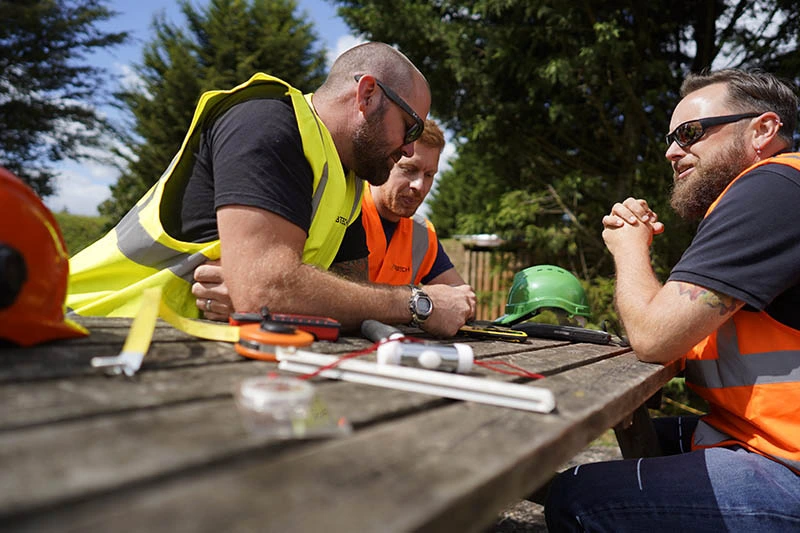
Arbtech are your best asset when it comes to getting planning permission for your project. We cover the whole of the UK and we are waiting to get started on your project...
Get Your Free Quote