Why Choose Arbtech?
Watch this video to see why Arbtech are the best asset you can possibly have when you need ecology or tree surveys to help you obtain planning permission.
Have you been asked for a Phase 1 contaminated land desk study by your local authority? Or do you want a preliminary risk assessment of potential contaminated land on your site?
Fill out a quote form on this page, and a specialist from our team will be in touch with a free quote.
Get Your Free Quote



Old factories, garages, petrol stations, farmyards and landfill can leave harmful substances in the soil, groundwater and ground gas long after a site has changed use.
You often can’t even see the effects of land contamination, and nothing on the surface could suggest that there’s a problem at all.
That said, if your site’s past could put future residents, workers, buildings or water at risk, your local council will want proof that the threats have been checked before you start any works.
Even if you are developing a single house, the local authority will want you to demonstrate the suitability of the development and the past uses of the site to remove any liability or risk to human health.
Without the proper checks, the contamination can delay your development, completely stop your work on the site or lead to an expensive clean-up later on in the process.
A Phase 1 contaminated land desk study is the first step. With it, you can get a clear understanding of your site’s risk early on, helping you to make informed decisions about your project, satisfy your local council, and only spend money on further work if it’s genuinely needed.
Officially known as a preliminary risk assessment but also sometimes known as a geoenvironmental desk study, a Phase 1 contaminated land desk study is an initial assessment of whether or not your land could be contaminated.
It’s non-intrusive, with no digging or drilling, instead combining existing information about the development site with a walkover to check the current conditions of the land.
In simple terms, it builds a picture of the site’s environmental context and site conditions, highlighting any and all potential contamination risks.
Our Phase 1 desk studies also cover basic geotechnical factors, such as ground conditions that could affect your foundations, giving you a fuller picture from a single report.
Contaminated land work follows a step-by-step approach set out in government guidance. A Phase 1 desk study is the first part of the phased approach, and in some cases, it’s the only step you’ll need.
In most cases, you’ll only need a Phase 1 desk study due to your planning application. Certain local councils will also ask for it as part of planning applications. For developers, the best advice would be to check your decision notice or speak to your local authority planning department if you’re unsure.
A Phase 1 contaminated land desk study may be required if:
Away from planning, a Phase 1 desktop study can also be used by buyers as part of due diligence when it comes to purchasing land, and it’s common in property transactions. On the other side, lenders may also ask for one before approving funding.
Building control teams and building warranty providers may also ask about ground risks before they sign off on the build.
Every local planning authority has its own specific requirements, but national planning guidance expects developers to deal with land affected by contamination.
From the perspective of the local authorities, the step is vital, because a site’s historical use can affect development in ways that aren’t entirely obvious today.
Our consultants use a process that follows the Environment Agency’s Land Contamination Risk Management (LCRM) guidance:
The assessment stage involves desk research to gather background information and environmental data about the site, including:
Aerial imagery also helps to spot changes over time. Between aerial photographs and all other factors above, our team can identify potential environmental constraints and potential sources of contamination.
After the desk study, our land contamination consultants will carry out a site walkover survey. The site inspections look for anything that records can miss, such as stained ground, old tanks, dumped waste and hazardous substances, as well as the ground conditions and any potential hazards.
For lower-risk sites like houses and gardens, you can send us photos instead. With commercial or industrial sites, however, we recommend allowing our team to conduct a walkover.
All of the relevant information will be brought together, and we can carry out a qualitative assessment of the risks in line with the LCRM.
The initial investigations then decide whether the site needs any more work.
Once all of the survey work is complete, you will receive a preliminary risk assessment report, ready to be submitted to your local council.
A Phase 1 desk study report includes:
More than anything, the report gives you a clear verdict on contaminated land.
A Phase 1 contaminated land report tells you whether your site has any significant potential risks, which potential environmental risks need looking at, and whether any additional information is needed before your local council can make a decision.
Every report follows current UK standards and environmental regulations:
Different environmental agencies cover each part of the UK. While England is covered by Natural England and the Environment Agency, Northern Ireland has the Northern Ireland Environment Agency (NIEA), Scotland has the Scottish Environment Protection Agency (SEPA), and Wales has Natural Resources Wales.
All of our environmental assessments are tailored to the guidance that corresponds to your site.
Depending on the outcome of the desk study, your report will recommend one of three routes:
All of our recommendations focus on mitigating risks in the most proportionate way, enabling you to only take further action when it’s genuinely needed.

With the right Phase 1 desk study, you’ll know exactly where you stand with the local council, what risks your site carries, and whether you need to do anything more.
Contaminated land doesn’t have to hold up your planning project, and it certainly doesn’t mean the end of your development plans.
Our in-house geo-environmental team carries out every Phase 1 desk study ourselves, meaning that you deal with the same people from start to finish.
The cost of a Phase 1 desk study for contaminated land depends on how quickly you need your report and whether you’d like us to carry out a site walkover or send us photos instead.
Every option covers the desk research, the risk assessment and a report for your local council.
The price starts at £800+VAT, but with the cost being different with or without the walkover and options to upgrade for rapid or even next working day. Costs for the environmental data retrieved from the desktop study are included in the price.
For sites in Scotland and plots of land spanning over ten hectares in size, however, the total cost will differ.
Timescales include the desk study and the site walkover survey, starting once we have your planning details and photos.
As a Phase 2 site investigation can cost anywhere from £2000 to £20,000, arranging a Phase 1 desk study first and seeing if you actually need a more comprehensive assessment is money well spent.
Arranging the desktop study will mean that you know whether hazardous substances pose any risks to human health before you start building.
From there, you will avoid costly surprises and only pay for further work if your site conditions genuinely call for it.
It could be that you’ve just been given planning conditions, or maybe you’re still weighing up a development site that you’re considering buying.
Whatever the situation, contaminated land can feel daunting, especially if you aren’t sure about the past land use and worry that it could affect human health.
Fortunately for developers and prospective land purchasers, our in-house experts will take on the responsibility for it all and manage all stages of whatever surveys you need.
You can reach out for a free quote from our contaminated land team by filling out the quote form at the top of this page, calling us directly, emailing us or visiting our contact page.
All we ask is that you give us as much further information about your development site and planning project as you can, and we will plan a date to start supporting you.

Editor at Arbtech, Rob is a content specialist who manages our ecology and arboriculture services copy to ensure it is accurate, up to date, and insightful for current and future clients.
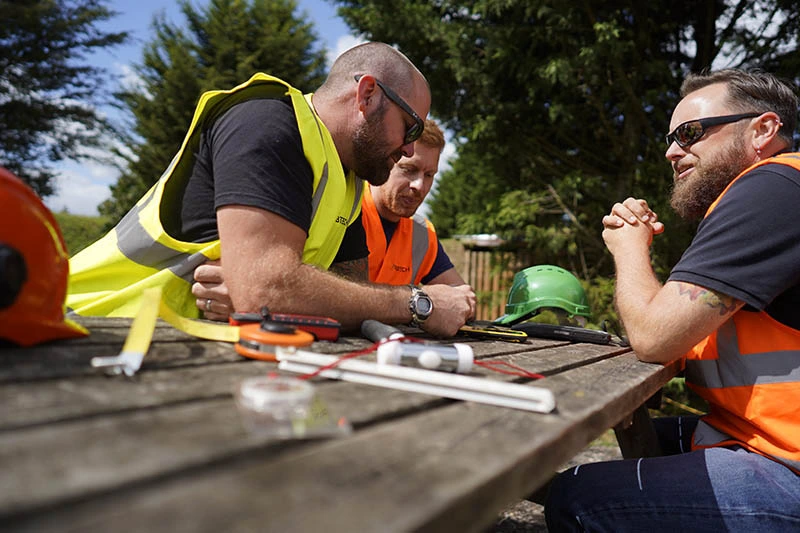
Arbtech are your best asset when it comes to getting planning permission for your project. We cover the whole of the UK and we are waiting to get started on your project...
Get Your Free Quote