Why Choose Arbtech?
Watch this video to see why Arbtech are the best asset you can possibly have when you need ecology or tree surveys to help you obtain planning permission.
If you cannot achieve biodiversity net gain (BNG) on your development site and buying off-site biodiversity units isn’t enough, statutory biodiversity credits are a last resort alternative.
For help with BNG units and satisfying the local authorities, get in touch with the team at Arbtech.




The launch of biodiversity net gain (BNG) altered the landscape of planning permission across England.
Ever since the law took effect for major schemes on 12 February 2024 and for small sites on 2 April 2024, development projects have had to comply with rigorous biodiversity net gain requirements.
With a focus on reversing biodiversity loss by ensuring that a development site is left in a measurably better state than it was before construction began, the primary objective under the Environment Act 2021 is clear.
To achieve this, the statutory framework dictates that most applications must increase biodiversity on the site, beating the initial baseline score by at least 10%.
Under the strict guidelines of the mitigation hierarchy, the top priority would be to achieve on-site improvements, limiting habitat damage within the red line boundary and focusing on the possibility of on-site BNG through new habitat creation and existing habitat enhancement.
Due to spatial constraints, however, developers cannot always hit the target and instead need to secure off-site biodiversity gains.
More often than not, off-site biodiversity units can be bought from an independent landowner or a local habitat bank.
Alternatively, if there are insufficient off-site options on the open market to fulfil the mandatory BNG requirement, the UK government offers a financial safety net in the form of the statutory biodiversity credit scheme.
Also known as biodiversity net gain credits, BNG credits or simply biodiversity credits, statutory biodiversity credits are an official economic instrument created by the UK government.
The intention behind them is to prevent essential planning applications from grinding to a halt due to a shortage in the private sector supply of habitats.
If developers and planners can’t get the right habitat type or quality from the available off-site options to meet the BNG requirements and satisfy the local planning authority, credits are a last resort alternative.
It is common to confuse biodiversity units with biodiversity credits.
Both are mechanisms within biodiversity finance, but there are key differences between the two:
Biodiversity Units
Standard currency of the private market, representing physical land conserved, restored or created by a land manager, landowners or private companies.
Biodiversity net gain units are bought and sold on trading websites or via national suppliers under the control of Natural England’s BNG Register.
Statutory Biodiversity Credits
Financial credits as a back-up option in delivering BNG, not representing an existing or allocated plot of land and instead acting as an emergency fund to address deficits.
Biodiversity net gain credits are purchased directly from the state via Natural England on behalf of the Department for Environment, Food and Rural Affairs (DEFRA).
Landowners who create these habitats on their own land are able to sell BNG units directly to developers, making the process of selling biodiversity units a major driver for local nature recovery.
Whether a project requires a fraction of a unit rounded to multiple decimal places or higher levels of environmental compensation, developers have three ways to meet their goals: on-site mitigation, private market biodiversity offsets, or government credits.
Certain voluntary biodiversity markets deal in generic nature-based solutions or voluntary credits to meet corporate green targets, whereas statutory credits in England are strictly tied to the legal BNG regulations.
Credits effectively exist to help developers bridge the gap when the emerging market for off-site units fails to provide a viable solution.
Purchasing BNG statutory credits works under a highly regulated credit sales service managed by Natural England.
When an ecological consultant calculates the pre-development biodiversity value of a site using the statutory biodiversity metric tool or the small sites metric tool, they calculate how many credits are needed to meet the BNG requirements.
If you need to buy statutory credits to bridge a shortfall, you will submit an online application to Natural England.
The UK government has set high barriers for purchasing credits, helping to protect the private market and encourage developers to invest in local habitat banks.
A financial penalty known as the spatial risk multiplier applies with a 2-for-1 ratio, insisting that two statutory credits are bought for every one biodiversity unit needed.
Within the biodiversity metric, the doubling effect happens automatically to confirm how many statutory credits need to be bought.
After you buy credits, Natural England issues an official certificate of purchase, and the proof of purchase will be input into the final biodiversity gain plan, which will be submitted to the local planning authorities for discharging the planning conditions.
All credit purchases are non-refundable, and once the money has been paid and tied to your application for planning permission, it cannot be recovered, even if your planning project changes.
The capital generated from the sales of biodiversity credits goes on to drive long-term biodiversity conservation across England.
Unlike many carbon credit projects that often face criticism from organisations like the World Economic Forum (WEF) for lacking high-integrity credits, the UK’s statutory credit system is built on verified outcomes.
Whenever someone needs to buy statutory biodiversity credits, the funds are reinvested into large-scale habitat creation projects, habitat improvement zones and strategic nature recovery initiatives.
Biodiversity finance activities aim to support the global biodiversity framework by funding nature-related projects that deliver a net positive impact.
In that sense, it is more effective than intending to store carbon credits or nutrient credits, or leaving funds for offsetting greenhouse gas emissions in a bank account somewhere.
The capital created by the purchase of biodiversity credits has funded major investments like the Iford Biodiversity Project, creating healthy ecosystems, establishing ecological connectivity, and restoring both natural ecosystems and natural habitats.
By working closely with conservation practitioners, local communities and local people in the area, the funding ensures that land is managed for a fixed period of at least 30 years via conservation covenants and planning obligations overseen by a responsible body.
As proof of the contribution to nature-positive projects, the sites must then report annually on their progress under a binding legal agreement that shows evidence of enhancing biodiversity across vulnerable landscapes.
Investments are aligned with local nature recovery strategies to maximise ecological value where it’s needed most. Common examples include addressing climate change, protecting biodiversity hotspot regions, turning localised issues into positive biodiversity outcomes, and promoting positive nature outcomes across the wider natural environment.
To work statutory credits into a development project, an understanding of how the state regulates it is needed.
Throughout the entire system, a structure ensures that developers and planners are supported in taking the significant step towards achieving BNG.
With biodiversity credit markets, instead of fluctuating based on global demand or the shifting priorities of financial institutions, indigenous people or civil society, it is standard for them to be non-competitive and completely transparent.
It operates alongside the private market but at a much higher cost, as it always appears as nothing more than a last resort option.
| 1. On-Site Gains | Avoid, minimise and enhance within the red line boundary |
| 2. Off-Site Units | Buy units from local landowners or registered habitat banks |
| 3. Statutory Credits | Emergency last resort option subject to a 2-for-1 ratio penalty |
Due to the rigid hierarchy, you cannot simply choose to purchase biodiversity units or credits from the state to save time.
The rule applies across the board, from small housing developments right up to nationally significant infrastructure projects (NSIPs).
Instead, your local authority will demand clear evidence within your planning application that you’ve exhaustively explored all other options first, demonstrating that you need the same amount of habitat space as your metric shortfall indicates.
Evidence could involve contacting local land managers, searching the national register, and checking the availability of off-site BNG units across different networks.
An exception to the rule is if the project has an exceptionally small shortfall of less than 0.25 units, where the government could permit credits to be purchased without any extensive proof of a market search.
The price for biodiversity net gain credits is purposefully designed to be expensive, as it should only be a last resort measure.
DEFRA regularly publishes a list of statutory biodiversity credit prices. With DEFRA metric pricing, the aim is to make sure that they remain safely above private market rates, making alternative solutions far more cost-effective for your business case.
Under this costing system, DEFRA considers factors like habitat rarity, distinctiveness and the cost of long-term prices to determine the exact prices.
Based on the specific habitat type being lost, the structure is organised into distinct tiers, whether you need to purchase BNG units or credits to offset the damage.
In terms of the necessary credits, the latest government portal should be checked for further guidance on application fees, and no official maximum purchase cap is currently in place.
For example, an indicative price for a standard one-credit purchase starts at £42,000 for low distinctiveness, while high distinctiveness woodland jumps up to £125,000, and rare wetland habitats can reach up to £650,000 per credit.
After the spatial risk multiplier has been added, replacing one hectare of lost habitat via government credits will always cost double the baseline price, forcing the market to favour local nature-positive projects.
It’s also worth noting that if the development plans impact ancient woodlands, salt marshes or other priority habitats, statutory credits are completely off the table, with highly sensitive areas needing bespoke compensation measures that need to be negotiated on a case-by-case basis.
While it isn’t the preferred outcome of the three options available, it is a positive step towards getting your development moving forward.
If an ecological consultant confirms that you need to purchase statutory credits due to a shortfall of different habitats, you must navigate a specific sequence to secure them and comply with regulatory requirements:
An ecologist conducts a biodiversity net gain assessment on your site and completes the statutory biodiversity metric tool.
The calculation determines the number of biodiversity units preventing your planning project from meeting the mandatory 10% target (or higher, depending on the local council).
As a developer or planner, you will need to demonstrate to the local planning authority that you’ve checked for local on-site and off-site solutions.
Any records of searches on Natural England’s BNG Register and rejections from local habitat banks should be kept as proof.
The metric calculations need to be uploaded, and the application forms need to be completed, all through the official UK government credit sales service portal.
It’s important to bear in mind that the applicant must complete this directly, as the rules from the UK government state that an ecological consultant cannot buy credits on your behalf.
Natural England processes your application and issues an invoice reflecting the statutory credit prices and the mandatory spatial risk multiplier.
You will then need to arrange the payment, with anti-money laundering and due diligence checks usually taking somewhere between four and eight weeks to complete.
Once the payment has been cleared, Natural England issues an official purchase certificate.
The certificate must be added to your final biodiversity gain plan and submitted to your local planning authority to officially discharge your planning conditions, allowing for work to start.

Even for an experienced developer or planner, working your way through the financial and legal complexities of the statutory credit system can be a daunting task.
With statutory credit prices set so high and the mandatory 2-for-1 spatial risk multiplier in play, a minor miscalculation in your initial metric assessment can potentially add hundreds of thousands of pounds in unexpected costs to your development’s bottom line.
Under the guidance of a licensed, trained, qualified and experienced ecological consultant, you can get help with an assessment, report and plan, and benefit from a wealth of knowledge surrounding meeting the biodiversity net gain requirement.
The team at Arbtech specialises in helping developers with navigating the complex planning system while keeping mitigation costs as low as possible.
Our main goal is to help you address habitat loss from day one, maximising on-site capabilities and exploring cost-effective private market options long before having to resort to government intervention.
If it comes to a point where investing in statutory credits becomes unavoidable, our team will handle the heavy lifting for you.
We can accurately calculate your exact shortfall using the appropriate mitigation tool, guide you through using the government’s credit sales portal, and draft the watertight BNG plan your local planning authority needs to approve your application.
Get in touch with our team for a free quote based on your site and project, and we can then go on to choose a suitable time for a site visit. You can reach out to us online, over the phone, via email or by messaging us on our socials.

Editor at Arbtech, Rob is a content specialist who manages our ecology and arboriculture services copy to ensure it is accurate, up to date, and insightful for current and future clients.
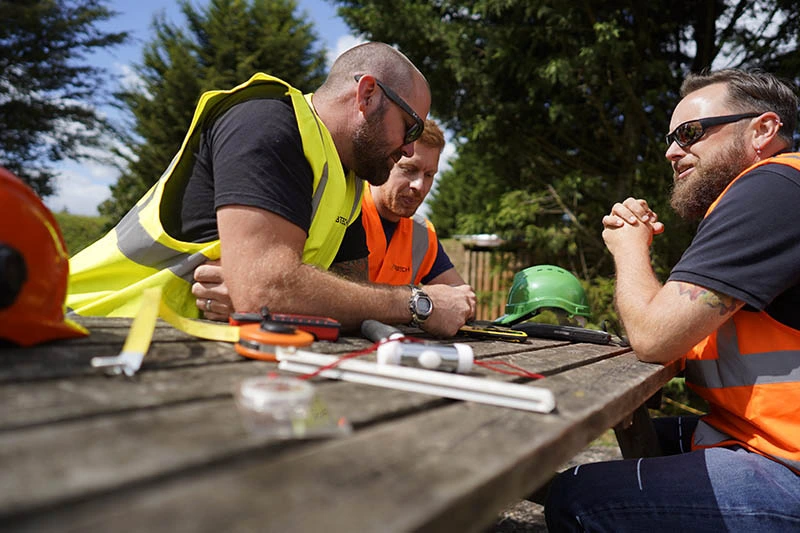
Arbtech are your best asset when it comes to getting planning permission for your project. We cover the whole of the UK and we are waiting to get started on your project...
Get Your Free Quote