Why Choose Arbtech?
Watch this video to see why Arbtech are the best asset you can possibly have when you need ecology or tree surveys to help you obtain planning permission.
As well as helping developers with achieving biodiversity net gain (BNG) to get planning permission, Arbtech also supports landowners and land managers with submitting parcels of land to generate off-site biodiversity units.
For help with biodiversity gain site registration, reach out to our team.




Under current statutory planning frameworks, biodiversity net gain (BNG) requires developers of applicable projects to leave natural habitats in a measurably better state than before work started.
The rules have applied to major development projects since 12 February 2024, and they then went on to apply to developments on small sites on 2 April 2024.
To secure approval for planning applications across England, developers are legally required to prevent net biodiversity loss and deliver an uplift of 10%, or higher if the local council ask for it.
The priority outcome is to deliver mandatory BNG on the site itself, but if you can’t, it is also possible off-site, including through external registered sites.
A biodiversity gain site is an off-site plot of land dedicated to creating new habitats or carrying out long-term habitat enhancement.
If a developer cannot achieve the full percentage uplift within their development site or project red line boundary, the local planning authority will expect them to deliver on-site gain where possible before making up the shortfall across off-site locations.
Any designated BNG sites allow farmers, rural estates and conservation organisations to repurpose parcels of ground through active land management. Once approved, landowners can sell biodiversity units directly to developers who need off-site biodiversity units to discharge planning conditions.
Strategically matching the land parcels within corresponding national character areas (NCAs) ensures that ecological value is replaced locally, and it does it at the same time as freeing developers to connect with other sites whenever local space is constrained.
Based on the statutory regulations, developers must ensure that any land providing off-site biodiversity gains is formally accepted onto the national biodiversity gain sites register.
A formal recording on the official public register prevents fraud, ensures long-term habitat security, and stops any chance of double-counting.
Whenever developers buy off-site gains, the relevant local planning authority checks the official BNG register before approving habitat discharge plans.
Local planning authorities will reject submissions if the units are not drawn from fully registered biodiversity gain sites.
By maintaining the statutory register, the UK government ensures that all registered gain sites remain legally accountable, transparent and enforceable, distinguishing genuine registered sites from unverifiable rural holdings.
Since the new policy, developers and land managers have had to ensure that they play their role, whether it involves delivering biodiversity net gain to achieve the mandate or meeting validation criteria to submit a site.
The entire process is built upon the biodiversity net gain principle, with a pre-arranged biodiversity gain hierarchy to follow.
Under the framework, developers and planners first need to avoid and minimise environmental harm, protect irreplaceable habitats, and deliver on-site restoration before turning to off-site solutions.
Purchasing expensive government statutory biodiversity credits is a last resort, making the option of buying off-site biodiversity units via registered private land a preferred alternative approach.
The process for registering land with Natural England involves several distinct procedural stages:
Bringing together all baseline survey data, boundary files and legal paperwork.
Signing the written mandate to authorise Arbtech to work on your behalf via the Government Gateway.
Submitting the completed dataset, including the exact OS grid coordinates for the site’s centre point.
The statutory body reviews all documentation, aiming for a determination within six weeks.
Once approved, the site is assigned an official land reference number and published on the publicly accessible platform.
The published data is then released under the open government licence, offering a spatial view of habitat parcels on the official BNG map. The registry database is updated daily, allowing prospective unit buyers to search the most recent entries to locate compliant offsetting capacity.
Before an application can be validated, you need to provide evidence, including such things as:
A standalone digital plan setting out the definitive land boundary, excluding any personal information like names and home addresses.
A completed calculation generated through the official metric tool.
The statutory metric file needs to account for all baseline parcels and proposed habitat enhancements across the landholding using the official biodiversity metric.
An official local land charge certificate confirming the agreement is registered against the title, dated within the last two months.
A comprehensive habitat management and monitoring plan (HMMP) setting out precise 30-year maintenance schedules, ecological targets and monitoring intervals.
Official land registry title deeds or lease documentation as proof of legal land ownership.
A signed legal agreement showing that the habitat is legally secured for at least 30 years.
It can take the form of a planning obligation via a Section 106 agreement with a local council or a formal conservation covenant agreed with a designated responsible body.
When it comes to preparing a site for registration, several wider planning and environmental factors need to be taken into account:
Published guidelines from the Department for Environment, Food and Rural Affairs (DEFRA) require accurate baseline surveys.
Underestimating the existing habitats can inflate unit calculations, risking immediate rejection when the baseline biodiversity value is audited.
Setting your site enhancements alongside the local wildlife trusts and broader local nature recovery strategies (LNRSs) supports regional nature recovery while maximising strategic multiplier scores in your metric tool.
When a developer or planner submits a biodiversity gain plan for a new development, local authorities will cross-reference the site’s registered units before discharging pre-commencement conditions.
Aside from standard commercial and residential schemes, any nationally significant infrastructure project (NSIP) needs to also account for habitat impacts, frequently generating substantial demand for registered off-site habitat units.

If you want to go through the process of site BNG registration, you need to navigate the Government Gateway, manage the substantial administrative overhead, and meet the strict validation criteria.
By pairing hands-on statutory submissions with strategic consultancy, Arbtech delivers end-to-end biodiversity net gain services that take the entire administrative and technical workload off your hands.
As soon as you appoint Arbtech as your authorised agent, you sign a written authorisation form. From there, we handle the gateway interface, audit your spatial and metric data for compliance purposes, and submit your application directly to the statutory authorities.
Since being established in 2005, Arbtech has been the UK’s leading ecology consultancy, now with 150+ directly employed staff and consultants scattered across every county.
The ecologists, arboriculturists and a selection of other specialist consultants in our ranks are the best of the best when it comes to dealing with issues that could affect applications for planning permission and other similar hurdles in the planning process.
When it comes to biodiversity net gain (BNG), our team has been at the forefront, dating back to the original mentions of it before the Environment Act was introduced.
Between guidance and assessments, reports and plans, and other related services, our team can do it all or take an entirely new approach if one is needed.
Whatever your situation, we know what to do, from developers needing to comply with the mandate to landowners wanting to register land for off-site measures.
Our transparent structure works around your deadlines, giving you flexibility to choose how quickly your application is submitted once all documents are completed.
By managing the technical audit and submission as your agent, we can ensure that your site is prepared for formal entry onto the national register without unnecessary hold-ups.
| Service Tier | Turnaround Speed | Fee (Excluding VAT) |
|---|---|---|
| Standard | Within 2-4 Weeks | £599 |
| Rapid | Within 2-5 Working Days | £899 |
| Next Working Day (NWD) | 5:00 pm the Next Working Day | £1089 |
It’s also worth noting that Natural England charges a separate statutory registration fee of £639.
The registration fee is excluded from our service fee and payable directly by you within 28 days of submission.
As our fast-track capacity is carefully managed to guarantee next-day delivery, our rapid and next working day slots are strictly limited on a first-come, first-served basis.
After submission, Natural England aims to determine all applications to the biodiversity gain sites register within six weeks.
If you decide to go ahead with Arbtech as your agent for registering a biodiversity gain site, you will get the benefit of never having to deal with the Government Portal yourself, as we will oversee the validation checks and administrative submission from start to finish.
For help with registering your site or further information on other ways we can help with biodiversity net gain, get in touch by emailing, calling or completing a quote form on our website.

Editor at Arbtech, Rob is a content specialist who manages our ecology and arboriculture services copy to ensure it is accurate, up to date, and insightful for current and future clients.
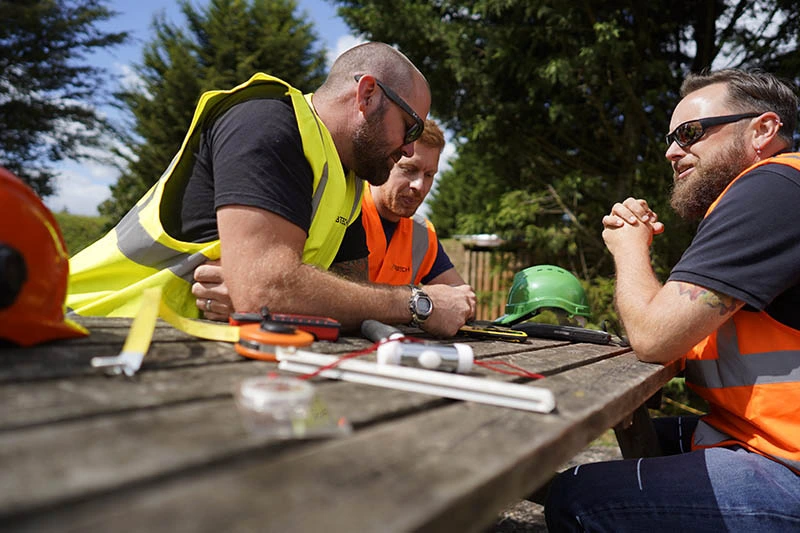
Arbtech are your best asset when it comes to getting planning permission for your project. We cover the whole of the UK and we are waiting to get started on your project...
Get Your Free Quote