Why Choose Arbtech?
Watch this video to see why Arbtech are the best asset you can possibly have when you need ecology or tree surveys to help you obtain planning permission.
Whether you’re extending a home, developing a brownfield site, or navigating a complex application, understanding what an architect does – and when you need one – can make or break your project.
Our informative page explains what they can bring to a project.



Last updated: October 2026

Gill is our Editor, with a background that combines journalism with land and estate management. Gill is a farmer’s daughter, an associate member of the RICS and has an interest in all things to do with agriculture and the countryside. Her free time is spent on the tennis court, walking and improving her cooking skills.

This is one of the most common questions we hear from developers and homeowners at the start of a project. The short answer: you are not legally required to hire an architect to submit a planning application, but for complex projects, not using one is a false economy.
Technically, anyone can prepare and submit their own planning application. Local planning authorities (LPAs) don’t require applications to be signed off by a chartered professional. However, the quality of your application, specifically the technical drawings and supporting documents, has a direct impact on whether it succeeds in the long run.
The real question isn’t whether you need an architect, it’s whether you can afford not to have one to support you through the planning permission process.
A rejected planning application costs time, money, and in some cases, the goodwill of your local planning authority. An architect for planning permission brings expertise, credibility and a working knowledge of what local authorities and planning officers actually want to see.
For a straightforward building project like a small single-storey rear extension or new extension to a single house in a non-sensitive area, for instance, a competent architectural technician or even a planning consultant may suffice. But for anything involving listed building consent, planning constraints such as green belt, home extensions of significant scale or a complex site, a qualified architect is invaluable when you need to apply for planning permission for building work.
Approximately 87% of householder applications for many projects are approved nationally, but quality of submission matters hugely. The typical time saved by submitting a well-prepared application first time is 3-8 weeks. Also bear in mind that first impressions count: local planning authority officers remember poor submissions.
The role of a planning permission architect in the planning process goes well beyond drawing up plans. A good architect is your strategic partner throughout the application process. Their in-depth knowledge of the local area and professional guidance will give your property development scheme its best chance of securing planning approval.
From discussing initial ideas to filling in the application form, securing building regulations approval and dealing with a structural engineer if necessary, architects bring a wealth of knowledge to a project. In the first place, it’s important to engage an architect with experience working with schemes like yours. Here’s a breakdown of their key responsibilities:
Before a line is drawn, your architect will assess the site constraints, planning history, local and national planning policies, and any designations (conservation areas, flood zones, protected trees, areas of outstanding natural beauty) that will shape what’s possible before they start to draw plans. This early-stage work is critical to setting realistic expectations.
Most experienced architects for planning permission will recommend a pre-application meeting with the LPA planning officers before a formal submission. This gives you informal officer feedback, flags potential issues early, indicates certain conditions to fulfil and, on larger schemes, can dramatically increase approval chances.
Your architect designs proposals that balance your brief for the construction project, the site constraints, the area’s character, building regulations and planning policy. On sensitive sites, this involves iterative design work and precise drawings, not just one drawing, but multiple options tested against the planning framework.
This is the core technical output; the following section gives a full breakdown of exactly what precise drawings are required and what they must show.
Planning applications often require more than just architectural drawings. Your architect will coordinate or prepare a Design and Access Statement, manage specialist consultant reports (ecology, arboriculture, heritage), and ensure every document is consistent with planning law and local planning policies and complete before submission.
Planning permission applications and the necessary documents are uploaded onto the planning portal. A good architect doesn’t just submit and walk away. They monitor the whole project, fulfil any relevant legal requirement, respond to requests for additional details from the local planning authority, liaise with case planning officers, and, if needed, negotiate amendments and design modifications to get an approval over the line, enabling you to begin work.

Do you need architect drawings for planning permission? Yes – and the quality and accuracy of those drawings is one of the most decisive factors in whether planning approval is achieved, whether for a new home or a house extension. Let’s be clear about what’s needed.
This shows the application site in the context of its surroundings, at 1:1250 or 1:2500 scale. The plan must be based on an up-to-date OS map and the site must be outlined in red.
The site boundary, existing buildings, access, trees, and relationship to adjacent properties, at 1:200 or 1:500 scale. Site plans may include a blue outline showing any other land in the applicant’s ownership.
The current layout of all floors of the existing structure. Required even if demolition is proposed; scale typically 1:50 or 1:100.
The proposed new or altered layouts clearly distinguish new from existing work. The detailed drawings must include all floors affected; dimensions and room uses annotated.
All external faces of the existing property, showing materials and openings. Typically, all four elevations are annotated with existing materials.
All external faces of the proposed development, showing new materials and design. Changes from the existing must be clearly legible.
Vertical cuts through the building showing internal heights, ground levels and relationship to context. Particularly important on sloping sites or with basement elements.
The proposed roof geometry, ridge heights, and drainage features. Often required for extensions and new build.
Missing north points, unscaled drawings, inconsistent measurements between plans and elevations and incorrect red-line boundaries are among the most frequent reasons applications are returned as invalid before they’ve even been assessed. A qualified architect will ensure none of these issues slip through.
Beyond the mandatory drawings, larger or more sensitive schemes often require additional plans: tree protection plans, landscaping proposals, drainage layouts and heritage impact drawings. Your architect will advise on exactly what your specific LPA requires for your specific application type and the necessary forms to complete when applying for planning permission.
Understanding how an architect integrates into the broader planning process helps you manage your project programme and budget effectively. Here’s what a typical journey looks like with architects’ planning permission work at the centre:
Your architect reviews the site and neighbouring properties, gathers planning history, checks the local plan and any relevant neighbourhood plans and identifies all constraints that will shape the design. They’ll advise whether permitted development rights apply (meaning planning permission may not be needed at all) or whether a full application will be required.
On anything beyond a simple householder application, your architect will typically recommend engaging local planning officers informally before committing to a scheme design. This might be a formal pre-application advice service or simply making contact with a duty planner. The outcome shapes the design direction and reduces risk.
This is where the architect’s design skills come to the fore. Schemes are developed, options and structural integrity tested, and the drawings package assembled. For complex applications, this stage also involves commissioning specialist surveys – ecology, arboriculture, ground investigation. The results will inform and shape the final design.
Once the application and necessary documentation is submitted, the LPA has a statutory determination period, typically 8 weeks for householder and minor applications, 13 weeks for major development. During this time, your architect manages correspondence, responds to any queries from the case officer and monitors the application’s progress.
If approved, your architect will review the decision notice and any conditions attached, advising on which need to be discharged before work starts. If refused, they’ll advise on whether to appeal or revise and resubmit and what changes would address the reasons for refusal.
Not every application for property development is straightforward. Some sites come with complications and potential challenges, from neighbouring objections to ecological constraints, heritage designations, or a history of refused applications for planning permission. This is precisely where having the right architect for planning permission issues becomes most valuable. Their creative approach and valuable insights can avoid unnecessary expense.
The most costly planning problems are those that emerge late in the process, when a scheme is already committed to a design. Bringing in an experienced planning permission architect at the very start, even before land purchase on development sites, is the single most effective risk-reduction measure available to developers, helping deal with the hard work such as material objections early and avoiding costly mistakes.
Architect fees for planning work vary depending on the scale and complexity of your project, the stage of engagement and the firm you choose. Here’s a realistic guide to what to expect:
Typical architect fee range – £800-£2,500, including survey, drawings package, application submission.
Fee range £2,000-£6,000 to include survey, full drawings, design and access statement and submission.
£5,000-£20,000 to include pre-app, full design, drawings and coordination of specialist reports.
Percentage fee (typically 3-8% of build cost) or agreed lump sum. Full RIBA stage service to planning.
Premium typically applies (add 20-40% to standard fees). Heritage impact assessment, specialist design input, Listed Building Consent application.
These figures are indicative: always get itemised quotes from at least two or three practices and check exactly what is and isn’t included in the overall cost. In particular, confirm whether the fee covers responses to local planning authority queries during the determination period, and whether specialist reports (ecology, arboriculture) are included or extra.
Viewed in the context of the value planning permission adds to a property or development site, architect fees are almost always one of the best returns on investment in the development process. Time and money matter: a well-conceived, professionally submitted full planning application doesn’t just get approved; it maximises the value of the consent.

Arbtech provides the ecological surveys and reports that applications for planning permission require, coordinated with your architect and timed to your programme.
If you need an architect, contact our expert team for help or fill in the quote form on this page. Consulting with an architect at the earliest opportunity will give your scheme its best chance of success.
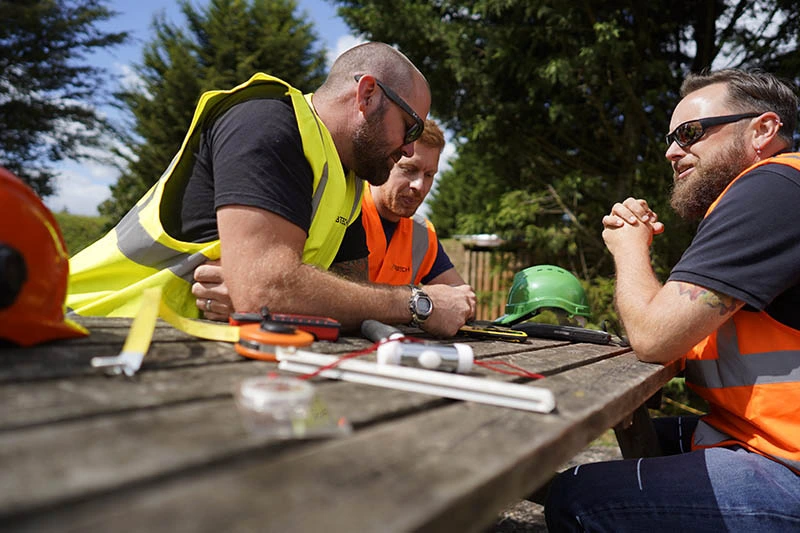
Arbtech are your best asset when it comes to getting planning permission for your project. We cover the whole of the UK and we are waiting to get started on your project...
Get Your Free Quote