Why Choose Arbtech?
Watch this video to see why Arbtech are the best asset you can possibly have when you need ecology or tree surveys to help you obtain planning permission.
For the many commercial and residential development projects all over England, biodiversity net gain (BNG) has been a massive change in how the process works and how the local planning authority grants planning permission.
Our comprehensive page explains how BNG applies to both residential and commercial development.




Whether you’re dealing with a minor development, a major development or an individual residential or commercial development of any size and scale, mandatory biodiversity net gain (BNG) is an established part of the planning system in England that could apply.
Originating in the Environment Bill and enacted through the Environment Act 2021, the legal requirement under the Town and Country Planning Act 1990 demands that most developments leave biodiversity and the natural environment in a measurably better state.
During the development process, the person submitting the planning proposal must arrange a BNG assessment to calculate the pre-development value of the land, identifying existing baseline features across the site boundary before layouts are locked in and confirmed.
As soon as the site layouts begin to take shape, the findings are measured against the projected post-development biodiversity value. The central goal is to prevent a permanent net loss of nature, and fulfilling the statutory biodiversity gain objectives ensures that each proposed development functions as a viable piece of sustainable development.
Unless exempt, every scheme where a development subject to the mandate is submitted will see all planning permissions granted under standard local authority protocols. Approval is then granted subject to a formal condition requiring statutory ecological evidence.
The national biodiversity gain condition operates across the country as a binding pre-commencement condition. In practice, it means that no ground clearance, grubbing out or building works can take place on a development site until the relevant local planning authority has reviewed and signed off the developer’s biodiversity gain plan.
The practical path to ensure compliance will vary depending on the identified scale, the total floor space created, and the primary operational footprint of the site.
As spatial parameters and design objectives differ dramatically between housing layouts and broader land management schemes, the proposed approach needs to directly adapt to the physical realities of the built environment.
Ranging from distribution warehouses and business parks to minerals development, commercial projects regularly present exceptionally high plot ratios.
It could be an existing car park, heavy industrial footprints, expansive loading bays or turning circles. Whatever it is, it can leave minimal undisturbed soil within the red line boundary for an ecologist to create biodiversity on-site.
Planning applicants managing employment schemes routinely deal with constrained sites where footprint pressures mean that they cannot satisfy full BNG purely through on-site BNG alone.
Under the statutory BNG system, the spatial limitation makes it necessary to buy off-site units. By allowing developers to secure registered off-site BNG units, the planning framework enables schemes to meet the requirements of the planning officers while keeping logistics layouts commercially viable.
Housing layouts integrate public open areas, shared green infrastructure, residential gardens and highway verges.
As a result of the statutory assessment framework, private back gardens receive low distinctiveness ratings, reflecting the likelihood of homeowners replacing lawns with artificial turf, decking or extensions.
To compensate for this, residential schemes need to concentrate design efforts on community open spaces. By integrating habitat creation into communal parks, swales and boundary buffers, designers can harness the biodiversity resulting from high-quality landscaping.
With this, housing schemes can effectively support biodiversity, create functional recreation space, and successfully deliver gains across most new developments.
Working within the statutory BNG framework involves applicants understanding how the national ecological policy interacts with their specific asset class.
While both sectors are governed by the same overarching BNG legislation, the practical realities of site selection, design layout and unit delivery differ substantially between housing schemes and commercial projects.
Whether a planning applicant is preparing a new application for a distribution hub or masterplanning a suburban housing estate, achieving compliance needs an early understanding of the metric thresholds, planning conditions and long-term land management obligations enforced by the local planning authorities.
Calculating the baseline scores and predicting the likely post-development changes requires using the biodiversity metric calculation tool published by the Department for Environment, Food & Rural Affairs (DEFRA).
An ecological consultant will need to perform rigorous biodiversity metric calculations using the official statutory metric tool.
The evaluation measures baseline conditions recorded on the relevant date, works out the initial pre-development biodiversity value, calculates how many units exist across the site, and confirms how many biodiversity units the scheme needs to generate to legally deliver at least 10% net gain.
If the proposed development is classified as taking place on a small site, the small sites metric (SSM) will be used as a streamlined calculation tool for smaller developments. If not, the full statutory biodiversity metric tool will be used for any development that exceeds major thresholds.
The statutory biodiversity metric includes accounting modules for area habitats, hedgerow units and watercourse units, ensuring that distinct habitat type classifications are evaluated independently. It also applies an automated penalty known as the spatial risk multiplier whenever off-site habitat provisioning is located outside of the local authority boundary or national character area (NCA).
If a development site contains irreplaceable habitat like ancient woodland or an endangered priority habitat, developers will be unable to substitute a proxy habitat or apply simplified calculations. In this case, the streamlined pathway designed for smaller developments will be legally excluded.
The transition to statutory mandates followed clear dates set by secondary statutory instruments.
Mandatory rules took effect when BNG became legally enforceable for major residential applications on 12 February 2024, with small sites transitioning onto the small sites metric on 2 April 2024.
For residential land, the small sites metric applies to schemes of 1 to 9 dwellings on a site area under 1 hectare, or on sites without a known dwelling count covering less than 0.5 hectares.
As for larger developments, the full metric tool becomes mandatory whenever a development exceeds the minor parameters, including residential proposals of 10 or more homes, or sites covering 0.5 hectares or greater.
Non-residential and employment schemes work out the metric route based on floor area and overall site boundaries.
For commercial land, the small sites metric can be used on commercial builds where the newly created floor space is under 1,000 square metres, or where the entire site area is less than 1 hectare.
As for larger developments, the full metric tool is needed on major commercial schemes where commercial floor space reaches 1,000 square metres or more, or where the overall site boundary covers 1 hectare or greater.
It’s only possible to secure a full 10% biodiversity net gain through working good practice guidelines into the early stages of the masterplanning.
In many cases, planning applicants can achieve BNG cost-effectively by protecting and improving on-site linear habitat, such as planting species-rich native hedges alongside the site boundaries.
Commercial layouts often achieve significant value through efforts to enhance biodiversity, such as planting patches of mixed scrub and a dense perimeter of tree screens to visually soften the boundary edges and creating a buffer adjoining road corridors along the transport network.
Residential schemes, on the other hand, often focus on establishing high distinctiveness wildflower meadows within sustainable drainage corridors, balancing natural wildlife habitats with recreational amenities to successfully offset local habitat loss.
Large-scale commercial schemes and strategic housing sites completed in phases over multiple years involve a level of careful procedural planning.
When it comes to applying for outline planning permission, an overarching BNG strategy must be formulated and approved prior to the start of each of the individual phases.
At the initial outline planning application stage, the project team agrees site-wide baseline values referencing a general location plan.
As construction moves forward, detailed BNG plans are prepared and submitted at each individual reserved matters stage.
With an officially approved biodiversity gain plan tied to each specific phase, it’s possible to ensure that early construction stages never consume all available on-site green assets without legally binding commitments that subsequent phases will deliver their assigned share of new habitat.
Within the National Planning Policy Framework (NPPF), the development management procedure and the official government planning practice guidance, planning applicants need to follow the biodiversity gain hierarchy to prevent significant harm to the natural environment.
To meet the mandate, the statutory framework effectively gives developers one of three options to choose from:
Retain existing habitat and any important habitats that were valuable in the first place, giving priority to on-site habitat creation directly within the red line boundary of the site.
If on-site space is exhausted and simply cannot accommodate all of the units required, developers can source third-party units from accredited commercial habitat banks or local land managers as a way of securing legally verified off-site gains.
As a strict last resort, developers could purchase statutory biodiversity credits directly from Natural England. The government prices the statutory credits intentionally high to disincentivise their use and drive demand toward private market off-site biodiversity units.
Whenever off-site units are needed, local planning authorities expect applicants to consult local nature recovery strategies (LNRSs).
From there, selecting offset locations with high strategic significance ensures that newly purchased off-site biodiversity units leave a lasting positive impact for local biodiversity.
Successfully achieving on-site BNG across an active development plot needs a certain level of long-term commitment.
Every on-site habitat designated to satisfy statutory net gain targets must be secured and maintained through active and ongoing management for a mandatory period of at least 30 years.
A matching 30-year obligation also applies whenever developers invest in external off-site habitats to meet a residual deficit:
Highly regarded as effective operational documents, habitat management and monitoring plans (HMMPs) establish working schedules, condition benchmarks and fixed monitoring intervals for all habitat types.
Unit gains can be locked in via a legal agreement with the local council known as a Section 106 agreement or via long-term conservation covenants overseen by an officially appointed responsible body.
Any land delivering off-site units needs to be formally approved and registered on the national register for designated biodiversity gain sites before the units can be lawfully allocated to individual applications.
Not every development proposal is subject to BNG.
While some local authorities encourage voluntary habitat enhancements under a standalone local plan policy or enforce a higher percentage requirement through other policies, whether statutory exemptions to BNG apply to a specific development depends on an existing exemption.
The primary exempt developments that don’t require planning permission to satisfy BNG include:
Small-scale works that don’t impact priority habitats and affect less than 25 square metres of area habitat or less than 5 metres of linear habitat, qualifying under the de minimis exemption and the statutory de minimis threshold.
Standard householder applications, including domestic extensions, detached garages and typical loft conversions.
Schemes qualifying under small-scale, self-build and custom build development, or custom housebuilding on qualifying plots, managed under relevant transitional agreement and the new rules introduced on 6 August 2026.
Sites where the entire development falls on land that consists exclusively of existing hardstanding commercial paving or buildings with a baseline ecological score of zero, as long as no adjoining vegetation is damaged.
Planning proposals involving urgent crown development, designated temporary development, schemes delivered under approved local development orders and designated simplified planning zones, all governed by respective transitional arrangements.
In other cases, local planning authorities will review the proposals to verify if the application is formally exempt from BNG.

For developers and planners, meeting the BNG requirements, discharging pre-commencement conditions and submitting a completed metric shouldn’t bring about planning risk or costly enforcement action.
Arbtech helps both small developers and major housebuilders comply with BNG to ensure that planning applications submitted to the local authorities swiftly and seamlessly grant planning permission for the site’s proposed works.
In most cases, a particular development presents distinct spatial constraints. Between managing multiple developments at a time, assessing an alternative site or needing to buy units as registered off-site biodiversity gains, our team gives you tailored solutions for certain types of commercial and residential schemes and other developments across the major towns and cities and all other parts of the country.
The smooth BNG implementation we offer helps developers and planners with BNG compliance, and we account for all of the primary considerations and any other things affecting the decision-making process from the perspective of your local authority.
Across the planning process, planning applicants need to follow the established mitigation hierarchy, ranging from installing bat boxes as less harmful impacts on your site to more significant ways to meet the biodiversity gain requirements.
Major schemes classed as nationally significant infrastructure projects (NSIPs) follow an aligned framework once planned consequential amendments to primary BNG law take effect. Whether it’s major or minor developments, our team can help you with satisfying the biodiversity net gain requirements.
Our ecologists advise on strategic biodiversity enhancements to protect native ecological value, secure maximum site gains, comply with the planning application process, and deliver at least some on-site gains that elevate habitat to the same level mandated by policy.
In order to meet the BNG objective and mandatory requirement, you may need certain assessments, surveys, plans or reports. Let us help you with working your way through the BNG process by contacting us and ensuring that all of the information submitted reflects your site.
As soon as we have all of the further information we need, we can create a free quote for the services needed on your site. Our team will then choose a suitable time to attend your site and provide you with the further guidance you need to get planning consent and deliver BNG.

Editor at Arbtech, Rob is a content specialist who manages our ecology and arboriculture services copy to ensure it is accurate, up to date, and insightful for current and future clients.
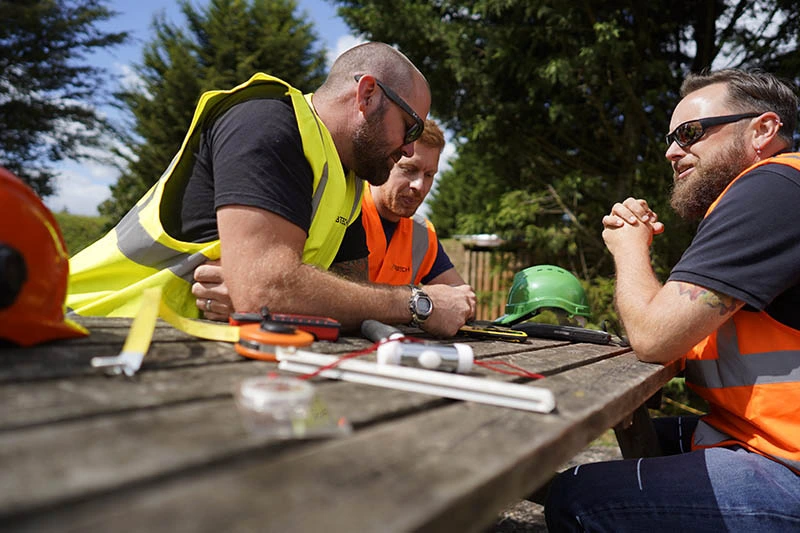
Arbtech are your best asset when it comes to getting planning permission for your project. We cover the whole of the UK and we are waiting to get started on your project...
Get Your Free Quote